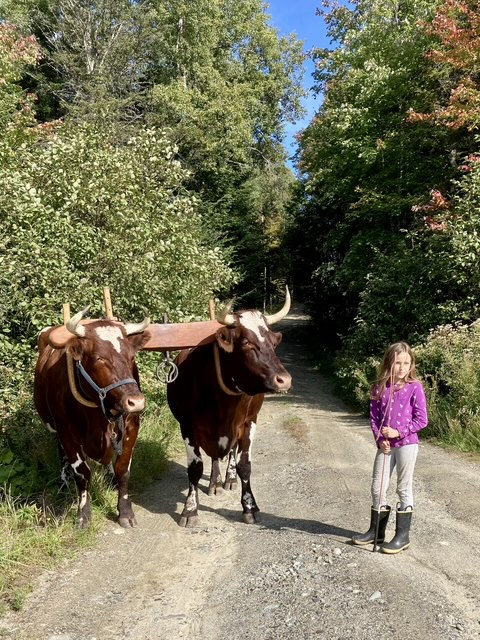
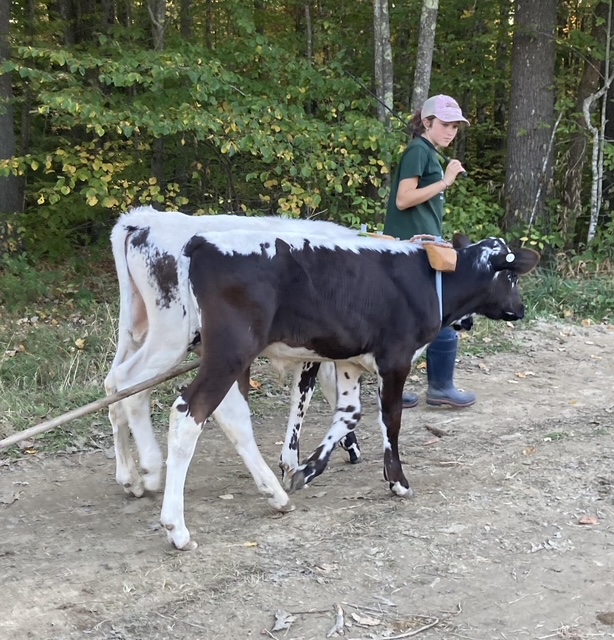
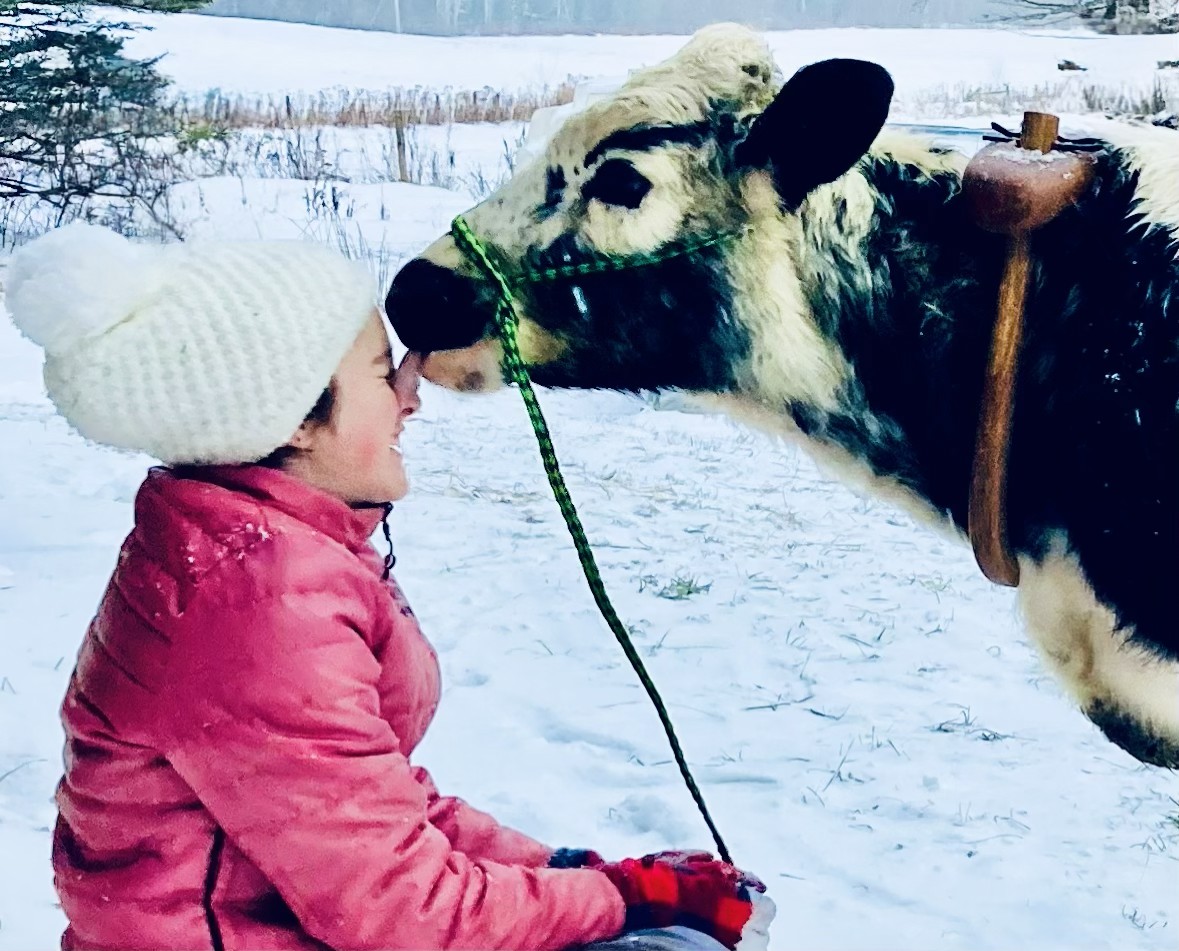
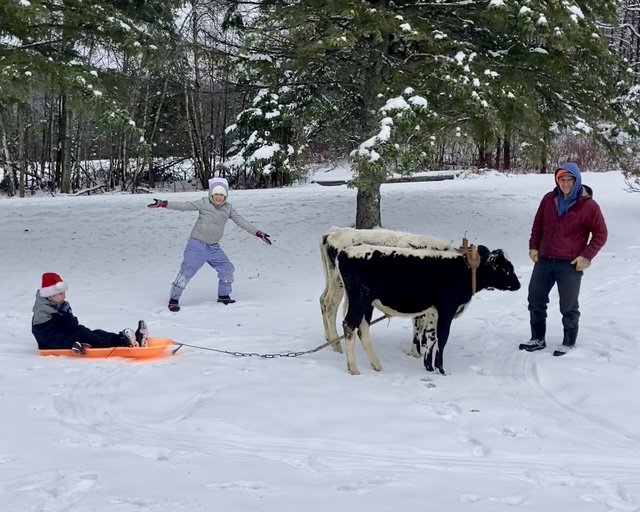
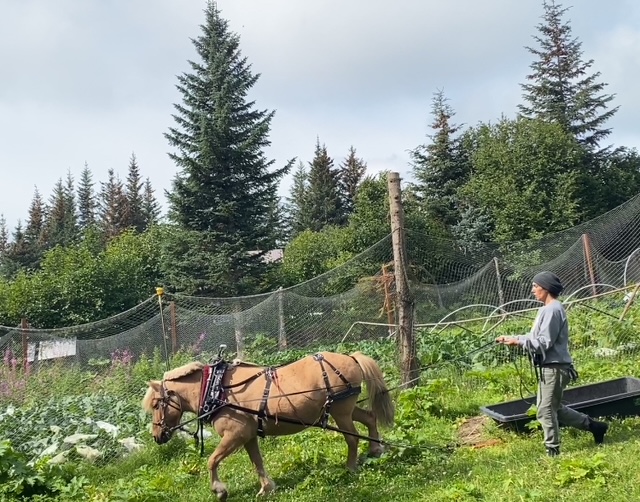
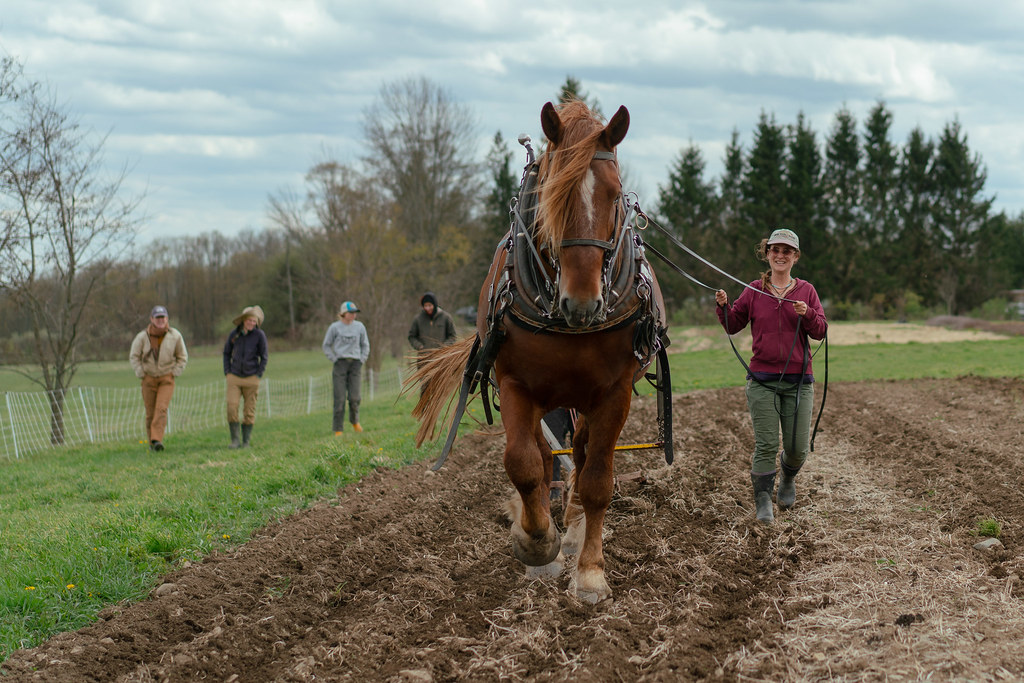
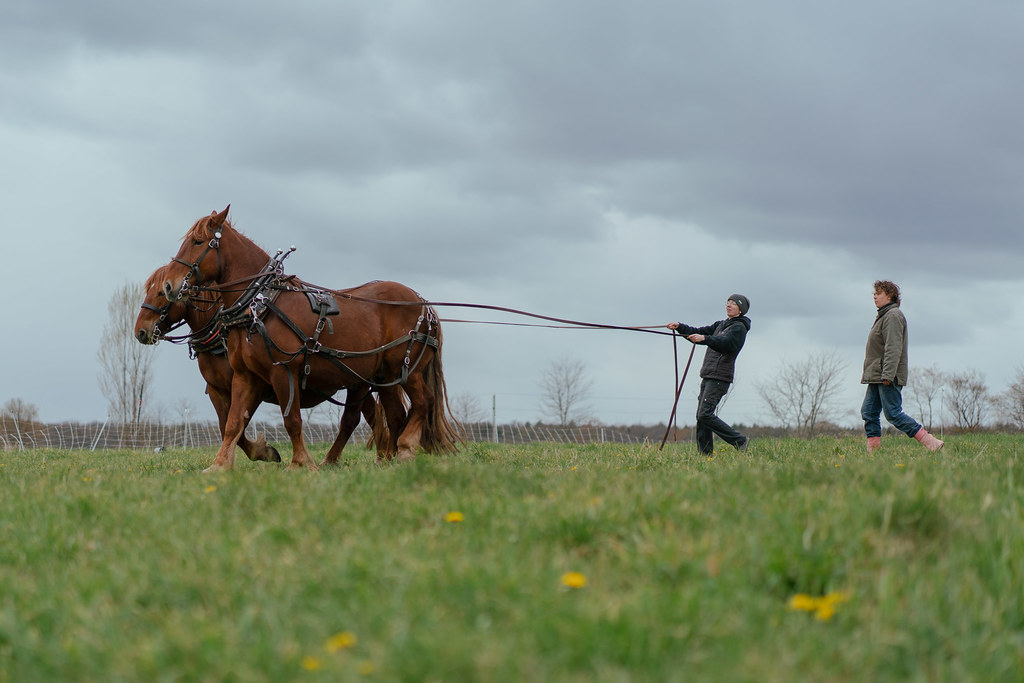
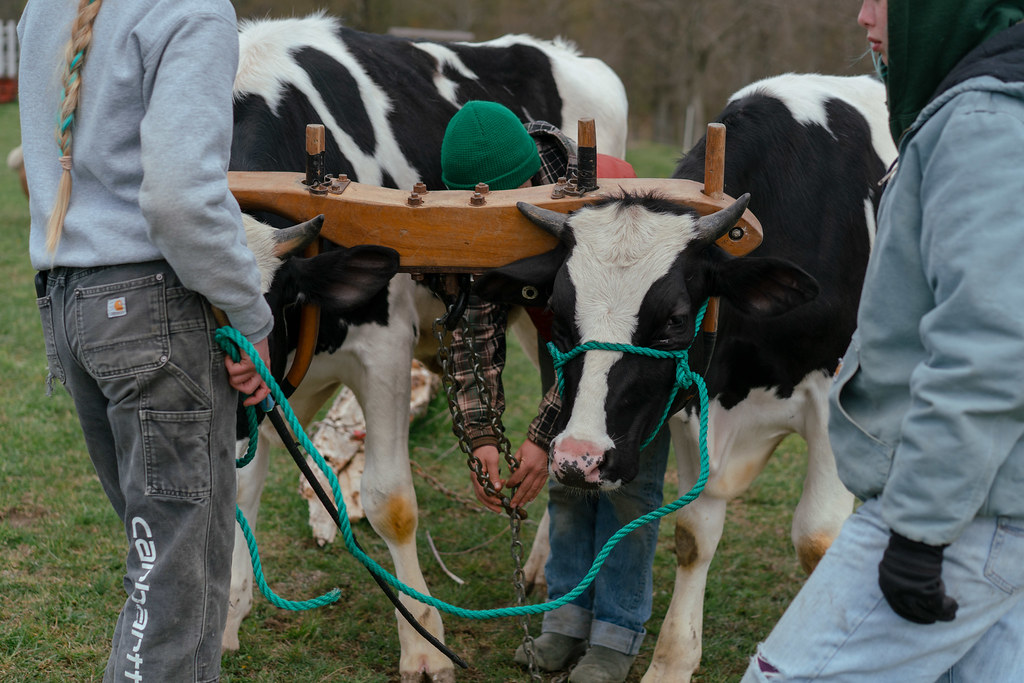
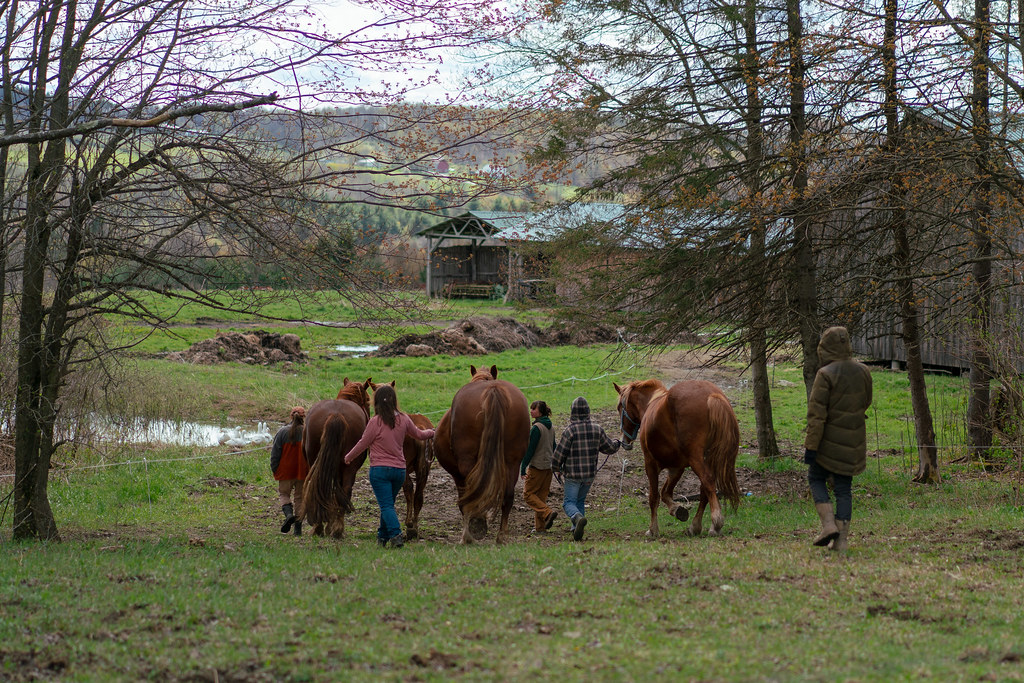
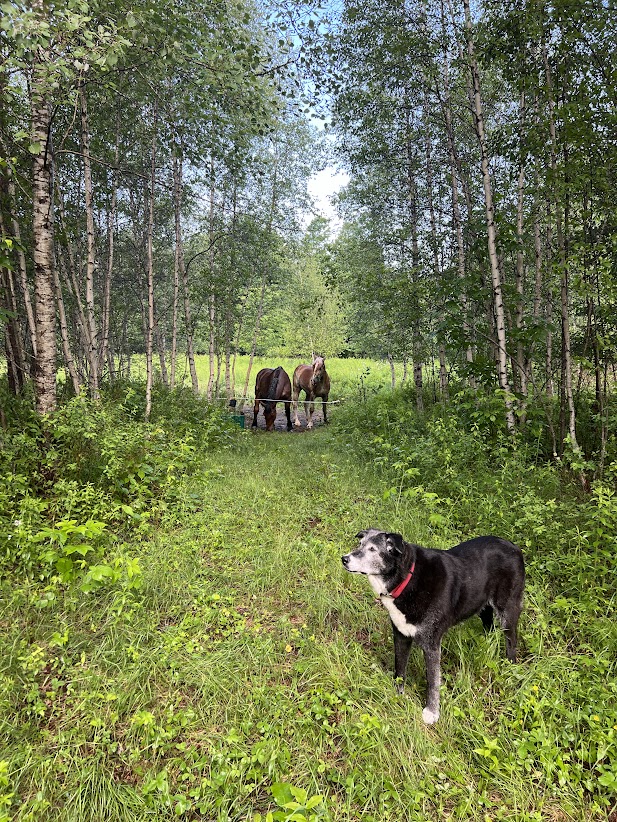
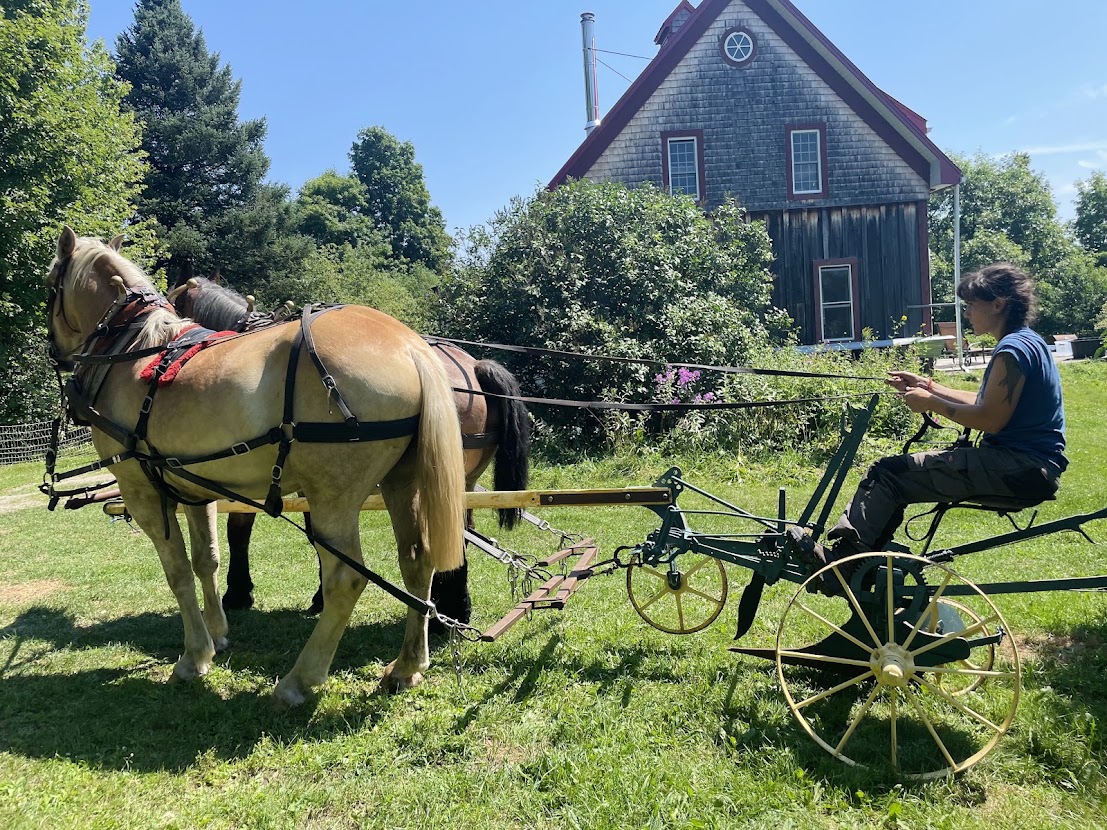
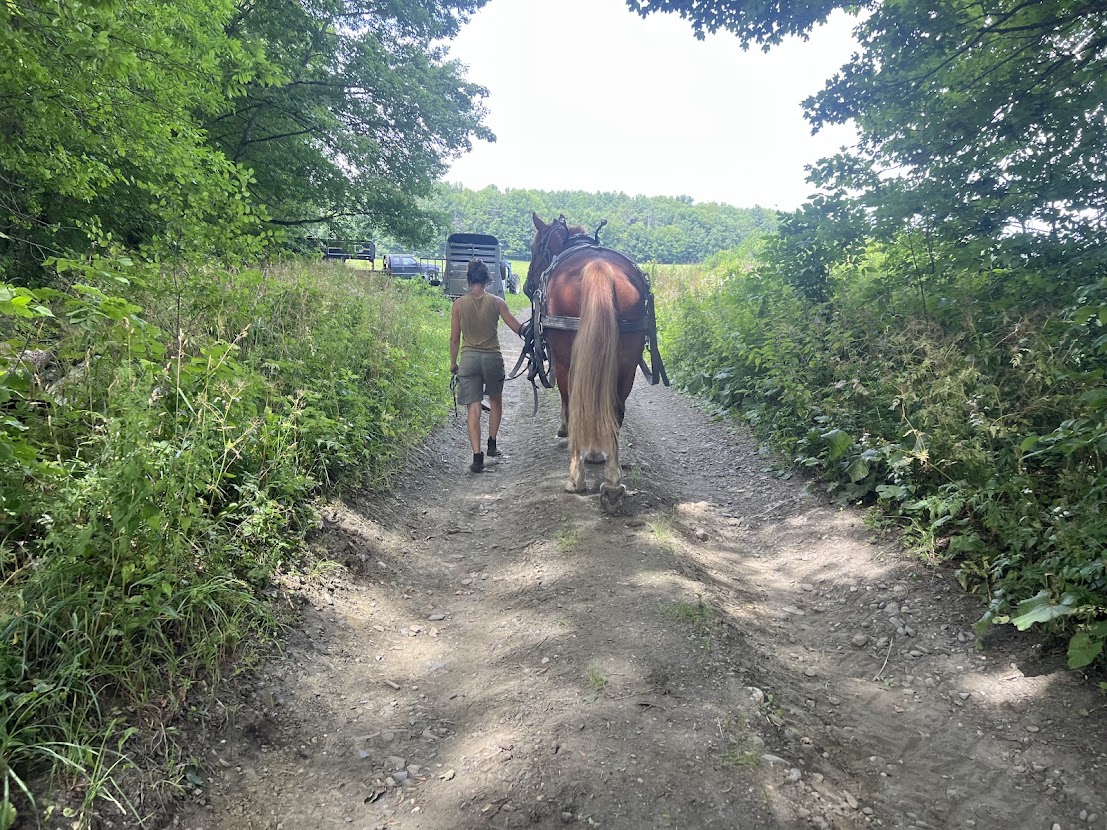
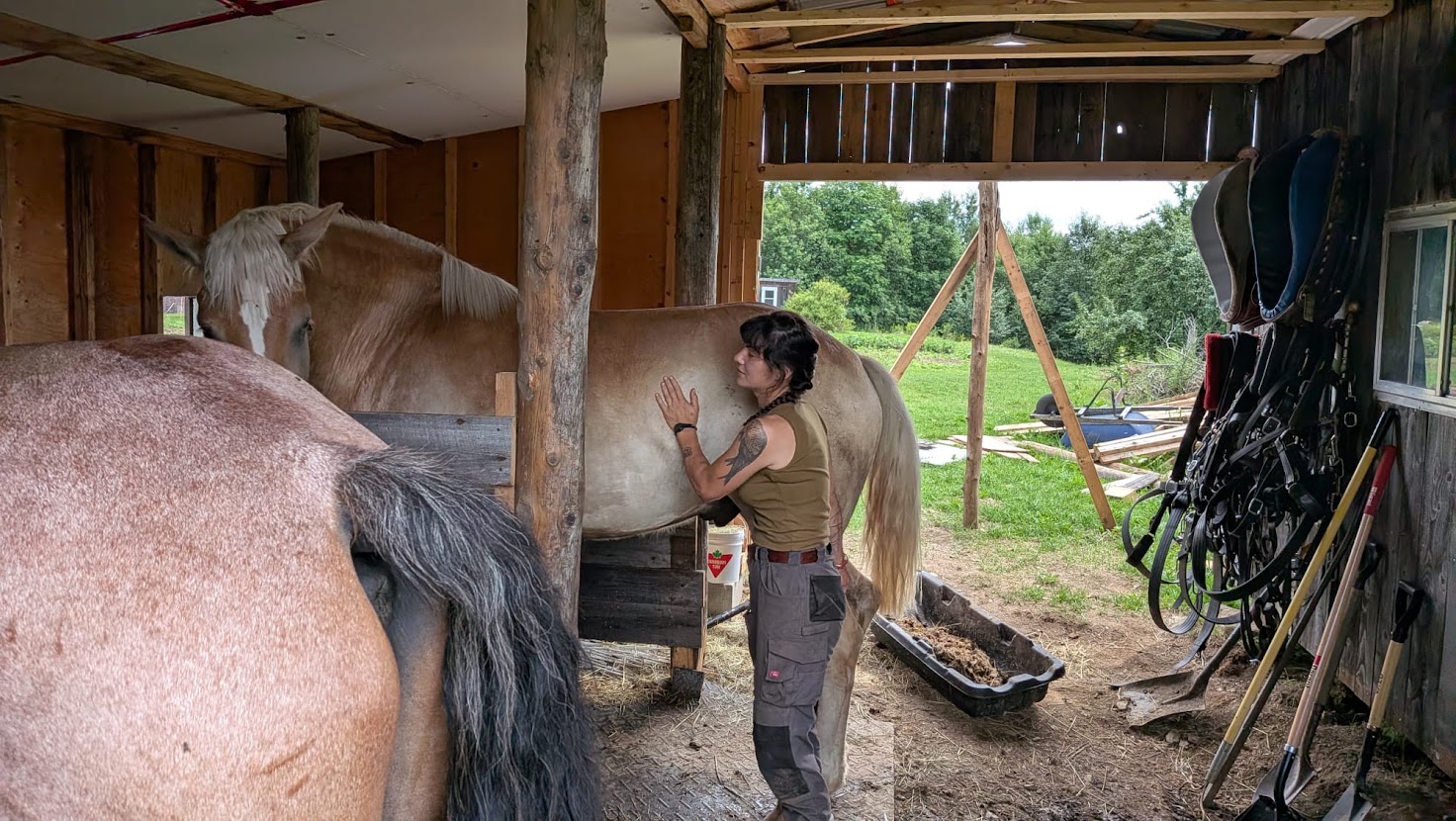
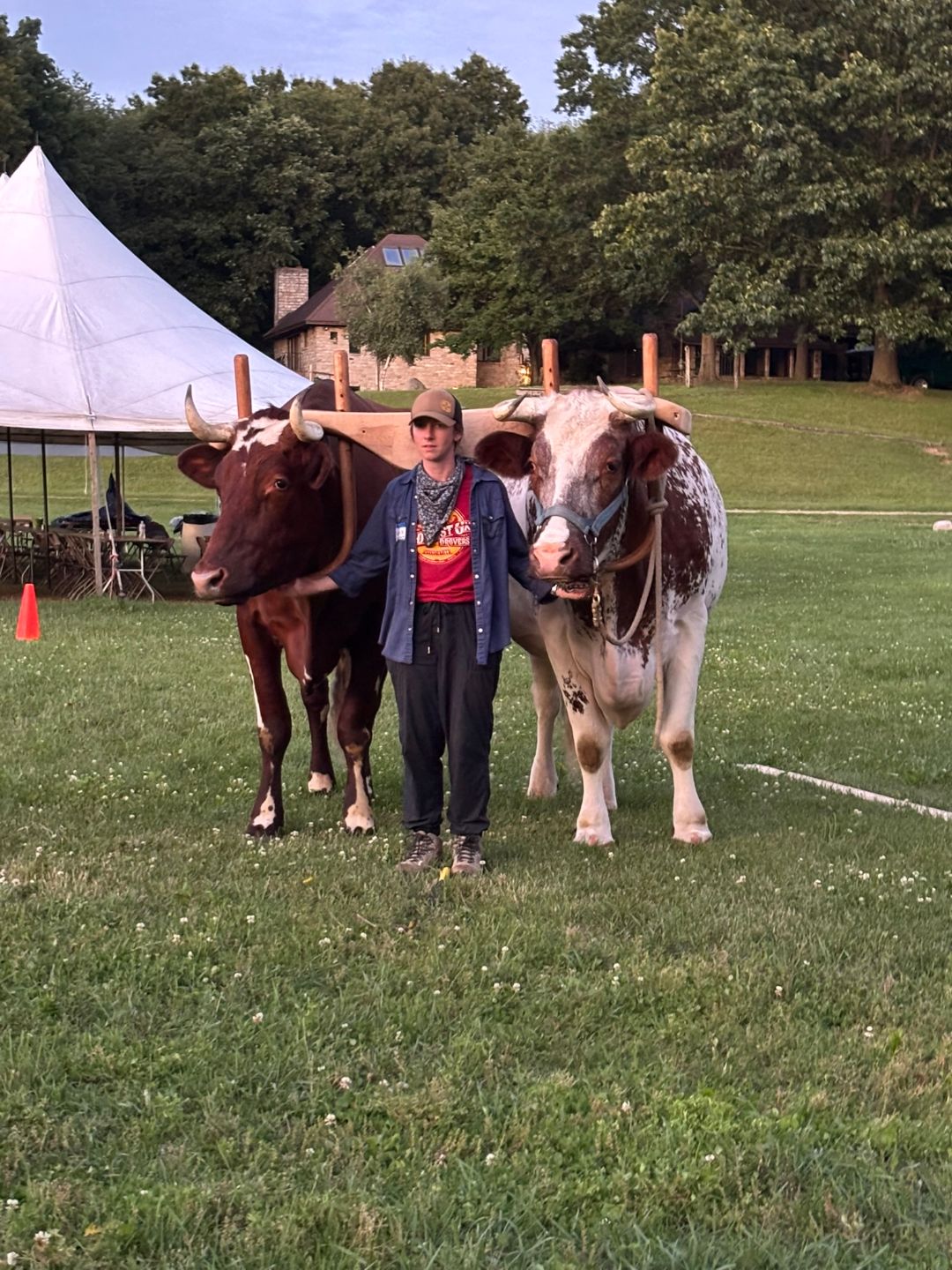
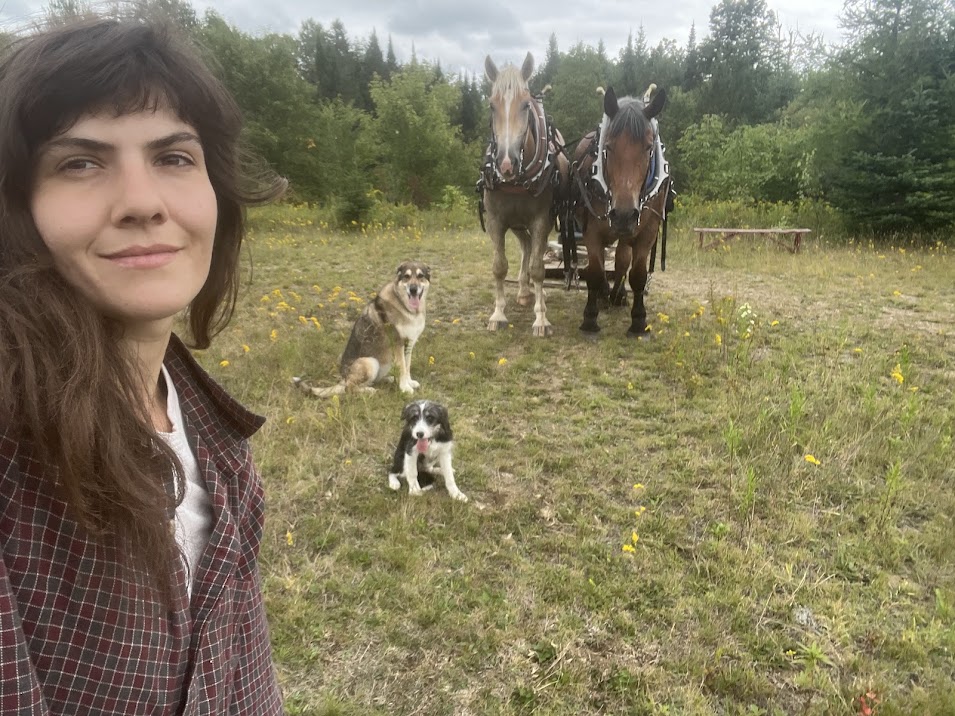
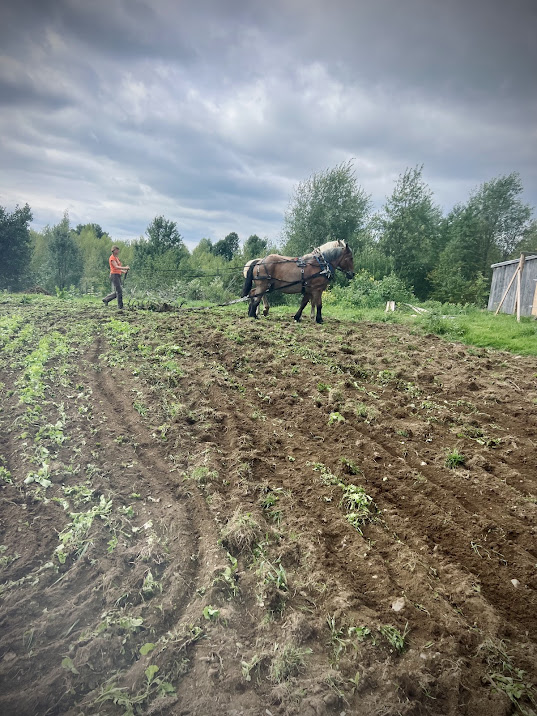
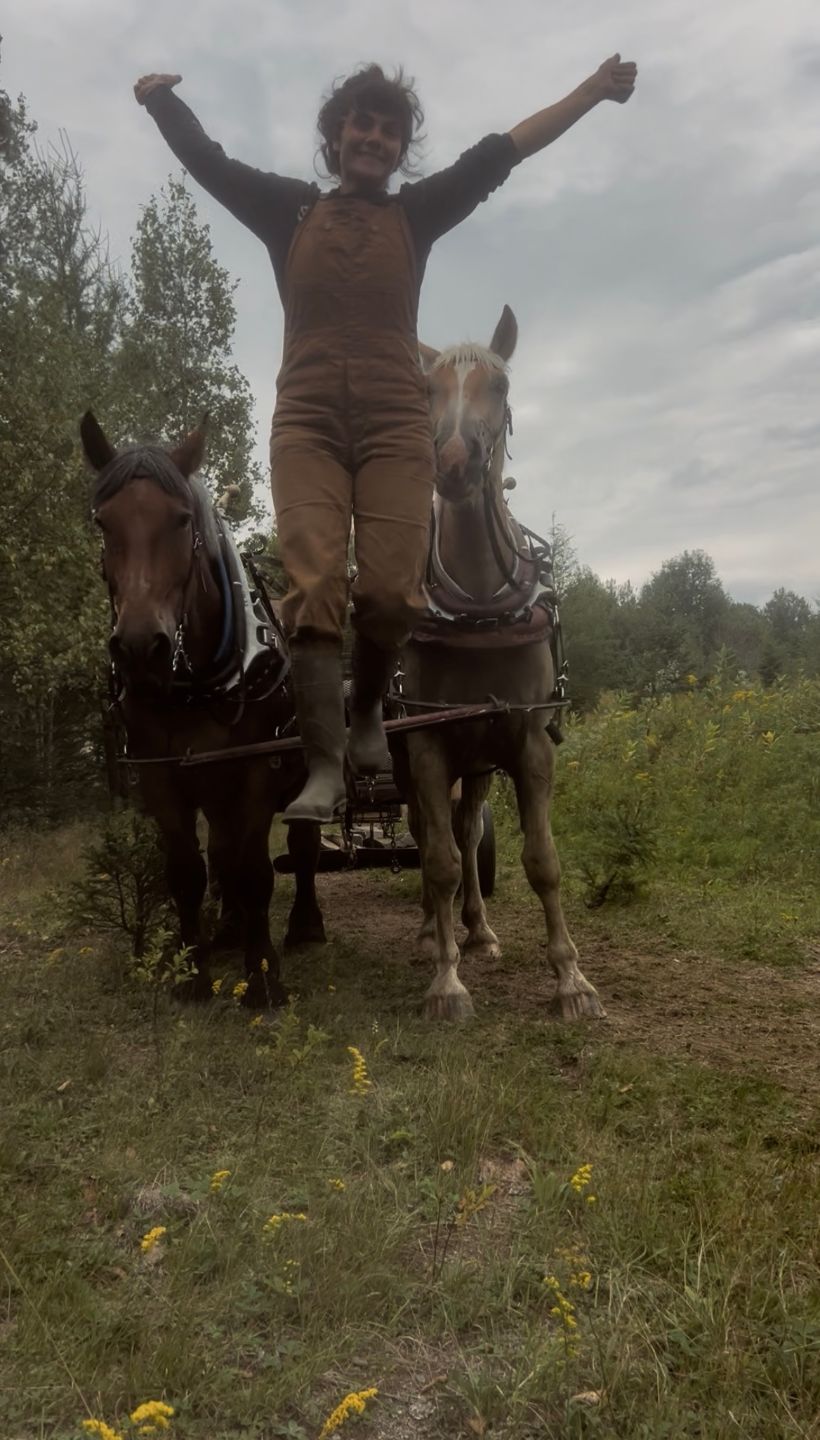
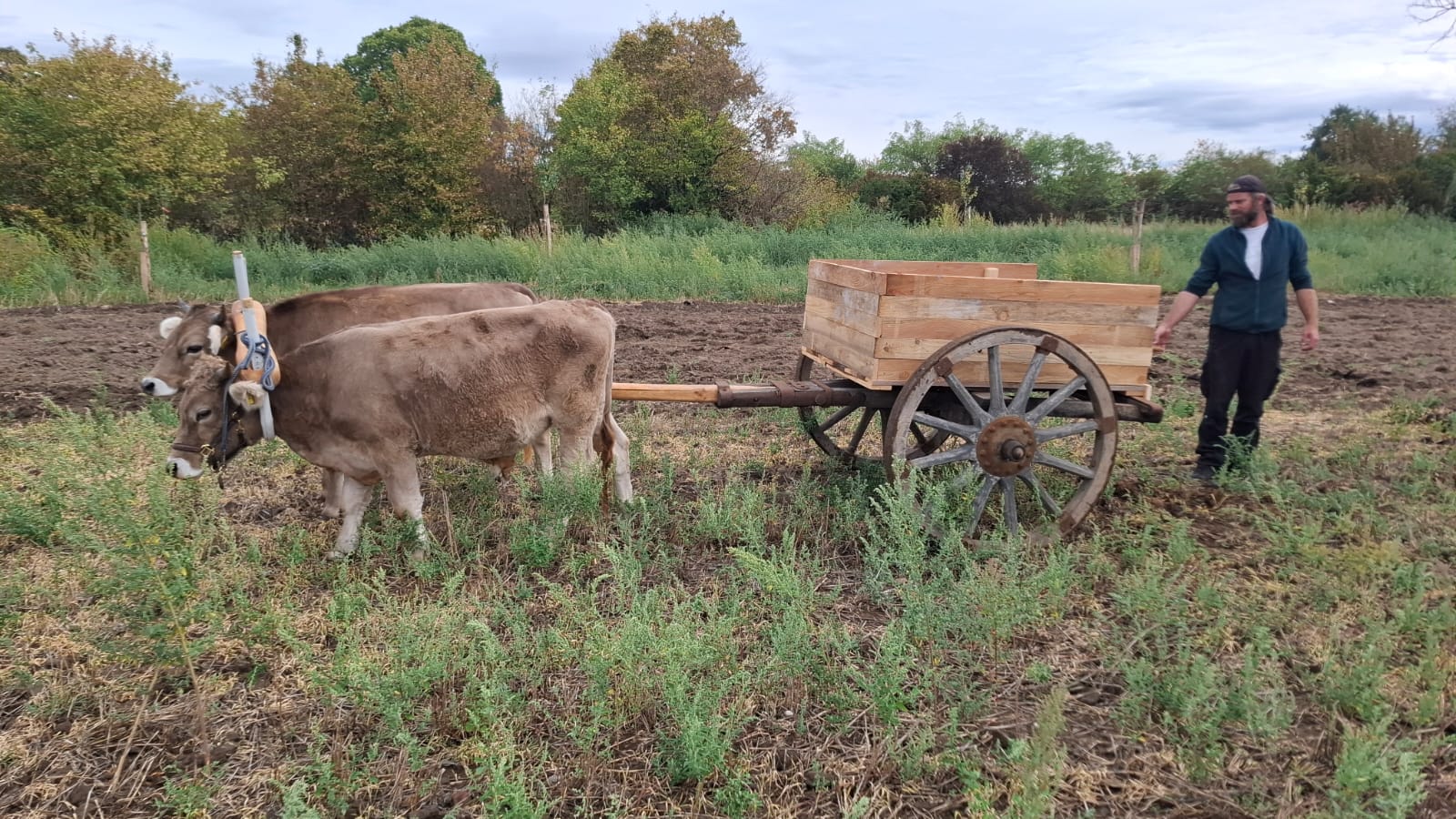
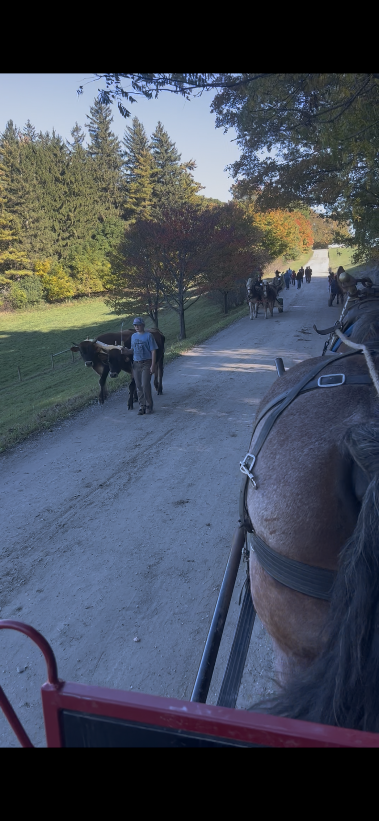
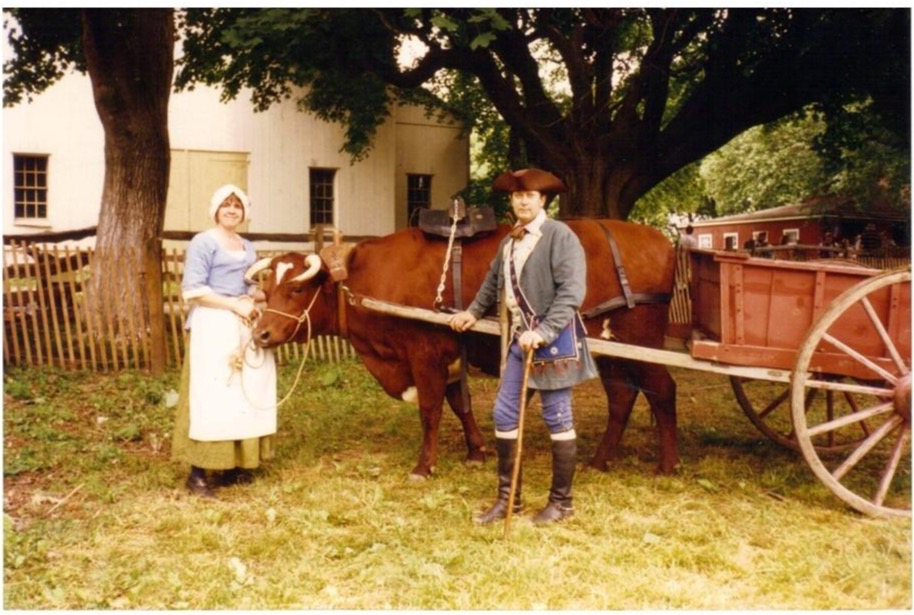
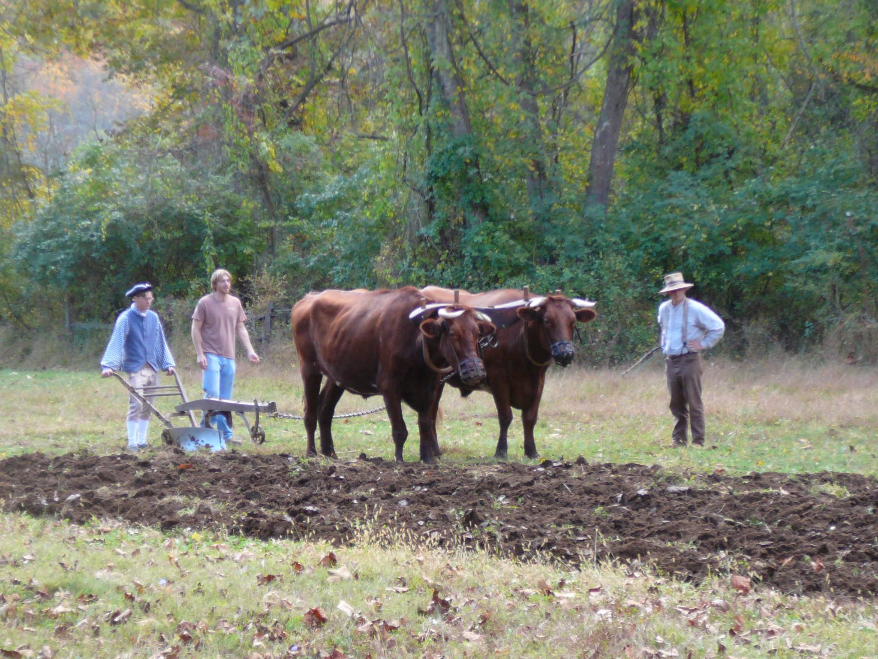
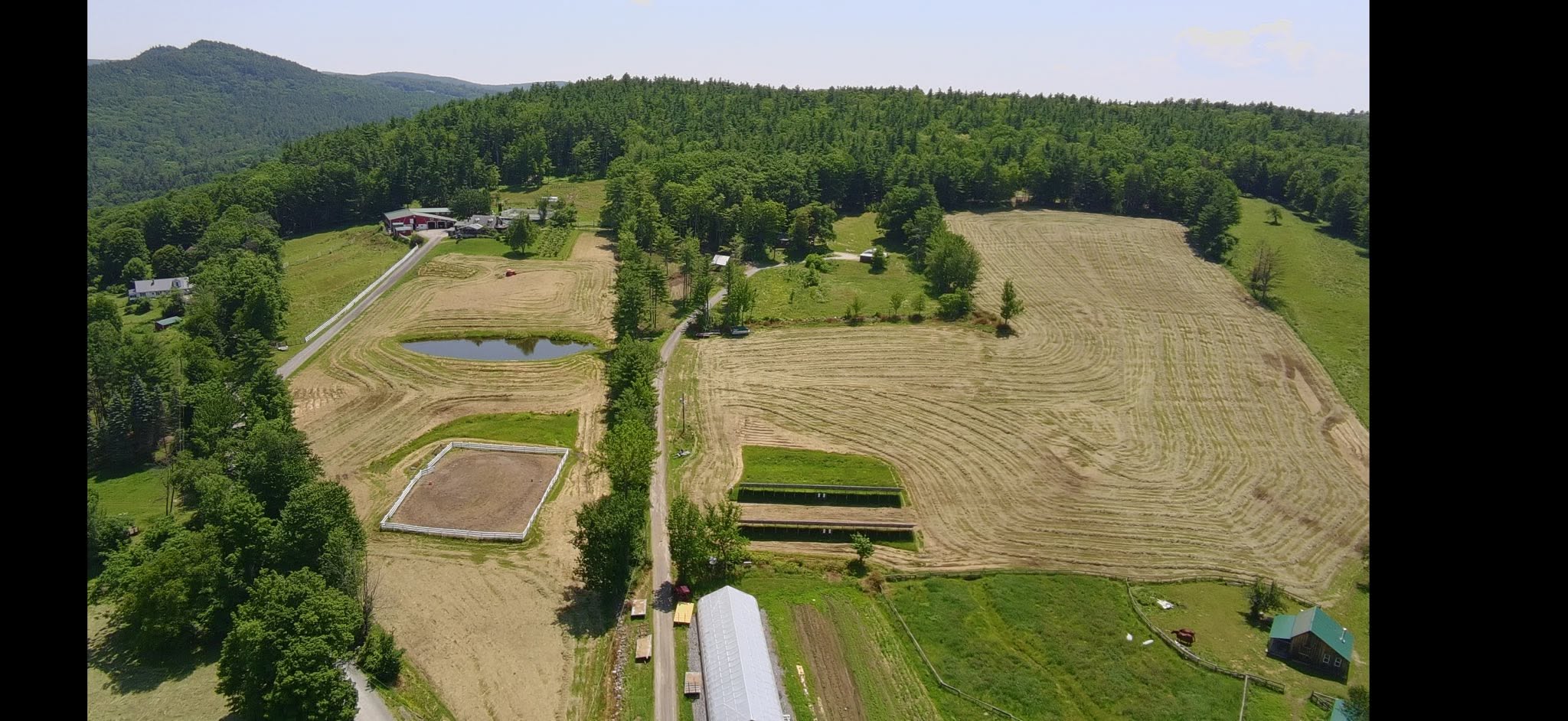
“Kärleken drar som tio par oxar” is an old Swedish saying that translates to “Love has the strength of ten pairs of oxen.” For centuries, oxen were the heart of Swedish agriculture, but they disappeared with the arrival of tractors in the 1950s. Today, the slow hoofbeats of oxen can still be heard on my farm - not out of nostalgia for the past, but to create a better future. Working with oxen is my daily practice of environmental and animal activism.
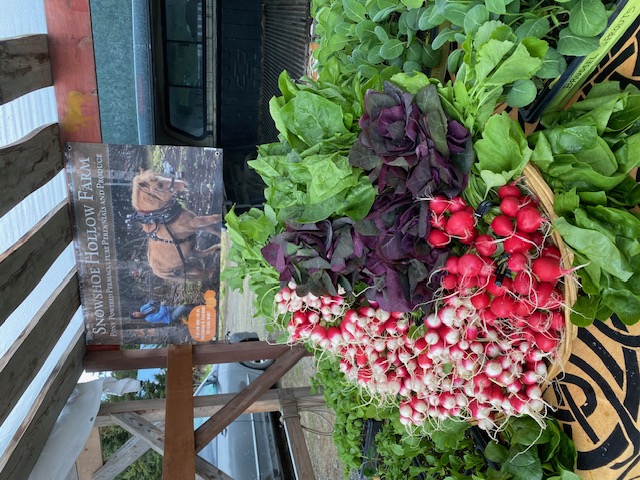
My name is Angela, and I own a small organic vegetable market garden near Stockholm, Sweden. From August through November, I sell heirloom varieties of tomatoes, pumpkins, squash, swiss chard, radishes, kale, lettuce, herbs, and whole chili pepper plants at the Stockholm Farmers Market.
I started farming as a business in 2021. I stepped off the academic path in environmental sciences to take action for a more sustainable food system. Every organic vegetable that I can provide for my community is one less that comes from conventional greenhouses in Spain. One tomato at a time, I work to help decrease the carbon footprint of food traveling across Europe, the eutrophication of the Baltic Sea, and the impacts of pesticides on biodiversity.
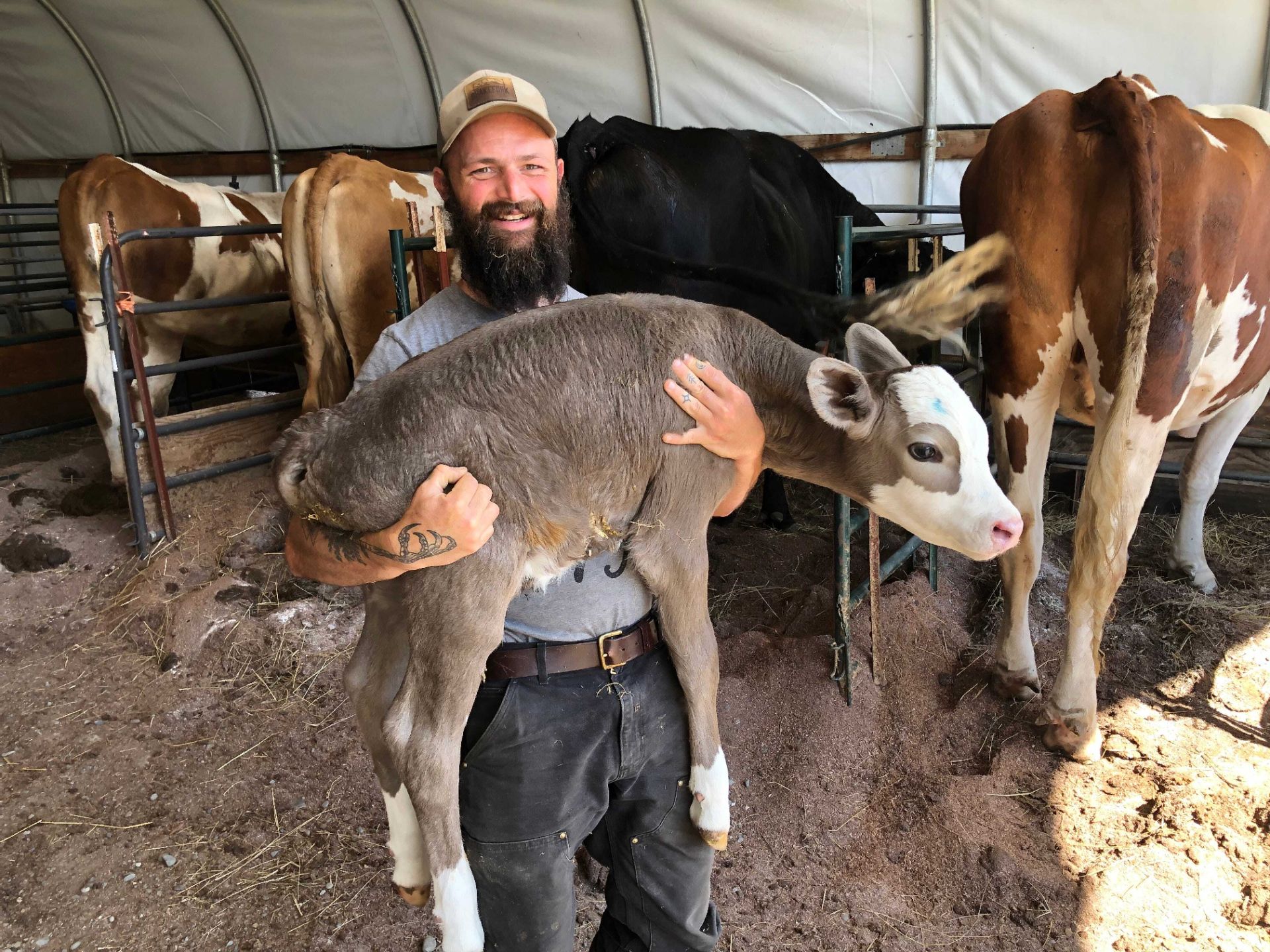
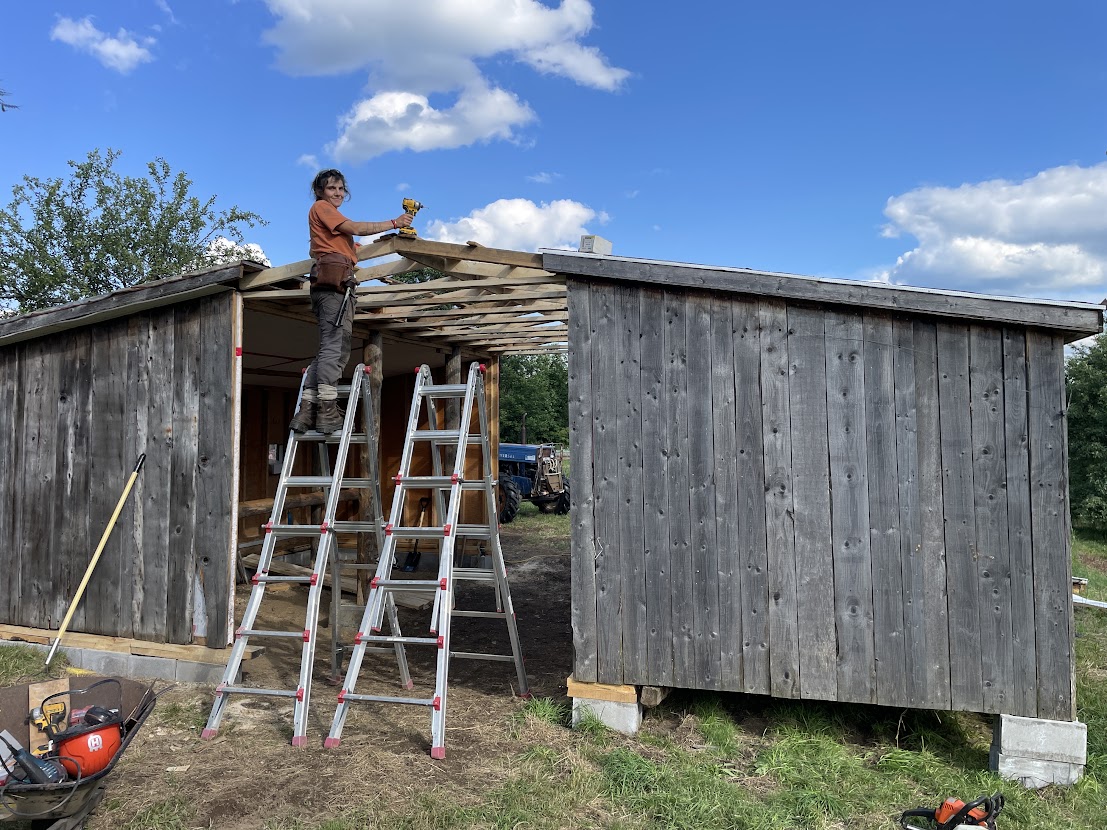
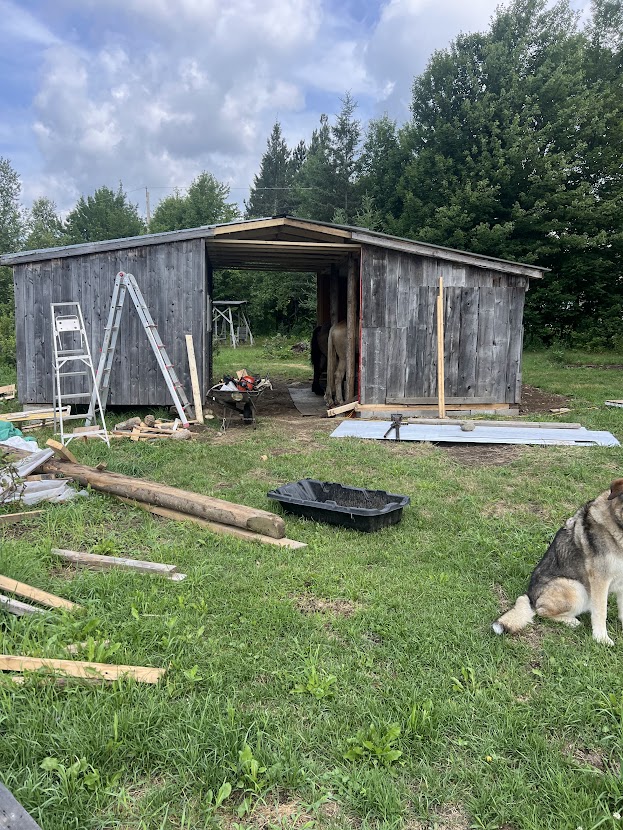
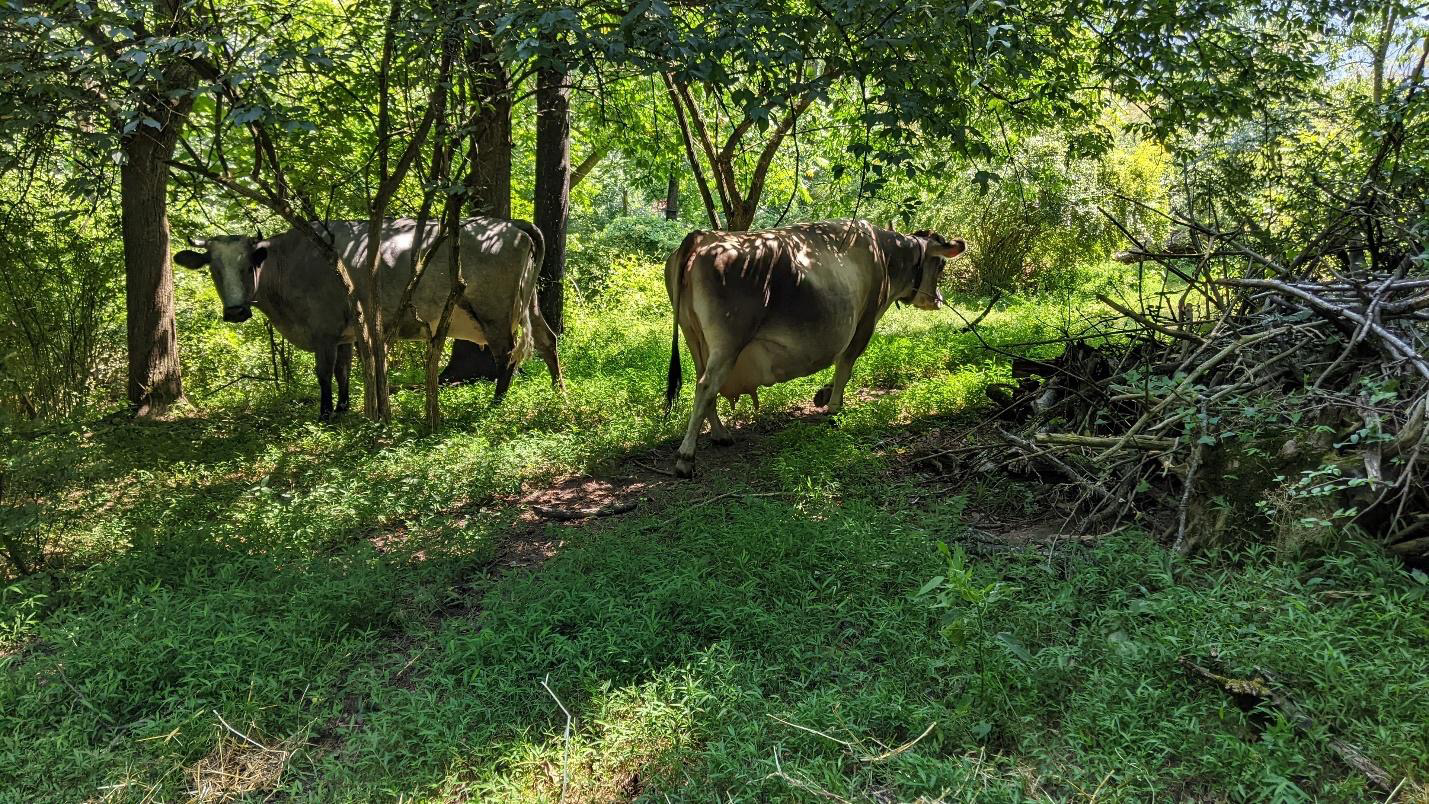
Growing vegetables is my “job”, but the real passion of both my farm and my life is my small herd of rescued cattle. In the barn that my partner built from the wood that he milled himself (yes, I'm bragging), live my two milking cows and two oxen. Sunshine and Marigold were discards from conventional dairy operations. They didn’t meet the rigorous standards the industry requires, but now they thrive as family cows. They are in the fourth year of their lactations, and together they still generously provide 15-19 liters (4-5 gallons) of high-fat milk per day. Sales from their milk, butter, ghee, and cheese easily cover the winter costs of the entire herd’s haylage, straw, and sawdust.
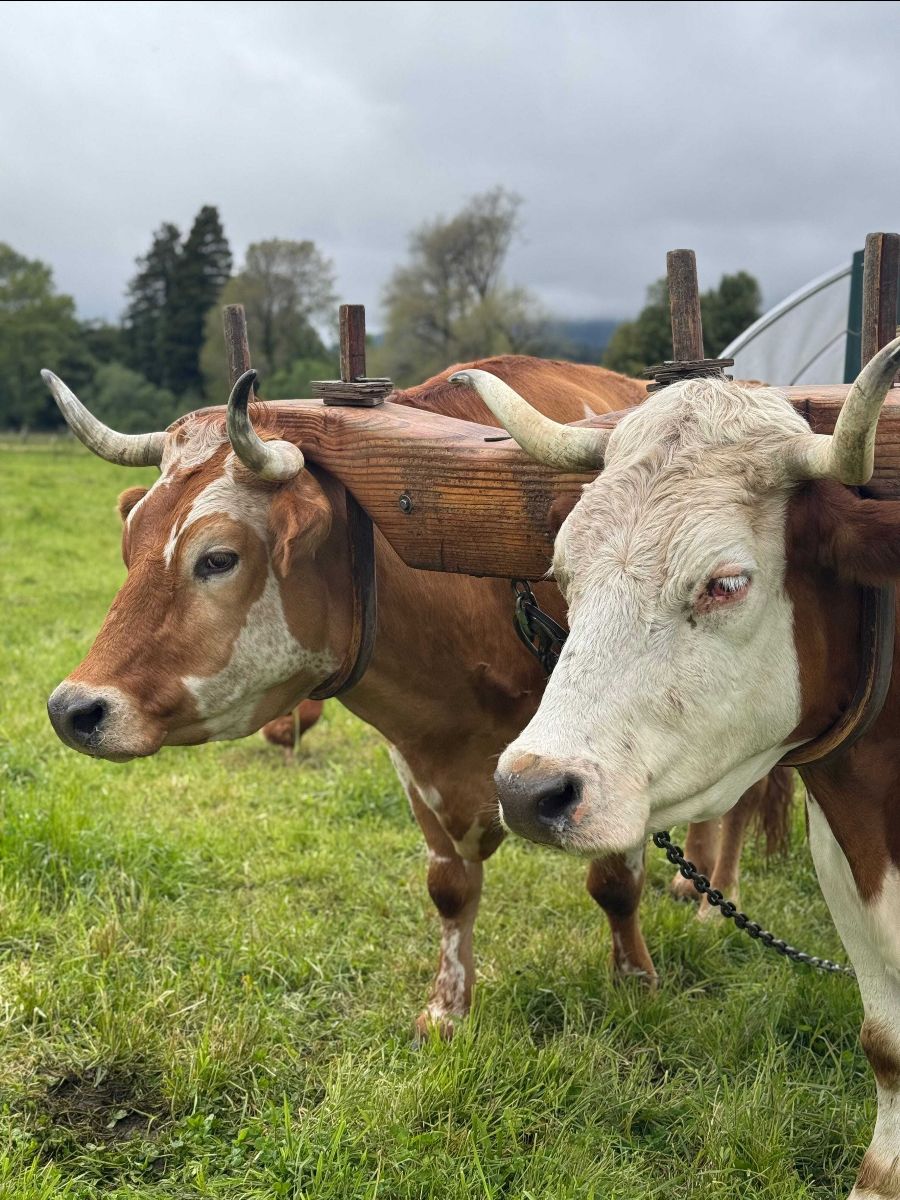
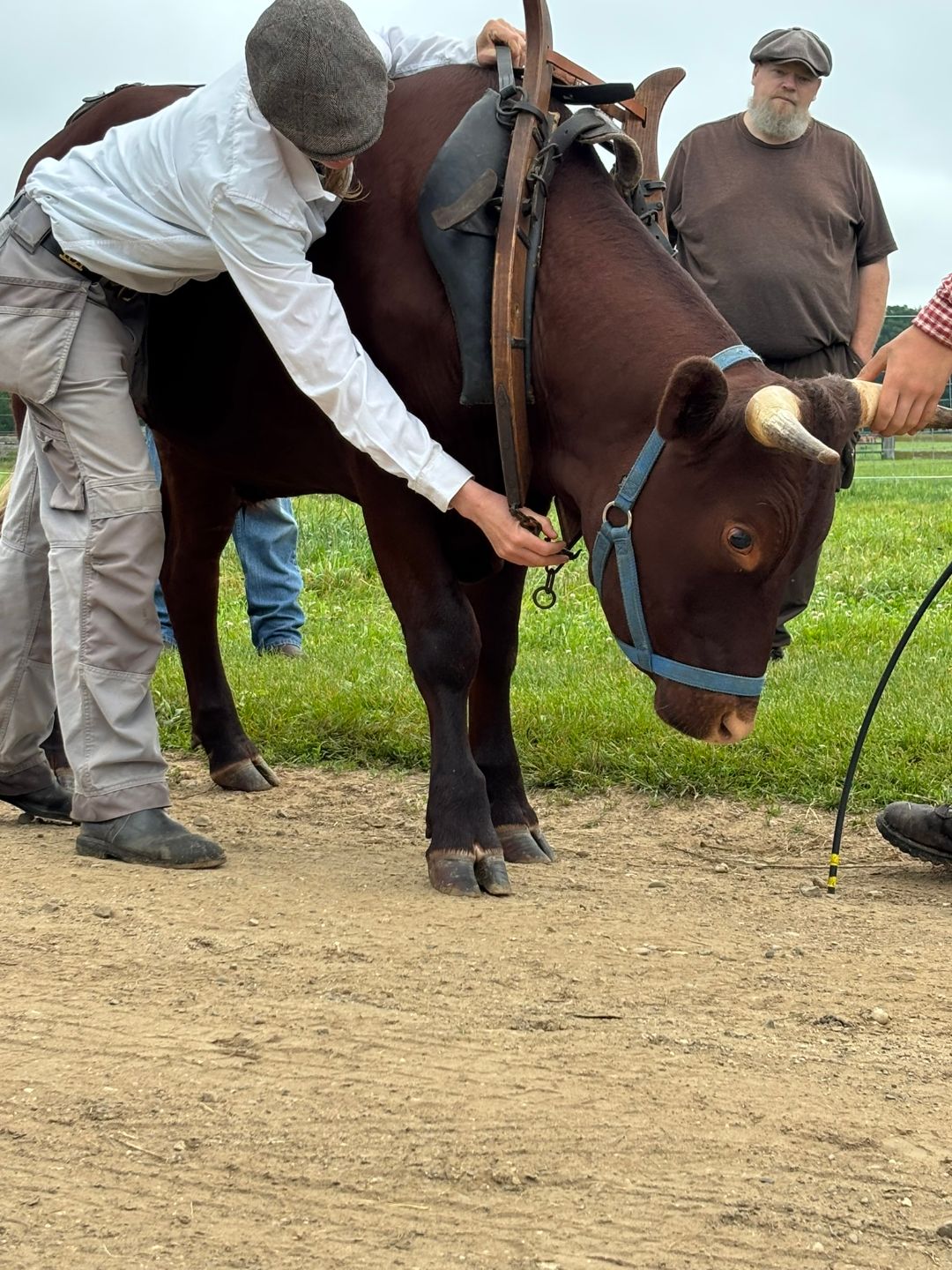
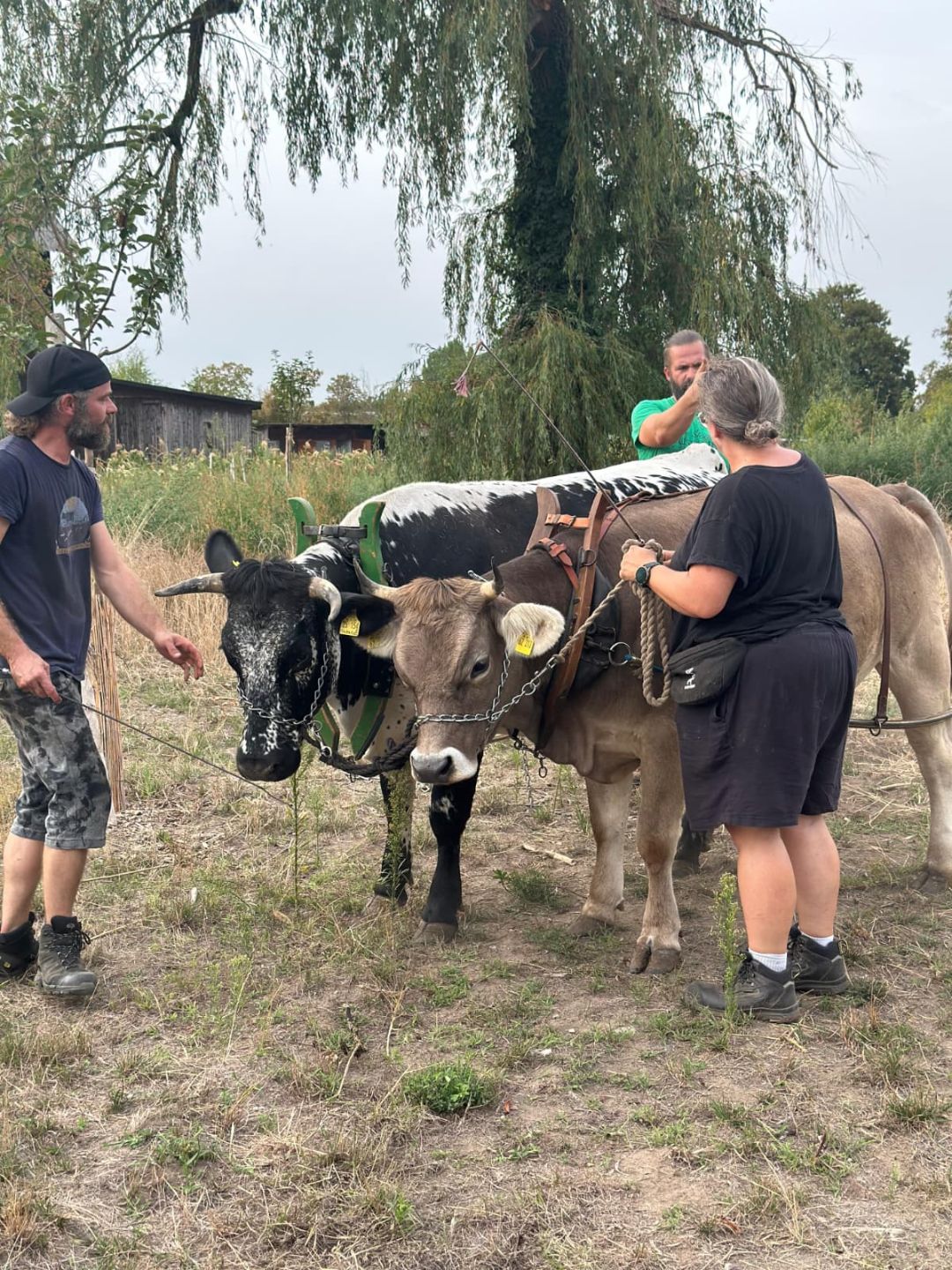
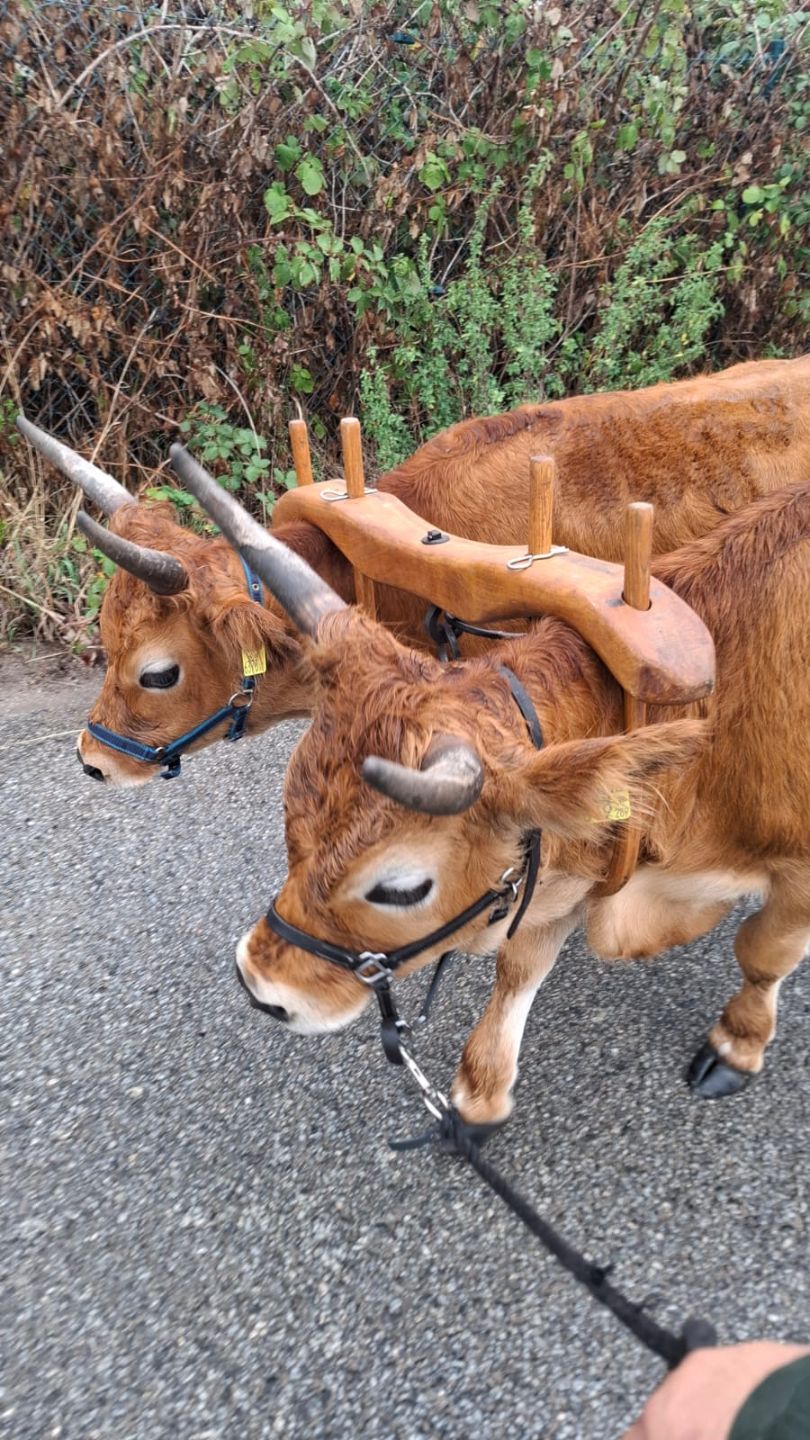
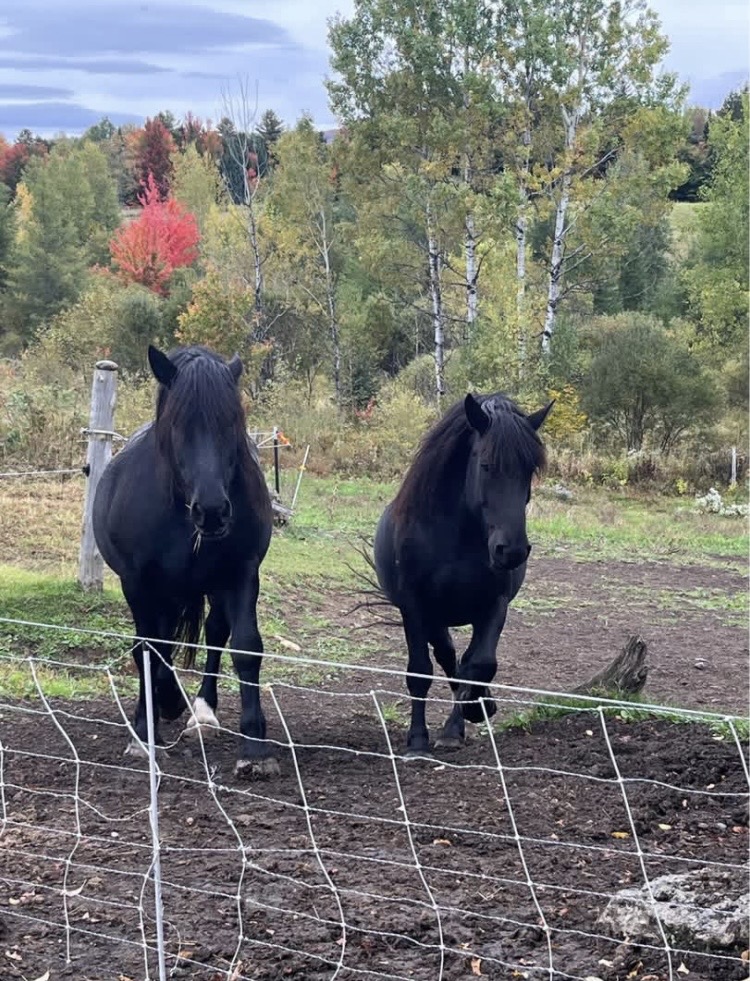
Madhu (Sanskrit for “sweet” or “honey”) and Chandra (the Hindu moon god) are my pair of four-year-old oxen. They are the most common dairy breeds in Sweden - half Swedish Red (SRB) and half Swedish Lowland (SLB). If I were to equate them to more common breeds, they are essentially half Guernsey and half old-version of Holstein. They are BIG, long-legged, people-loving sweethearts.
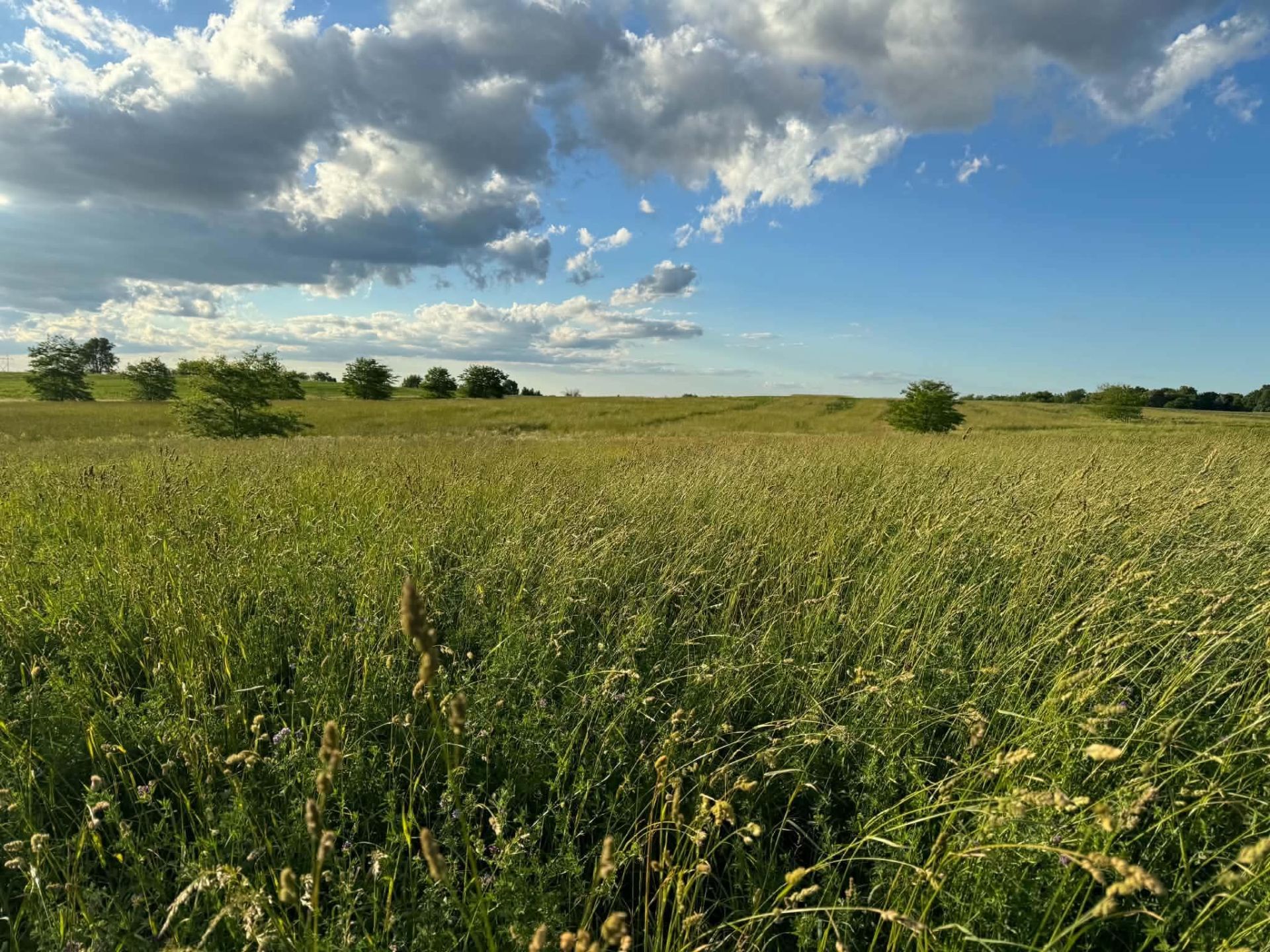
As an environmentalist, I have always been drawn to the benefits of using draft animals because of how lightly they tread on the land. Literally, their hooves compress the soil much less than tractors, but even in a much larger sense, their global “footprint” is far less. We don’t depend on fossil fuels, and there are no waste products to send to landfills. Their manure becomes the rich compost used to grow vegetables. I find it so poetic that even after my two oxen live out their natural lives, their bodies will simply return to the earth; the only evidence they will leave behind is the healthy soil they built and the metal buckles of their harnesses.
In truth, my small-scale production doesn’t actually require oxen - one donkey could probably get the job done. The most important point for me is to positively engage them in work. This benefits their physical health, their mental well-being, and, of course, they help me run our shared home.
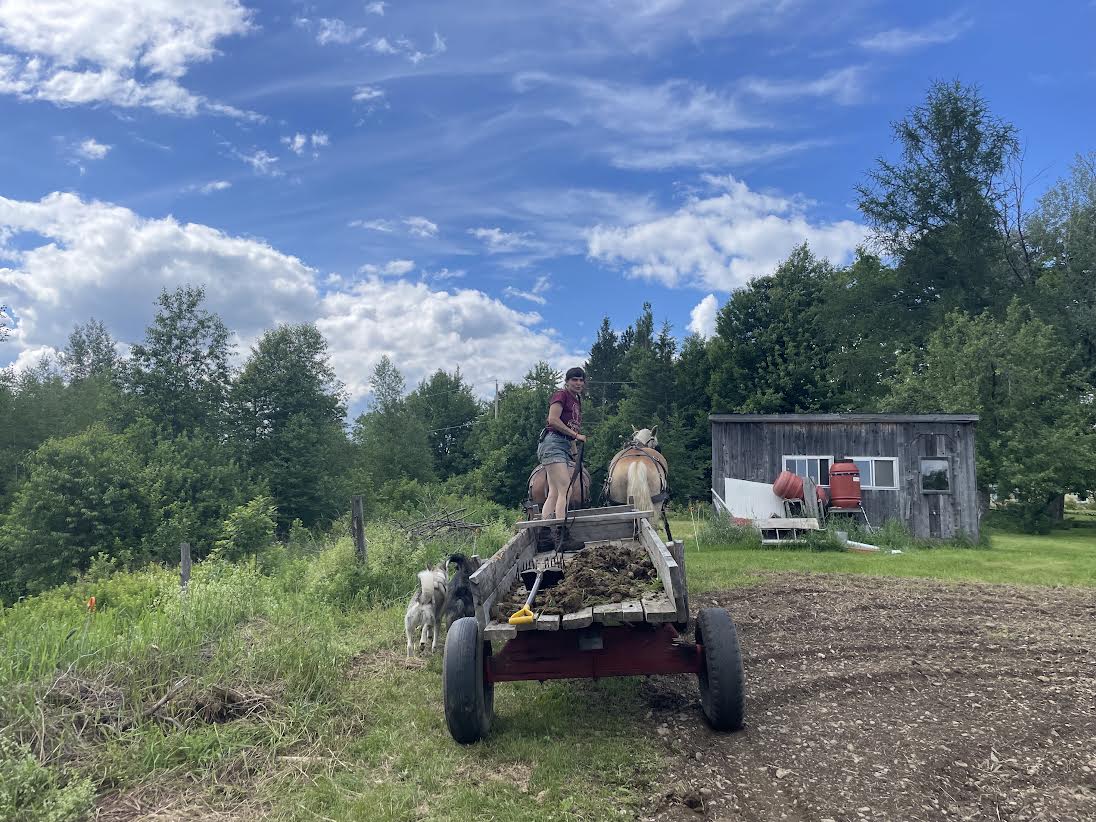
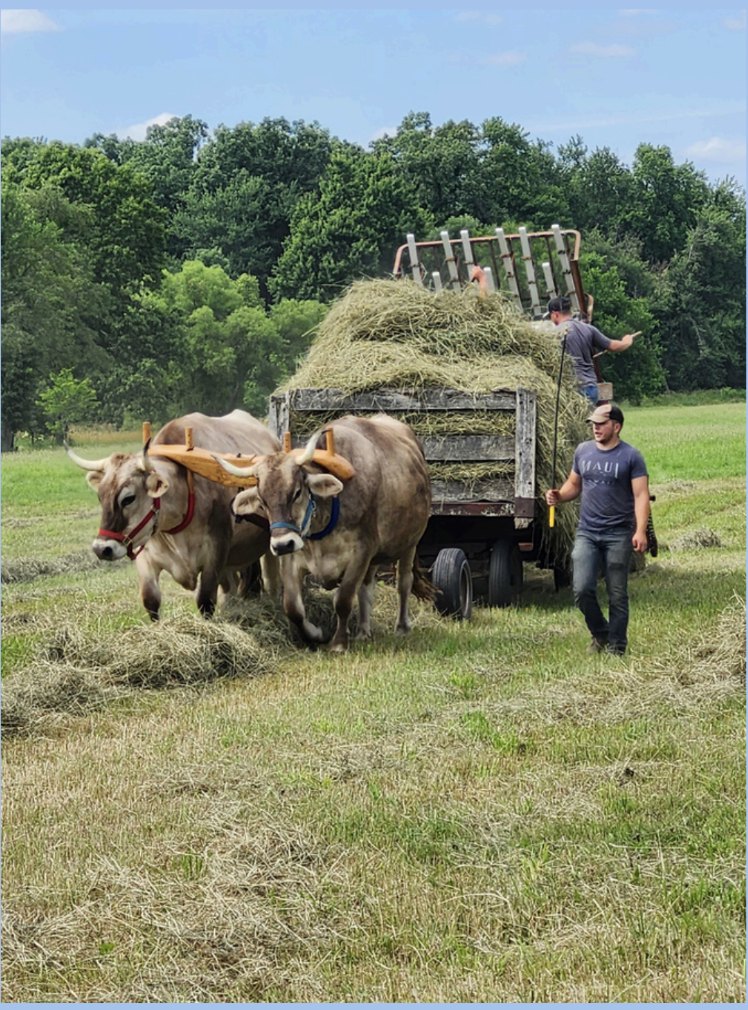
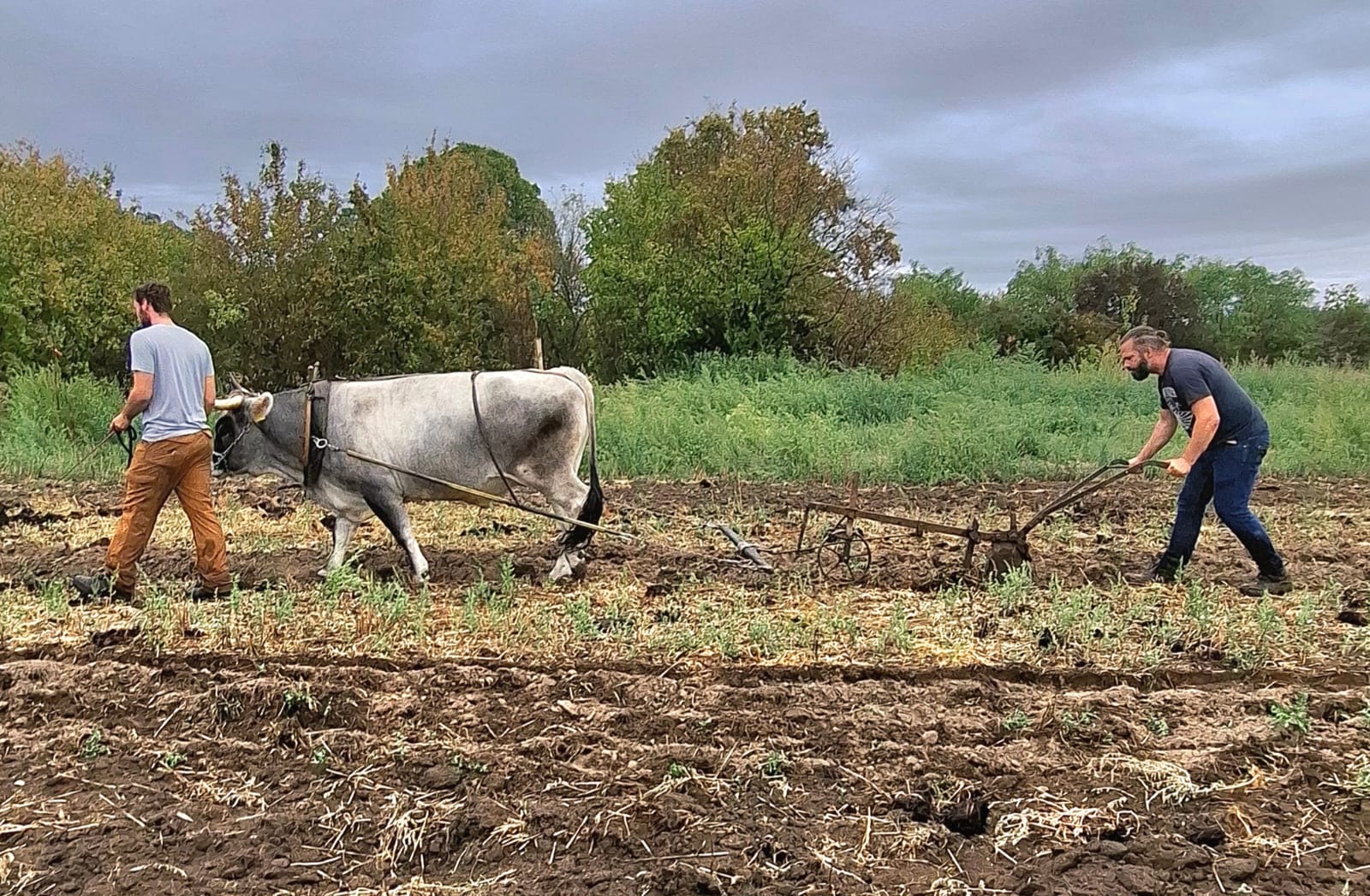
In the growing season, we harrow and cultivate vegetable beds, move compost around, and mow the pastures. In the winter, we plow the snow from the farm driveways, haul fallen logs home for firewood, and go for sleigh rides. Year-round, we use our small two-wheeled cart to do simple errands like buying sawdust and grains from a farm down the road, and emptying moldy food from the round bale feeder.
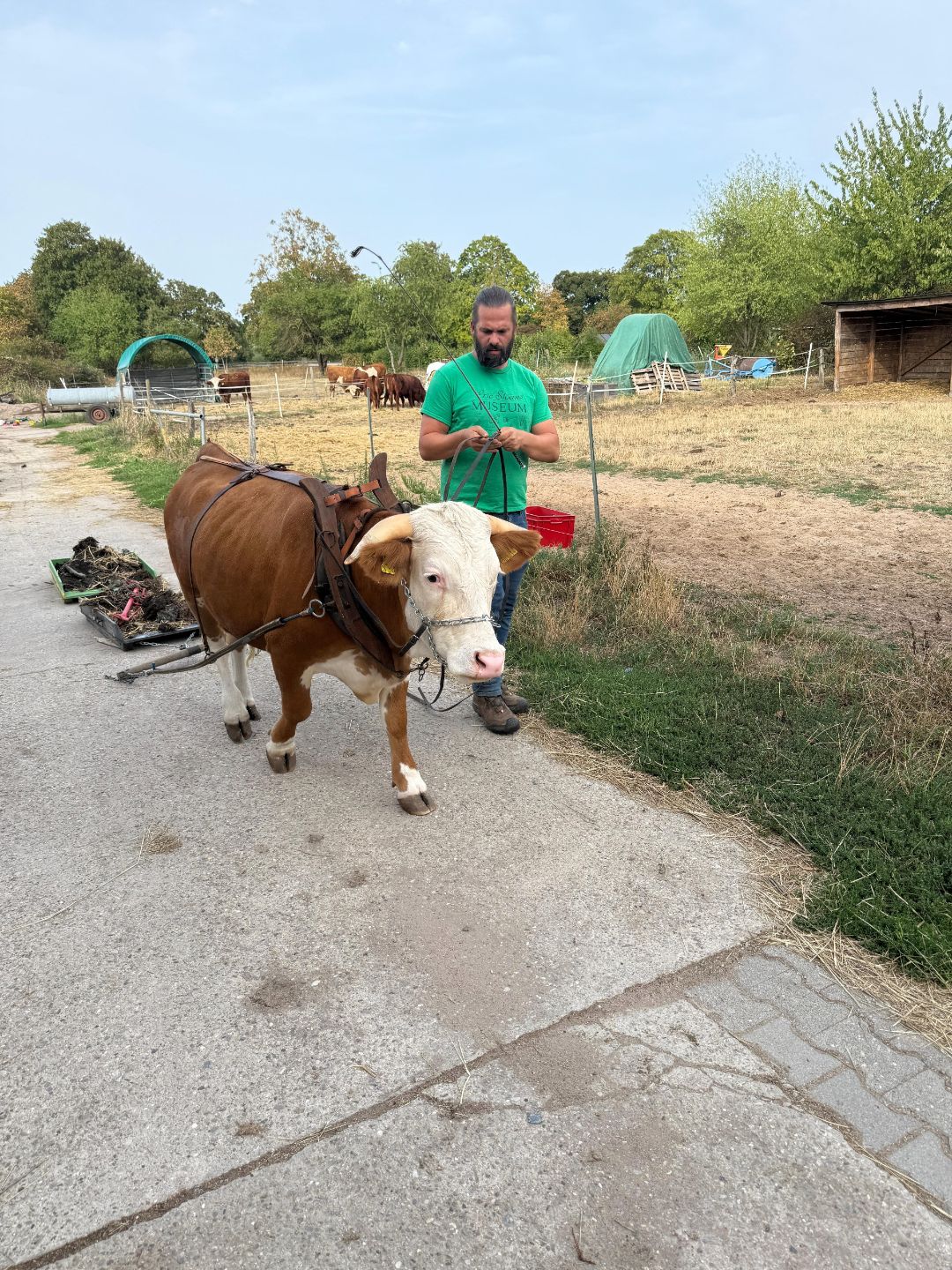
I almost always choose to work them as singles rather than as a pair. They are plenty strong enough alone, the tight layout of my gardens are better suited to one ox, and I naturally prefer connecting with one individual at a time. Each ox has his own personality and strengths, and by working one-on-one, I have the luxury of choosing the ox who best fits the task. If I want power, speed, or need to do repetitive work, I go with Madhu. When a task requires detailed movement, a slow and even pace, or frequent periods of time where I have to leave him standing to adjust the load, then I work with Chandra.
Their eagerness to work and the depth of their companionship have surpassed all my expectations. I am profoundly grateful to Madhu and Chandra for their patient and adaptable natures. They are my first team, and the three of us have learned our skills together, step-by-step. Even though we are certainly still beginners, every day they prove that oxen are not just a relic of a romantic past. I believe that together we are stepping forward toward a sustainable food system built on respect for the earth, respect for our local community, and, of course, respect for draft animals.
-Angela Patterson
A Passion That Persists
And People Who Light the Path
Hello from wintry Western Massachusetts. I hope this finds you cozy enough to sit and read this newsletter. I was asked to write about how I came to work with draft animals and how they fit into my life. Though initially a bit stumped, I decided to share in case it helps someone else find their way, or feel a little less alone in the process. My journey is very much a work in progress.
I was a horse-obsessed kid in a family that did not have horses. Thankfully, I had parents who became very supportive, along with access to a raggedy little barn in coastal MA, where kids earned their stripes through work and learned to ride. With no formal management, a bunch of us kids and a few adults cared for two full barns of school horses and some boarders. It was a pretty feral scene, which meant learning by doing — guided by a few seasoned mentors who instilled some old-school horsemanship.
From lessons and drill teams, to barn bullies, buddies, nerdy horse-care school projects, first aid, troubleshooting, trail and beach rides, tragedies and triumphs — I was all in. I got into showing, braiding, and hauling horses to shows, and always imagined my future would be with horses. I loved it with every ounce of my being. Eventually, though, I realized that a career in the hunter/jumper world I knew so well was not a viable path beyond junior riding years. When my horse was sold, that chapter closed. I deeply missed horses and sought them out wherever I could as I moved into adulthood.
Work and motherhood became the primary focus of my twenties. I made my home in rural Western MA, which embodies deep agricultural heritage — something I hadn’t known growing up on the coast. A family friend, Bruce Marshard, had been the exception: with a pair of Percherons, the only draft horses I knew as a kid. They logged, plowed snowy driveways with a V-plow, and dragged the arena at our county fair before our drill team performed. I admired those horses but never imagined working with drafts myself. At the time, the disciplines felt more rigid. It’s refreshing to see the versatility and interdisciplinary horsemanship today.
Living in Western Massachusetts exposed me to working farms that told stories — generational farmers and loggers whose cadence of speech felt like a portal to another time. Not lost, but still very much here. I also encountered first-generation farmers working with draft animals, including David Fisher right in my hometown. As my worldview took shape, each brush with draft power tugged at my horse-loving soul. It simply made sense, and steadily began shaping my dreams.
The hardest part was finding a pathway. As a working single mother, I wasn’t exactly a candidate for an apprenticeship, so the dreaming and longing became a slow burn. I took side jobs on farms and helped farmers with draft animals whenever I could. Discovering DAPNet and the Green Mountain Draft Horse Association felt like finding a magical realm full of inspiration, generosity, resourcefulness, and community. Even as a newcomer, I felt I had found my people, or at least knew I wanted to be among them.
Some key steps included an immersive workshop at Fair Winds Farm with Jay and Janet Bailey, and a GMDHA driving clinic with my Dad, where we met people who would become mentors and friends. I wasn’t sure I would ever truly become a teamster — coming in as a newbie and as a woman — but a few key people encouraged me to keep stepping up.
I said yes to nearly every invitation. Phil Warren welcomed me to tag along, hold the lines, and meet up at the Mid-Ohio Spring Sale, where we watched horses for days. I bought a teal draft halter to manifest my future horse, followed by a team set of Phil’s old leather harness. (Three days later, unknowingly, I was offered my horse!) Pat Palmer and Macey Ross welcomed me on their trash route and offered insight as I explored starting a business in my town. I devoured Lynn Miller books, nerded out at Field Days, drove solo to Horse Progress Days, and showed up wherever I could — even when I felt like an outsider, unsure if I would ever cross the threshold into truly doing this work.
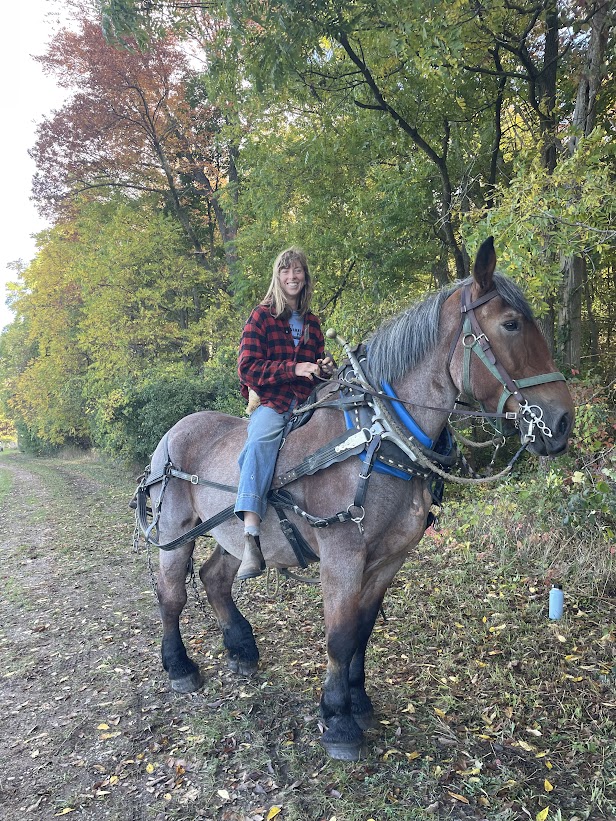
During the pandemic shutdown, space finally opened in my life. My daughter was older, my work paused, and mentorship became the next step. Through a DAPNet suggestion, I reached out to Pam Rickenbach and asked if I could volunteer with her herd. That winter, I spent countless days with her horses — routine care, fitting harness, ground driving, hitching, and long conversations about history and context. Eventually, Pam placed an incredible semi-retired carriage horse into my hands: a Spotted Draft named Tomahawk, or “T-Bird.” He became my first draft and showed me what I was made of. He knew far more than I did, tested me plenty, and over time we became a dream team.
That spring, I took a job with Carriages of Acadia. I couldn’t fathom how it would work — a teen, a horse, a dog, a home — but miraculously everything aligned. My horse and I spent the summer in Acadia National Park, where he was “on vacation.” I worked long days caring for and driving many teams for miles on the historic carriage roads, living in close quarters with coworkers who became mentors and friends. Emily and Mike Carpenter pushed me and believed in me. It was immersive, demanding, humbling, and deeply rewarding — my Draft Horse Practicum, an experience that would have taken years to replicate at home.
If there’s one takeaway I hope to impart, it’s the value of mentorship and community. These powerful animals generously place their trust in our hands, and there are always risks, even for lifelong teamsters. Seasoned allies make all the difference — for safety, success, and support when things go sideways.
Since returning home, my herd has grown and changed. Tomahawk was joined by Quinny, a young Belgian, Moonshine, a mini-hinny and Chief, a seasoned Percheron. We’ve done meaningful carriage work in our community. More recently, I’ve navigated profound loss — saying goodbye to two beloved older drafts, and facing injury and uncertainty with the younger one. These hardest parts are often experienced quietly, yet they are part of the promise we make to these animals who give us so much.
The momentum of beginning my work with draft horses was life-changing, and there is much I still hope to do. For now, I’m in a quieter, liminal space — uncertain of what’s next exactly. Still, every day I spend with these animals is a gift. Each challenge and success makes me a better horse person. Sharing these remarkable creatures with others who are drawn to them is deeply rewarding. They connect people to something larger — something felt rather than explained. The horses sure work their magic, whether I’m on the lines or on the ground. And this, I know, is at the heart of the work I will continue with them.
-Towner Smith
Welcome to the DAPMap!
This month we are introducing our DAPMap places in Germany!
NEW- Johann Oemler's Zugrinder- Johann works with an old German breed. Red Highland-Cattle. They are somewhat comparable to Devons. Johann started with logging firewood as a hobby. Johann is always willing to show and teach people the ways of working with draft cattle that I learned. You can contact them here.
Zugrinder Döring- We breed the endangered Rhaetian Grey cattle and harness the cows. We also have a team of oxen, which is used for all kinds of events (parades, medieval markets, farmers' markets, etc.). We enjoy training people and animals and offer internships. You can contact them here.
Kuhnweiler Hof- PhD written on modern draft horse use in organic farming; international networking; still engaged in science concerning draft animal use. Contact them here.
Arbeitspferde Höbel- Farming and forestry with Bavarian draft horses. Further we offer services with our horses: carriage rides, events for schools and groups. Contact them here
Starke Pferde- Magazine to promote the use of draft horses and other working animals. Visit their website here.
Want to be featured on the map? Fill out the form today!
This month the education committee is beginning to hone ideas from the December board retreat. Our current focus is on collaborating with partnering organizations. We want to understand their needs and goals, and creating open dialogue so that we can find new opportunities to work together and strengthen one another.
Events :
This month the events committee appointed work groups for specific needs such as coordinator roles and streamlining the form for potential field days teamsters and educators. Discussions were had on intensives and other topics of interest to bring to the table for this year's field days.
Executive :
Alongside ensuring that every committee is fulfilling its mission in support of draft animal power education, the Executive Committee has been very busy this month. We have been preparing interview processes for upcoming hiring, while ensuring alignment in our shared perspectives and expectations regarding contracting. We also worked on strengthening connections with past board members by creating a dedicated webpage and meeting with them directly. Following these discussions, we agreed to establish an Emeritus Committee to provide additional guidance and support in board decision-making.
We have also been reflecting on how the board continues to evolve in a rapidly changing environment and how we position ourselves publicly. Conversations have begun about transitioning to a new email system once we are more fully familiar with the CRM implementation, which has already proven to be highly beneficial.
Communications :
The Communications Committee has been busy getting ready to attend events in the summer of 2026. This year we are excited to have teamsters in the logging section of the Common Ground Fair. We are also working with new consultants on podcasts and an educational video series.
Finance :
We’re finalizing the 2026 budget and meeting with the bookkeeper at Morning Ag Clips (MAC), to streamline things between the network, the bookkeeper, and make sure all of our categories match to bring clarity on both sides.
It's February and that's the perfect time to become a DAPNet member or renew your membership!
Your support last year helped young people and their teams (as well as 300 other participants!) come to Field Days, paid for the web services that brought 4 DAPChats to community members around the globe, and revamped our website to facilitate more online programming.
By being a member you show us that this culture and community is important and relevant! Thank you for being a part of this community! We couldn't do it without you!
Members receive some perks as well - including 10% off an order of $100 or more at High Mowing Organic Seeds - just in case you've been dreaming of Not Winter.
Have you had a chance to listen to the Draft Animal Power Podcast? We have published several different episodes with interviews of people working with draft animals in the USA and Germany! Find us on any podcast listening platform and subscribe to be the first to know of a new episode!
Becky Frye, Julia Ramsey, Maggie Smith, Michael Glos and Donn Hewes examine each cultivator brought to Northland Sheep Farm for the workshop and assist each other in the task of repairing the hundred year old machines. Marathon, NY
It always amazes me that some of the horse equipment I use is likely close to 100 years old and is still working. My McCormick Deering cultivator(s) are no exception. This cultivator is very versatile and a pleasure to operate. I have tolerated a lot from my cultivator over the years just assuming that since it was old that I shouldn’t expect much more from it. Although not every individual machine has stood the test of time, some routine maintenance and repair can keep many working for another generation or more.
Last March a group of teamsters assembled at Northland Sheep Farm to spend two days working on cultivators. I brought two that I thought were fully functional and didn’t need much. Maggie Smith brought hers, that while functional, needed some work. Becky Frye worked to make one cultivator out of the half a dozen non-functioning “parts” cultivators she had parked outside.
As the wind blew and the snow fell outside, six of us worked together to take the wobble out of the wheels and make the many levers move again. Wheels were scavenged from parts machines and new springs and washers were installed. We even built a new metal tongue so the cultivator designed for larger breeds would work better with my smaller horses (Fjords).
Shovels and Discs set up for potato hilling.
Photo Credit: Michael Glos.
Michael Glos and his Norwegian Fjords hill potatoes with his recently tuned up sulky cultivator.
Photo Credit: Michael Glos.
We will be doing it again on April 4th and 5th at Northland Sheep Dairy, Marathon, NY and I invite you to join us. Visit www.teamsterschool.com for more information.
The Southeast Teamster Gathering would like to thank our following sponsors:
Branch Mountain Farm
Agricultural History Society
Turner Farm
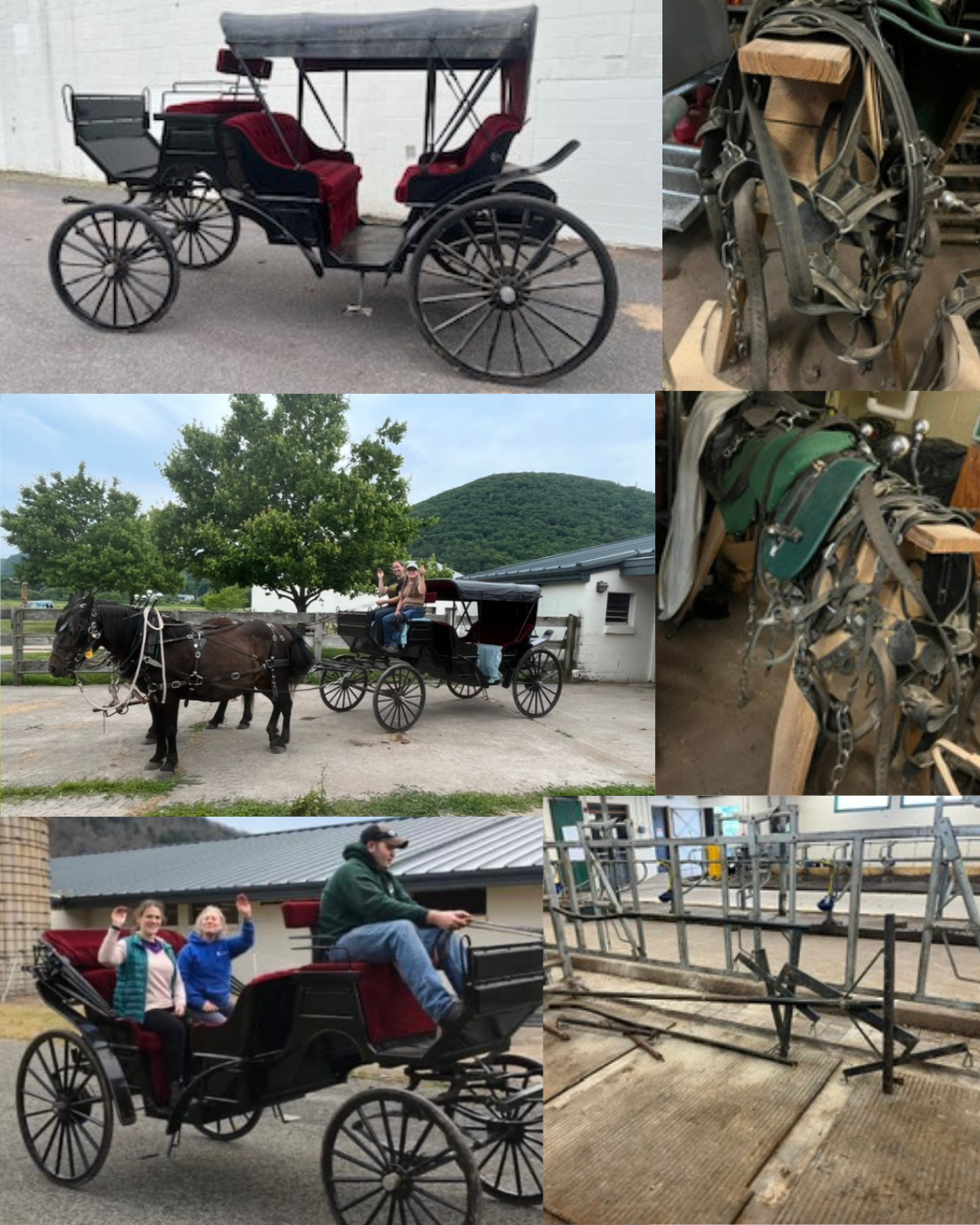
A. A. Carriage
The Berry Center Farm and Forest Institute / The Bookstore at The Berry
Speckled Hen Garden
Registration is open for this event! We are still accepting sponsorships. You can find out more here.
Troy with Bruno as a calf in 2020.
Photo Credit: Anna Knapp-Peck
Learning from Bruno- The Process of Training an Older Animal
By Anna Knapp-Peck
Bruno came into my life in December of 2020. It was the middle of the pandemic and that was a rough time for my kids, especially my son Troy. He’s a social guy and very active in sports. The loss of contact with his friends and teammates was hard. One day, while he was supposed to be doing remote work, he found a calf for sale on a buy/sell group. He asked if we could get him, expecting me to say no. Occasionally, I say yes, and we went on a two-hour road trip to get a weaned Holstein steer with poor conformation.
Troy taught Bruno to lead some and spent a lot of time with him during that first year. Then the pandemic was over, and life resumed. Troy finished high school and went to college and Bruno was left out to pasture. Eventually Troy moved into his own place, and the question of what to do with Bruno had to be decided. I acquired a four-year-old steer with no education. Bruno and I went back to school.
The first thing I realized was that working with an older animal needed a different approach than I use for training calves. The first few months were spent tying Bruno to a tree and putting the harness on and taking it off. He learned to be comfortable with the weight of the harness and trace chains making noise and bumping his legs. He began to wait at the gate, and liked being groomed and eating hay while wearing the harness.
After Bruno became comfortable with the equipment, we took walks around the pasture wearing the harness. These walks helped teach him and reinforce the basic commands, ‘whoa’ being the most important. I always work with him in a fenced area, if he gets away, he can’t hurt himself or others. He is a large animal, as much as I trust him, I am always cautious. I added a single tree on to the traces, so he would become accustomed to the noise.
Eventually I added a small car tire and then a small log. I didn’t use an ox goad or a whip while working with Bruno, just the halter. He became comfortable and a little complacent. He wouldn’t run away, but he didn’t always want to move either. I found that he likes horse treats, and I began using a practice dog trainer’s call luring. I put the treat in my hand, and he would follow the movement. After he pulled the log a distance he got the treat. That was just a training tool; I no longer use treats when I work with him. It was an effective method early on to get him to move forward.
With time I introduced the stone boat and the ox goad, and Bruno began the important work of clearing the pasture. We have no grass and feed hay year-round. The pasture was thickly forested when the fence was built, now the trees are dying, and the ground is covered with dead branches. I use Bruno to collect the branches on the stone boat and move them to a brush pile. The load is light for the size of the animal, but the work is meaningful.
Bruno at work.
Photo Credit: Anna Knapp-Peck
I went into this process with few expectations and Bruno has surpassed them all. He is the biggest ox I have, but he is gentle and willing. He always tries to do what I ask. For liability reasons I don’t plan on taking him to off-farm events, he isn’t comfortable with new people. I have realistic goals for his progress. Bruno has taught me more than I have taught him. With patience and creativity older cattle can be trained to do useful work.
Welcome to the DAPMap!
This month, we are diving into our DAPMap Club, Associations & Fair section!
NEW- Prommata-PROMMATA is a french non-profit organization wich support and encourage farm agriculture, through the development of modern draft animal uses , by carrying out research and innovation in Modern Animal Draft Agricultural Equipment (MADAE), by promoting animal traction, by offering as many people as possible equipment adapted to high-performance, agro-ecological farming, and by passing on our know-how through a wide range of practical training courses and international missions. You can contact them here.
B & B Carriage Service- We offer wagon rides to the local churches and other nonprofit organizations. Weddings, Anniversaries, and many types of farming... plowing, mowing and raking hay, harrowing, stalk cutters, etc. You can contact them here.
European Brabant Registry of America- The mission of the European Brabant Registry of America is to preserve and maintain purebred European Brabants through the use of existing registry information, ancestry tracing and DNA profiles of imported European Brabants and their offspring, thereby providing enthusiasts and breeders the ability to search for and register purebred horses in North, Central and South America. Contact them here
Broken Yoke Ranch- Cattle farm, Oxen for work/movies. Contact them here.
Want to be featured on the map? Fill out the form today!
Planning for this year’s Field Days is well under way! This month we are smoothing out details for tent rentals, a potential dance floor and other down and dirty details! Coordinators have been assigned to their roles and applications are open for Teamsters and Presenters to apply. If you have animals and or something you’d like to bring to the table at this year’s Field Days, you can fill out the form here.
Communications Committee
The Communications Committee is working out the details for the upcoming video project. We are reviewing applications and will begin to interview people for the role of web designer. The committee is also improving the process of putting out the newsletter, and planning for upcoming events at the World Draft Cattle Symposium and Common Ground Fair.
Executive Committee
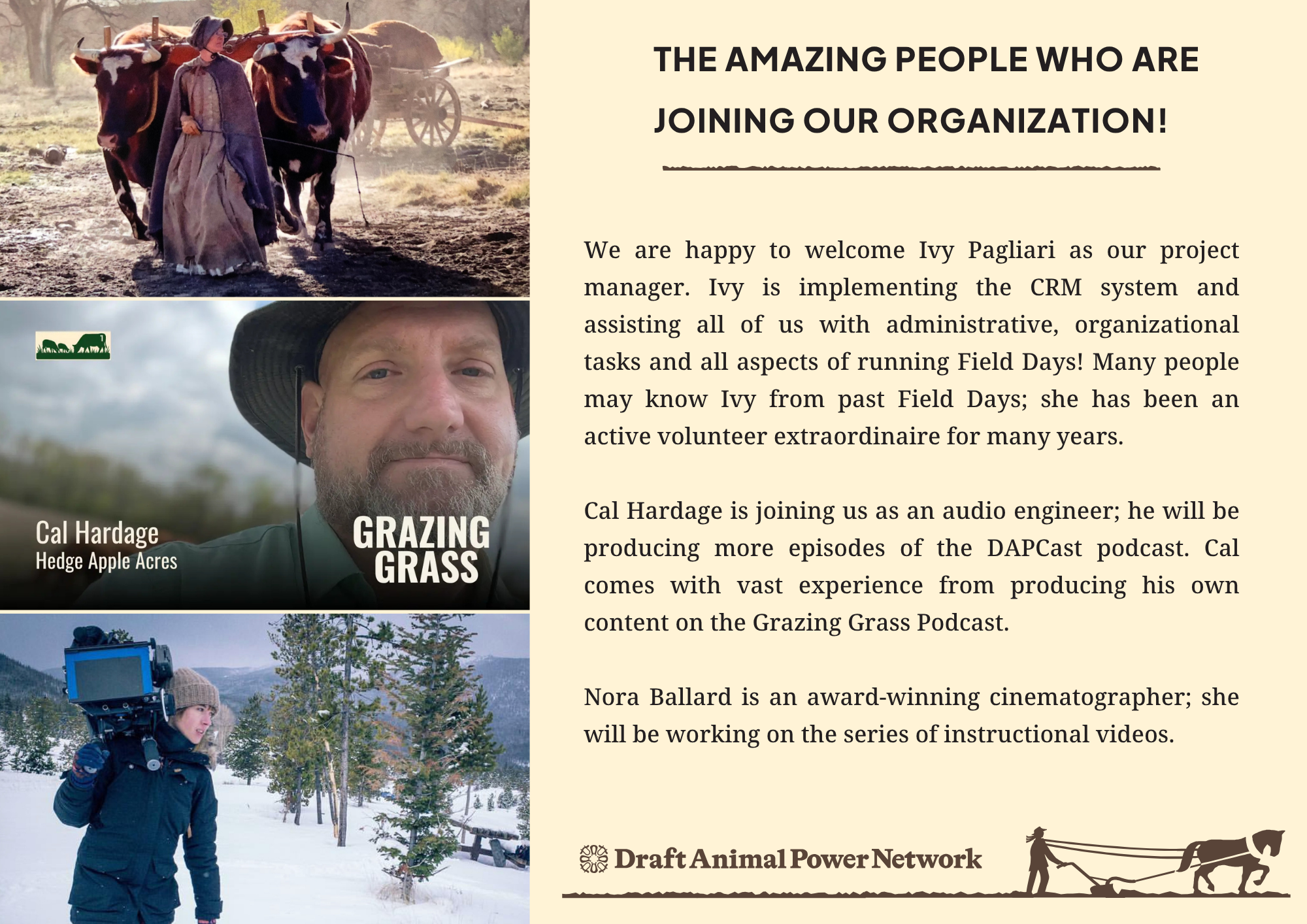
This month the Executive Committee hired three new people to work with us on various projects.
We now have a videographer working with us to produce innovative educational content featuring members of our organization. We also brought on a podcast producer who will help us put more episodes out there...we know many of you have been waiting for them impatiently!
We also welcomed a project manager who has already been putting a lot of work into making the organization better, especially when it comes to communications and backing up our shared drive (and the million folders and pictures in it).
While this organization already has many years under its belt, the amount of information we’ve gathered over time has grown exponentially. Because of that, a bit of cleaning up and organizing is definitely needed.
Education Committee
The Education committee is working on developing resources and support for member-led educational opportunities as well as exploring partnership opportunities with other educational facilities later this year.
2026 Draft Animal Power Field Days Art Contest!
ART SUBMISSION DEADLINE: April 23, 2026
Submit your art now, we love to see it!!
Classifieds
Horse Teamster / Farm Hand
Sanborn Mills Farm
7097 Sanborn Road • Loudon, NH 03307
www.sanbornmills.org
Position Overview
Sanborn Mills Farm seeks a highly skilled and experienced Horse Teamster & Working Farm Operator who brings their own well‑trained draft horse team. This mission‑critical role supports the farm’s agricultural, forestry, and educational programs through the safe and effective use of horse‑drawn equipment. The teamster also contributes to broader farm operations beyond horse work and serves as a core member of the Farm Team. Work includes field preparation, logging, transportation, and public‑facing activities such as wagon rides, sleigh rides, and special events, as well as routine farm tasks—garden work, fencing, animal chores, and seasonal projects completed without horses.
The ideal candidate demonstrates a deep commitment to animal welfare, strong situational awareness, and the ability to assess and respond to horses’ needs in real time. This role also supports the farm’s mission by teaching and mentoring students, interns, and guests in traditional horse‑powered skills. Experience in hay production, animal husbandry, and horticulture is required.
Key Responsibilities
Feed, water, and groom horses daily.
Drive draft horses for farm work, logging, wagon rides, sleigh rides, and special events.
Maintain tack and all related draft equipment in safe working order.
Provide a safe, enjoyable, and educational experience for students, visitors, and workshop participants.
Follow all safety protocols for animal handling and public interaction.
Assist the Farm Team with animal chores, garden maintenance, fencing projects, and hay production.
Perform grounds and seasonal maintenance.
Support cross‑department operations as needed.
Qualifications
Proven experience training and safely driving draft horses.
Working knowledge of both conventional and historical farming practices.
Ability to operate conventional farm and logging equipment (e.g., tractors, chainsaws).
Experience with animal husbandry for multiple species (chickens, sheep, pigs, cattle).
Mechanical and carpentry skills are preferred.
Ability to work outdoors in varied weather conditions.
Willingness to participate in rotating weekend coverage.
Experience teaching or engaging with the public through workshops, demonstrations, or outreach.
Work Environment & Schedule
This position is based on a historic, working farm that operates year‑round in a variety of weather conditions. Work is primarily outdoors and involves physical labor, interaction with animals, and engagement with students and visitors. The role requires comfort working around draft horses, farm equipment, uneven terrain, and active workshop environments.
The schedule varies seasonally based on farm needs, program activity, and weather. Flexibility is essential, including early mornings, occasional evenings, and rotating weekend shifts. Seasonal demands—such as haying, logging, and public events—may require additional hours. Sanborn Mills Farm maintains a “one mission, one team” culture where staff support one another across departments as needed.
Compensation & Horse Care Provision
Salary of $55,000 annually
Stalls and/or paddock housing for the draft team
Hay and grain consistent with farm standards
Routine veterinary care
Routine Farrier Services
Bedding
Participation in professional development opportunities
The provision of horse housing and care is contingent upon active employment and compliance with the Draft Horse Use & Liability Addendum.
The DAPCast!
Have you had a chance to listen to the Draft Animal Power Podcast? We have published several different episodes with interviews of people working with draft animals in the USA and Germany! Find us on any podcast listening platform and subscribe to be the first to know of a new episode!
Headed home from a month of working on ranches in Colorado and Wyoming, I was thinking of adding some light horses back into my herd of drafts. Midway through South Dakota I got a text from fellow DAPNet member Derek O'Toole; “Interested in a 2yo standardbred filly?”.
Derek was one of the first people to point out that drafts are a funny choice for a guy with a predisposition for adrenaline seeking behaviors. Although I have proven to him we can get pretty cowboy in the woods with draft horses, he got me thinking that maybe I should return to my roots a bit and find some new challenges. (One idea we threw around was adopting a bunch of mustangs and logging with them green broke!) I thought this standardbred might just be the midlife crisis I needed. Little did I know this standardbred would be the most calm level headed horse in my herd.
I was rushing my drive back east to get home in time for my wife’s birthday. Perfect, I'll give her a horse for her birthday. Well she wanted a dishwasher not a horse, but luckily for me she said I was welcome to get another one.
After some back and forth, Derek’s dad Steve delivered “Ada Shelby” to our farm early August 2024. Steve has spent a lifetime breeding pacers and his no-nonsense horsemanship showed through immediately. Ada already knew how to communicate with humans, which made my work much easier. Now I just needed to decide if I wanted to street-race local amish boys, or start hunting small game off horseback?
Ada had a lot of track time on a jogging cart and drove like a dream, so I decided to start working on saddle training first. On our third ride and second time on the trails, we flushed a flock of turkeys. To my surprise Ada likes hunting turkeys almost as much as I do. She asked if she could chase them and I agreed that sounded like some fun. She took off like a border collie puppy in the lamb pen. We had an awesome time and rode home looking forward to our next adventures.
Now it was time for her to learn how to lean into the collar and push a load with her shoulders. I started with the stone boat for hauling simple loads and we moved on to small logs. Ground skidding was a new sensation, but after a few minor hissy fits she started to enjoy the feeling of short skids with lots of breaks. We added wheels and mechanical advantage and she could haul a decent load.
“Standardbreds aren't draft horses.” Well…… the standardbred is the preferred buggy horse for most Amish and old order Anabaptist communities. Judging by my Amish friends, they collect buggy horses like my redneck buddies collect squarebody pickup trucks. Often over a 3:1 ratio. With more than 400,000 Amish in the US that makes for a lot of buggy horses. These horses regularly get hitched for farm and garden work as well. The standardbred is by far the most common draft horse in the US.
Standardbred horses are common, level headed, affordable, super friendly, and most often trained by no-nonsense professionals. Why aren’t more DAPNet members driving standardbreds? Yeah they are a little light, but that's a great excuse to get a few more! All I know is when I walk into the barn to grab a horse, I struggle to walk past Ada.
Raising My Own Team
By: Maggie Smith
Spring feels extra hopeful this year, with a colt running around kicking up his heels.
My draft colt Hank was born at 6am on Tuesday, March 10, 2026 after an unseasonably warm night. He was welcomed into the world from the start, by the weather, by the intense interest of his future herdmates, and by my friend Liz Brown and me, who carefully attended his delivery by the veteran Percheron mare, Lady.
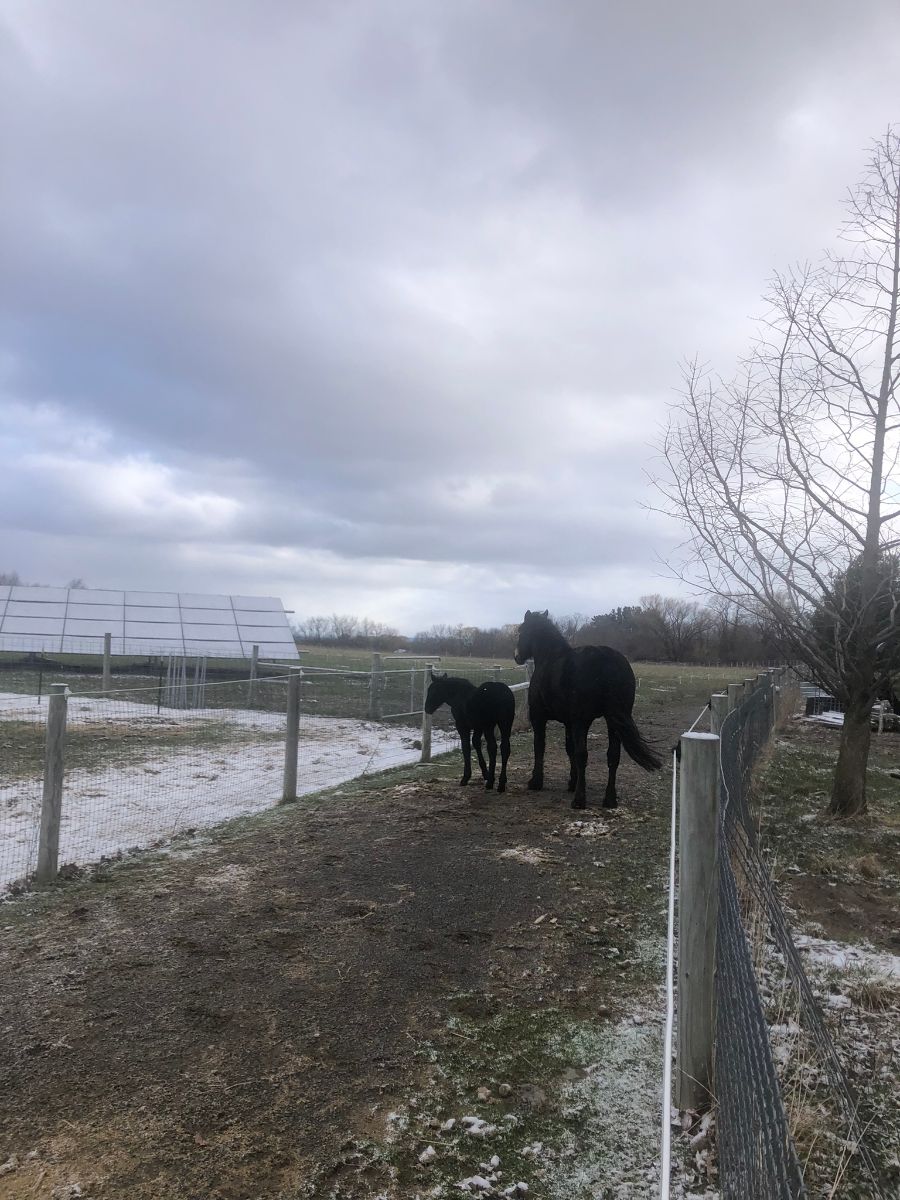
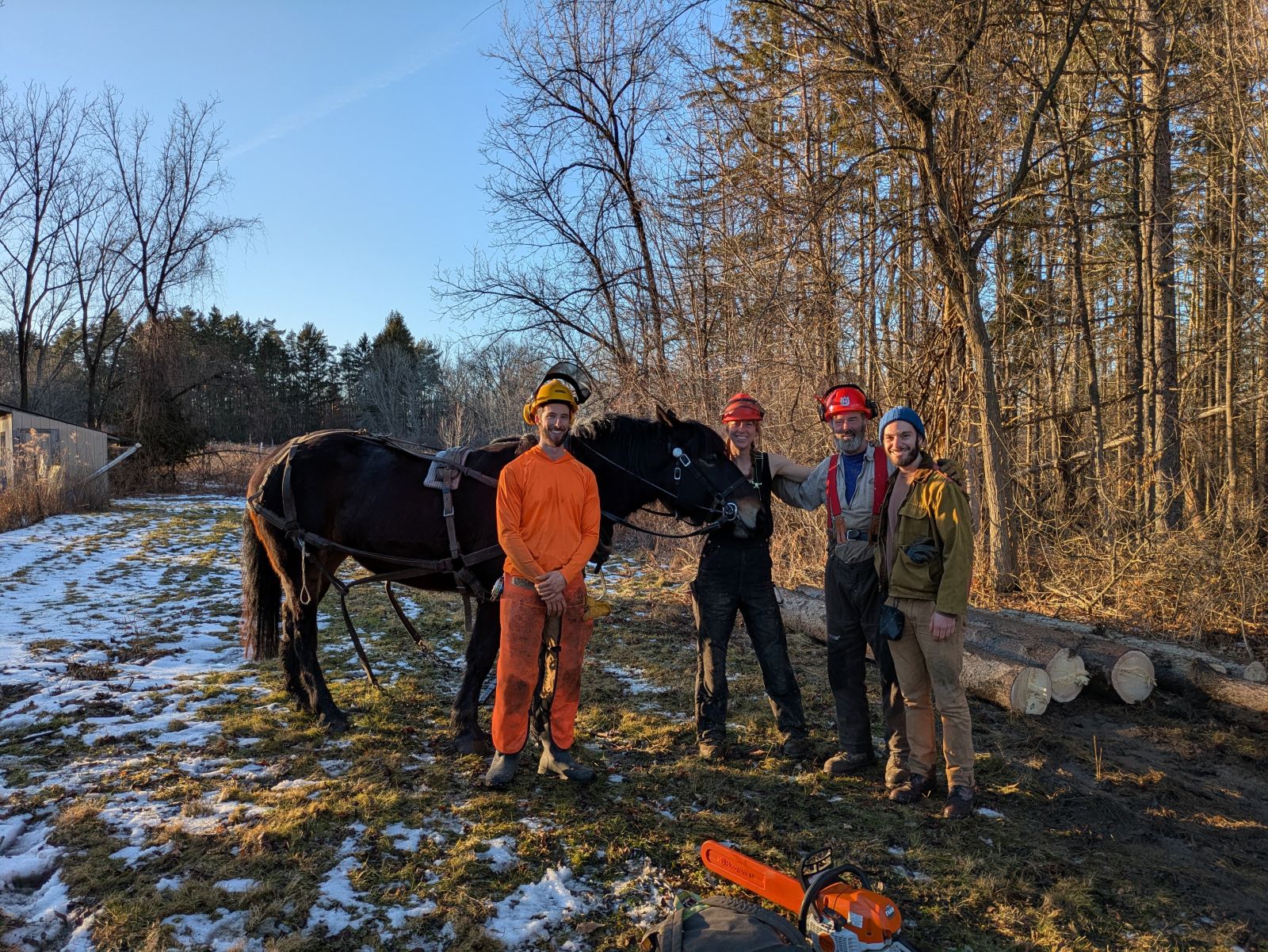
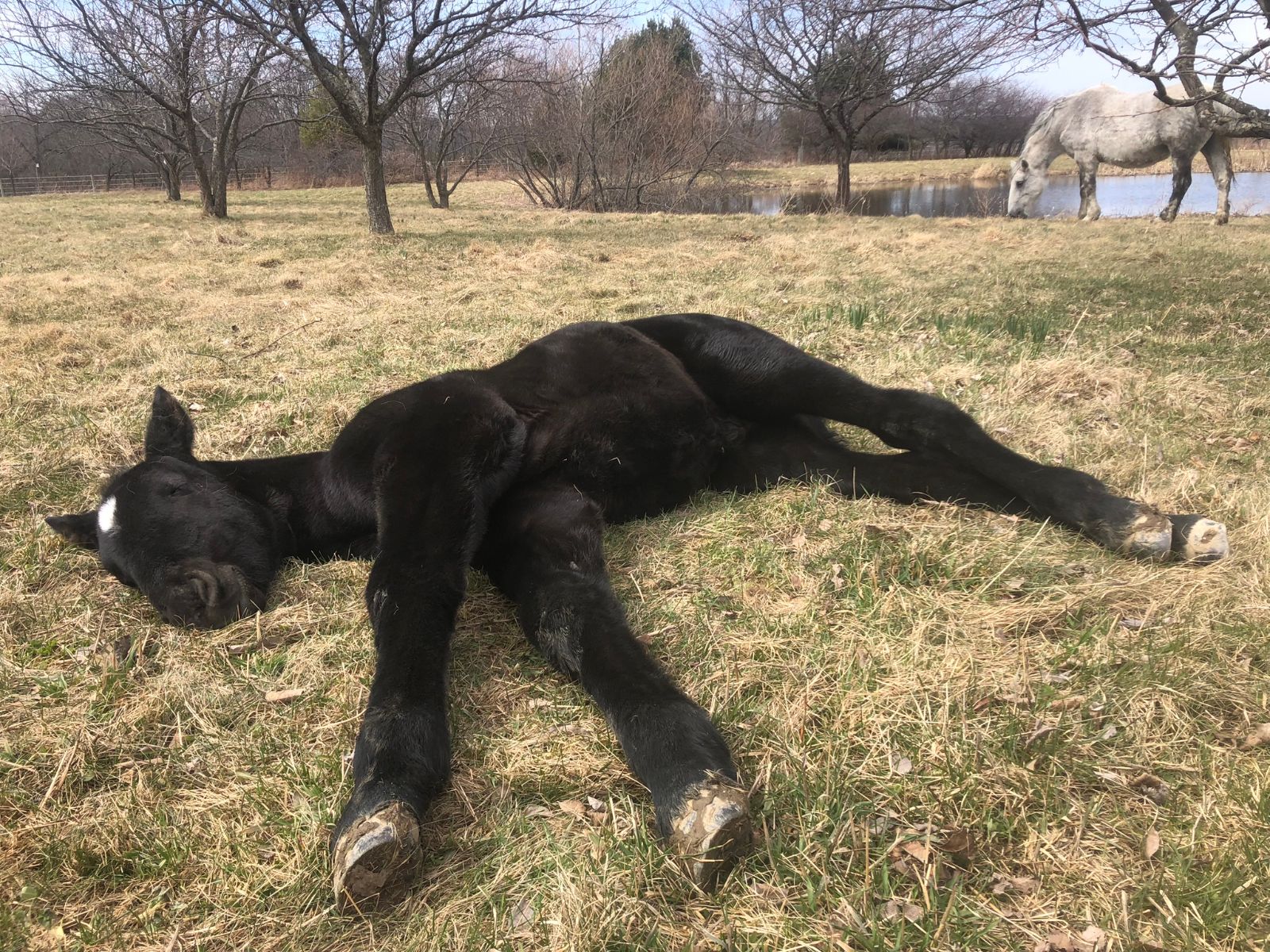
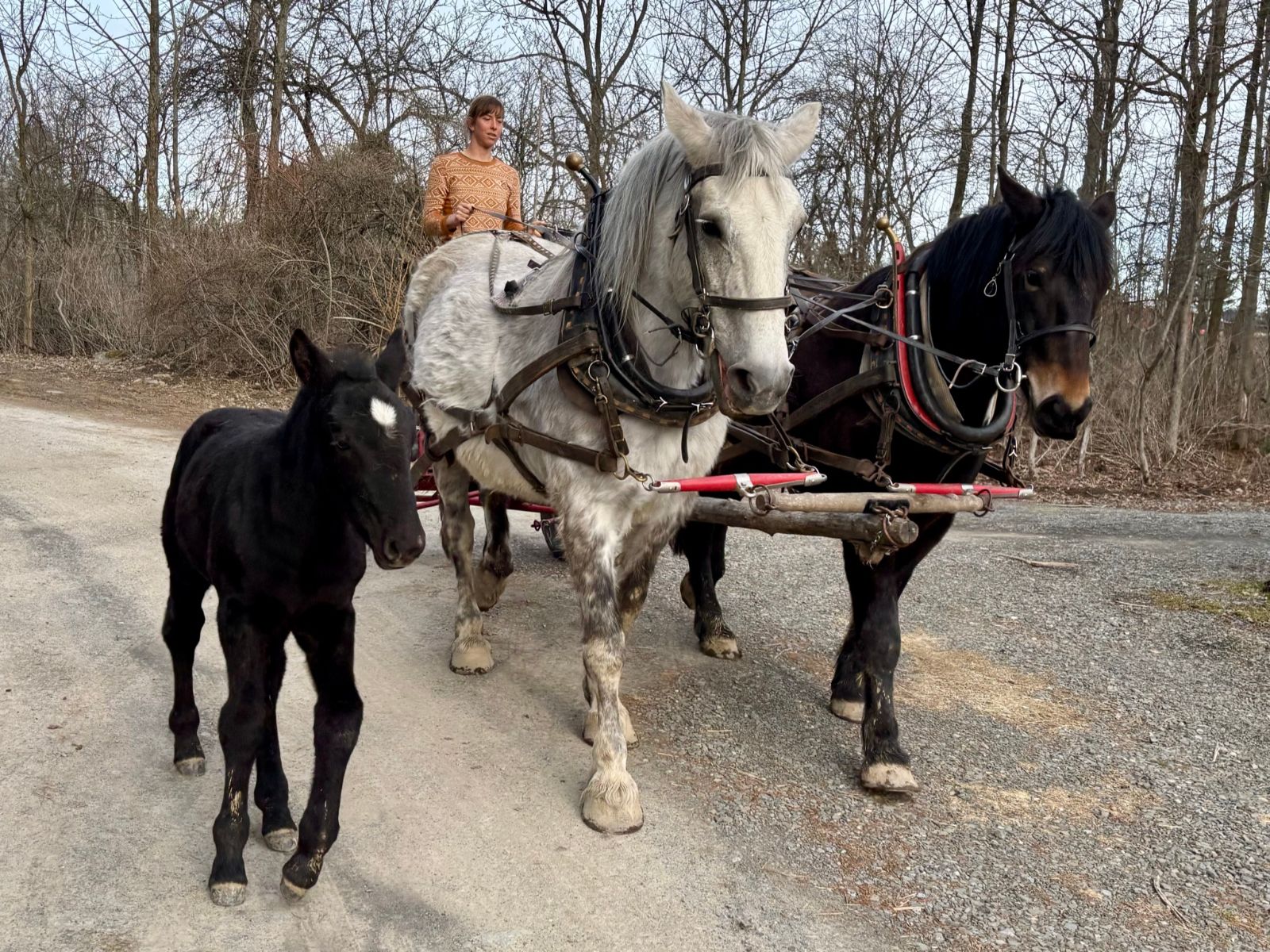
At five weeks, his charmed existence continues: from evading getting shocked by the electric fence despite my attempts to teach him what it means, to countless naps flaked out on snow-flattened, sunwarmed grass. His windswept legs have straightened out, and the muscles are rounding out his little body, so incredibly angular when he was born. There was a moment this morning that took my breath away. The bedded pack in the nursery stall is getting pretty thick, and he must have jumped out into the larger barnyard because I found him at morning chores, quietly surveying the valley with his big sister, Hazel. Since he hasn’t been trained on single-strand electric fence yet nor fully integrated with other three horses in the herd (which has run-in stalls emptying into a barnyard that opens onto a mile-long narrow circular track), my first impulse was to stress – but something about the way they stood together, Hank looking so tiny and yet so calm next to his fully grown, three-and-a-half year old full sister, stopped me in my tracks. Hazel was gently and calmly resisting the advances of the huge curious gelding Reno, and Hank was completely comforted by her presence. Lady, who could see her offspring from her vantage point in the stall, was watching them but not at all distressed. It was as if she knew this was the future team. Hazel and Hank together, that’s the whole plan. Might as well start now.
I didn’t always plan to raise my own team. When I first fell in love with driving horses seven years ago, I thought my first team would be an older, experienced pair. I tried a couple different combinations of older horses for a couple years, hovering around that holy trinity of experienced, affordable and sound. This was a great learning experience for me, teaching me about what’s available and giving me numerous opportunities to grow my skills as a teamster. By the summer of 2023, I was ready to let myself be talked into taking on Hazel, who had been born on the farm in late summer 2022. I still worried I would screw up her training terribly, but my friend and mentor Donn Hewes assured me he’d help when I wanted it and reminded me how much time I had to get her ready to work. Importantly, I also knew I had the ever-gracious Liz Brown, on whose farm this was all taking place (I live there in a tiny house, just through the trees from the barn), whenever I needed an extra set of hands.
Fast-forward two years of playing and training, tears and joy as that wonderful filly grew into a powerful mare and I figured out that two steps forward, one step back is the name of the game. Hazel was dragging sleds and things around the farm by the winter, and it was so much fun that we bred Lady to Northland’s Red Oak again last February. Fast forward another year, and Hazel skidded 4000 board-feet of spruce in her first real log job this January. She pulled with so much heart. It was one of the most rewarding experiences of my life, that first job off the farm. And 348 days after she was bred, the indomitable 23-year-old Lady delivered little “Hanky Panky.”
My dream is for Hank and Hazel to be as strong a farm team as they are in the woods, and good in public too. My philosophy is to integrate them as deeply into my life as I can, and make them earn their hay all year round! I work as a natural builder, and my coworkers are also excited to market horse logging to our customers. I grow ½ -1 acre of dry beans for a local bean company every year. This year’s farm team will be Lady and Hazel, and by the time Hank is ready to help, his mother will be ready to retire for real. I’m casually looking for a good people-mover, so we can give rides at public events. Looking farther ahead, I can’t tell you exactly what my life will entail, but I can say Hank and Hazel will be at the center of it. Raising your own team: it takes a while, but it sure is fun!
FUNDING AWARDED ...
Over $1 Million in Grants Awarded to Vermont Farm, Forest, and Food Businesses and Organizations
The Working Lands Enterprise Initiative continues work to support and stimulate Vermont’s agriculture and forestry industries
PUBLISHED ON
John Smolinsky of Earthbound Forest Services. (Photo provided)
Listen
MONTPELIER, Vt. — The Working Lands Enterprise Board (WLEB) announces 34 awards totaling $1,047,320 to Vermont businesses and organizations in 2026. The award categories are:
Service Provider & Producer Association Grants – $370,000 awarded to 10 businesses and nonprofits. These grants fund service providers and producer associations who work directly with working lands enterprises to support them as they grow, pivot, and adapt to an ever-changing marketplace. In 2026, grants will support apprenticeships for future foresters, farm and forest business advising, a Vermont specialty foods tradeshow, and more.
Business Enhancement Grants – $647,320 awarded to 19 businesses. These grants support farm, forest, and food businesses using Vermont-grown products with market development, infrastructure, equipment costs, and workforce development to advance their businesses. In 2026, grants will support cheese cave improvements, egg washing equipment, new maple taps, a timber processing forwarding wagon, a sawmill lumber carriage drive, and more.
Trade Show Assistance Grants – $30,000 awarded to 5 businesses. These grants support agricultural, food, and forestry businesses with exhibiting and selling their products at trade shows targeting out-of-state buyers. These matching grants partially offset the expenses associated with exhibiting at trade shows, which provide excellent opportunities to network with wholesale buyers and expand into new domestic and international markets.
“These investments help businesses increase sales and efficiency while growing the Vermont economy, making it more affordable and strengthening our rural communities,” said Vermont Agency of Agriculture, Food & Markets Secretary Anson Tebbetts.
A key element to the Working Lands impact is the programs’ ability to flexibly respond to businesses most pressing needs. In fiscal year 2026, demand for grants far exceeded the available $1 million in funds. Across these three grants, 169 applications were received totaling $6,098,779 in requests. This significant demand meant that many worthy projects were not funded.
The Working Lands Enterprise Initiative receives an annual allocation of $1 million and sometimes receives additional special funds as determined by the annual state budget. Applications will re-open in the fall.
Visit https://workinglands.vermont.gov to find out more about the application process, read stories about grants, and learn about the program’s impact.
The Working Lands Enterprise Initiative (WLEI) and governing board (WLEB) were created by the Vermont Legislature in 2012 to stimulate economic development in the agricultural and forestry sectors. WLEI is a collaborative effort between the Vermont Agency of Agriculture, Food, and Markets, the Vermont Department of Forest, Parks, and Recreation, and the Vermont Agency of Commerce and Community Development.
—Vermont Working Lands Enterprise Initiative
Welcome to the DAPMap !
This month, we are diving into our DAPMap, Farm Production section!
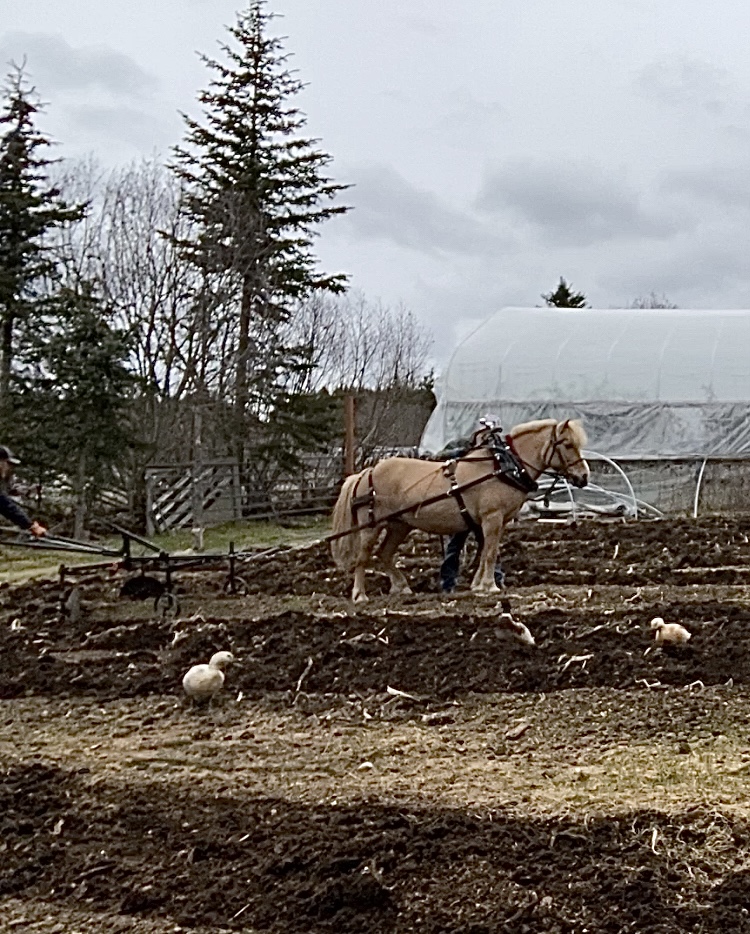
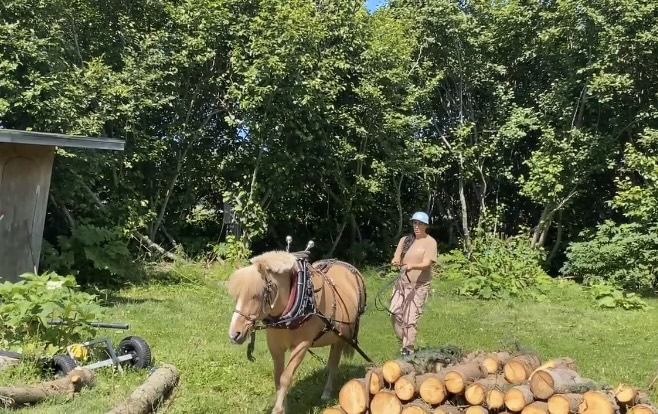
NEW- Earthborn Garden - I raise vegetables and herbs for market. Previously, I farmed with a team of Fjord mares. Now that they have passed on, I am training a Haflinger colt to hopefully help out in the garden and around the farm. You can visit their website here!
Angela’s Farm- We are a small market garden that sells organic vegetables at the Stockholm Farmer’s Market. We work with our two oxen for cultivating, harrowing, moving manure, snow plowing, moving logs, and other various farm chores. You can contact them here.
Wingnut Acres Inc- We are a diversified operation that raises grassfed beef, non-GMO pork, pasture raised and chicken. We also raise bees for raw honey and produce maple syrup. We use organic/sustainable practices, but are not certified organic at this time. We have a team of Belgian geldings that we use for jobs like mowing pasture, raking hay and pulling logs. Contact them here.
Tender Soles Farm- We are a MOFGA certified organic, horse-powered vegetable and flower farm in Richmond, ME. We currently have two draft horses that do all the tillage, mowing, and cultivation on our 45 acre farm with 4 acres in active production. We are currently ramping up to make our own loose hay with all horse-power. Contact them here.
Red Gate Farm, LLC- We are a horse-powered, sustainable permaculture farm, offering educational opportunities in Southern IL. We raise meat and produce, occasionally offering food for sale, and practice forest-improvement through animal rotations and selective logging with horses. We offer a variety of tours, clinics, internships, and more. In addition, we are TIP trainers for BLM wild mustangs and burros, and frequently have horses available for adoption. Contact them here.
The Communications Committee has been busy fine tuning the Newsletter; each edition is better and more efficient. We are still working on logistics for upcoming events at the Common Ground Fair, and World Draft Cattle Symposium. There is also collaboration with Nora Ballard to get the outline for the first video completed.
Events:
This month the Events Committee took data from a survey about potential new intensives as well as the information provided in folks’ interest forms, both with great feedback! The schedule for the weekend has begun forming; tentatively and carefully laid out with many edits to come.
Finance:
The finance committee is reviewing budgets and pricing for upcoming 2026 events. We’re thrilled to report that over 90% of our members donate to cover credit card fees on transactions. This is a big deal for a small organization, thank you!
Education:
The education committee is working with Tillers International to collaborate on future workshops geared toward youth teamsters.
Executive:
This month the executive meeting was overlooking some important ongoing projects . The organization is continuing to transition into Google Workspace and Neon One, including using draftanimalpower.org email addresses, reorganizing files, and improving event and membership management. The board also discussed increasing communication with members through quarterly meetings and more social media and e-blast outreach. The social media team is coming up with a better plan to make these update happen. Committees shared updates on fundraising, educational resources, the podcast, and planning for Field Days and other upcoming events.
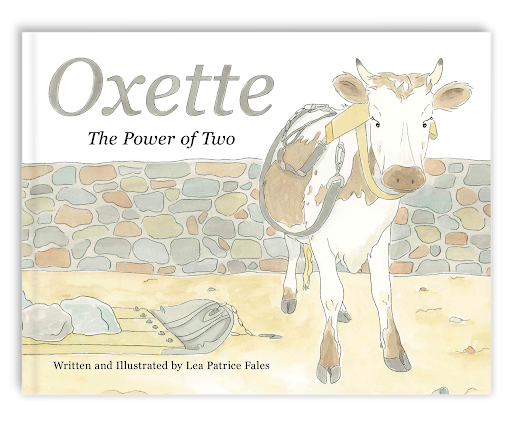
Pasture Pine Press has released a new children's picture book that may interest those who love working with cattle and want to share that with the next generation. Oxette: The Power of Two is a 32-page, full-color book, written and illustrated by Lea Patrice Fales. In the story, a small cow named Virginia has a very important job. She is a draft animal that helps with chores on the farm. Late in the spring, it is time to clear the fields of stone. While the farmer picks the rocks, Virginia pulls a stoneboat behind her. That is, until they find a stone too big for them to move. Will Virginia ask for help? Who could possibly help her?
Have a draft animal related event you’d like to see on this calendar? Fill out our Events Submission Form and our volunteers will add your event to our calendar!
Draft Animal: Oxen Basics
April 25th and 26th at Sanborn Mills, Loudon NH
Are you considering an oxen team for your farm but wondering where to start? Join us for a two-day workshop to learn the things you need know about bringing a pair home, finding the right equipment for them, and learning how to work them. Our experienced instructors will train you in a safe and productive environment. Taught by Ray Ramsey and Tyler Allen. $288. Visit https://sanbornmills.org/farm-garden/draft-animal-oxen-basics-4-25-26/ for more information.
"Relationship-Based Cattle Training" - a one-day course with Anne Wiltafsky
April 26, 10:00 a.m. to approximately 4:00 p.m. Lorsch, Germany
The focus of this one-day course is the relationship with the animal. Anne Wiltafsky explains her method of cattle training and illustrates, through targeted exercises, how to improve trust and respect—the two cornerstones of a balanced and resilient relationship with the animal. Only when both are present will movements towards humans function as well as movements away from humans. Participants will learn massage techniques and how to be mindful of their personal space. Course fee: €100 per person, including meals and course materials Registration: c.kropp@kloster-lorsch.de — Registration deadline: April 20
Women and LGBTQ+ Teamsters Gathering 2026
May 2nd and 3rd at Northland Sheep Farm in Marathon, NY.
This event is free to attend and loosely structured- we intend for this weekend to be about sharing our ideas and skills with each other.
Any questions can be emailed to: WQTGathering@protonmail.com
Beginning Teamster School
May 9th and 10th. Northland Sheep Dairy, Marathon, NY
This hands-on program will focus on putting the animals and teamsters to productive tasks. Small ratios of students to instructors ensures lots of participation and learning. We will mix new students and returning students. This program will include horse handling and care, harnessing and driving, How to safely hook to logs and other farm equipment. We often do seasonally appropriate work if the weather permits. We can teach each other all the basic skills, and work together to learn and have fun. $300 per new student. $150 for returning students.
May 14th and 15th at Tillers International, Scotts MI
In this two-day class for beginners, experienced teamsters share draft horse handling, hitching, and driving skills. Participants begin by building confidence with the gentle giants in the barn, brushing and harnessing. Handling skills are then honed with simple ground driving of a single horse progressing to plowing and other field work with a team. Taught by Rick Eshuis. $410 DAPNet members get 10% off.
Are you ready to put your team or a team of oxen to work on the Farm and gardens? Then this is the workshop for you. Spend two full days with hands-on experience learning about plowing, discing, planting, cultivating, and cart work. Students will gain a working knowledge of draft equipment and a needed maintenance schedule to work properly. Taught by Ray Ramsey and Tyler Allen $288.
Draft Horse Clinic with Brandt Ainsworth and Daniel Dauphin
May 23rd and 24th at Dan Seewaldt Farm 3820 Hermitage Rd Warsaw NY 14569
This clinic is for all experience levels and will focus on horsemanship, communication, ground work, bitting, line fitting, harnessing and much more. All skill levels are welcome. Fun evening activities are also planned. Come and learn together! $225 for full participation both days. $40 to audit both days. For more information DM Brandt Ainsworth on Facebook, email stihlhorse@hotmail.com, or call 585-307-2972.
Draft Animal: Oxen Basics
June 6th and 7th at Sanborn Mills, Loudon NH
Are you considering an oxen team for your farm but wondering where to start? Join us for a two-day workshop to learn the things you need know about bringing a pair home, finding the right equipment for them, and learning how to work them. Our experienced instructors will train you in a safe and productive environment. Taught by Ray Ramsey and Tyler Allen. $288. Visit https://sanbornmills.org/farm-garden/draft-animal-oxen-basics-6-6-7/ for more information.
Oxen Basics Plus Yoke Making
June 21st-25th at Tillers International, Scotts MI
This comprehensive five-day class creates skills in driving, training, and yoking in a sequence of hands-on experiences. Enjoy well-trained oxen responding to your commands. Learn to select, team, and care for oxen. Use low-stress training to teach calves. Drive teams hitched to various loads and practice field tasks. Particpants will also make a yoke with hand tools. Beginner to intermediate class. Taught by Rob Collins and Tom Nehil. $675 DAPNet members get 10% off. Visit https://tillersinternational.org/classes/ for more information.
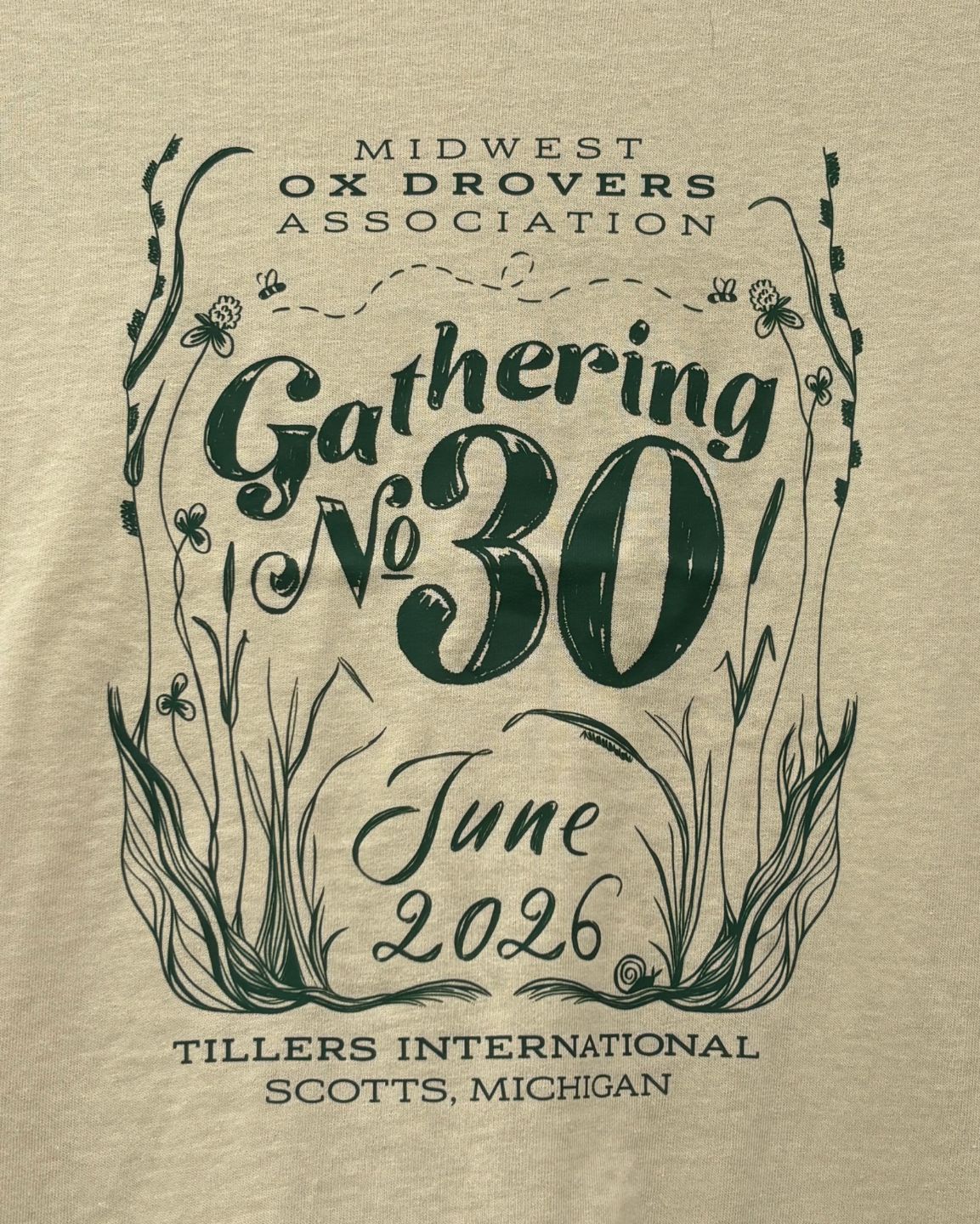
MODA 30th Anniversary Gathering AND Draft Cattle Symposium 2.0!
June 25th-28th at Tillers International in Scotts Michigan
Tillers International and the Center for Draft Cattle Research team up for The Ox Extravaganza you’ve been waiting for. More details to come but the preliminary schedule is to have formal presentations in Tillers’ Museum on Thursday and Friday afternoons, with field demonstrations and hands-on sessions on the farm both Friday morning and all day Saturday. For more information contact tillers@tillersinternational.org.
September 27; 10:00 a.m. to approximately 4:00 p.m. Lorsch, Germany
Have you always wanted to get a taste of the world of draft cattle training and work? Then this course is perfect for you. The one-day course covers an introduction to cattle behavior, harness knowledge, training options, and finally, suitable fields of work for draft cattle. In addition to theoretical sessions, the course offers the opportunity to gain initial practical experience with various training cattle.
Course fee: €100 per person, including meals and course materials
October 11, 10:00 a.m. to approximately 4:00 p.m. Lorsch, Germany
Draft cattle can be used in a variety of ways in agriculture. Whether in arable farming, grassland management, or fruit growing, cattle can find suitable tasks. This one-day course aims to introduce the specific agricultural training of cattle and, above all, present the different fields of work and provide practical exercises. It will cover machinery and equipment operation, as well as aspects of occupational safety and economic efficiency.
Course fee: €100 per person, including meals and course materials
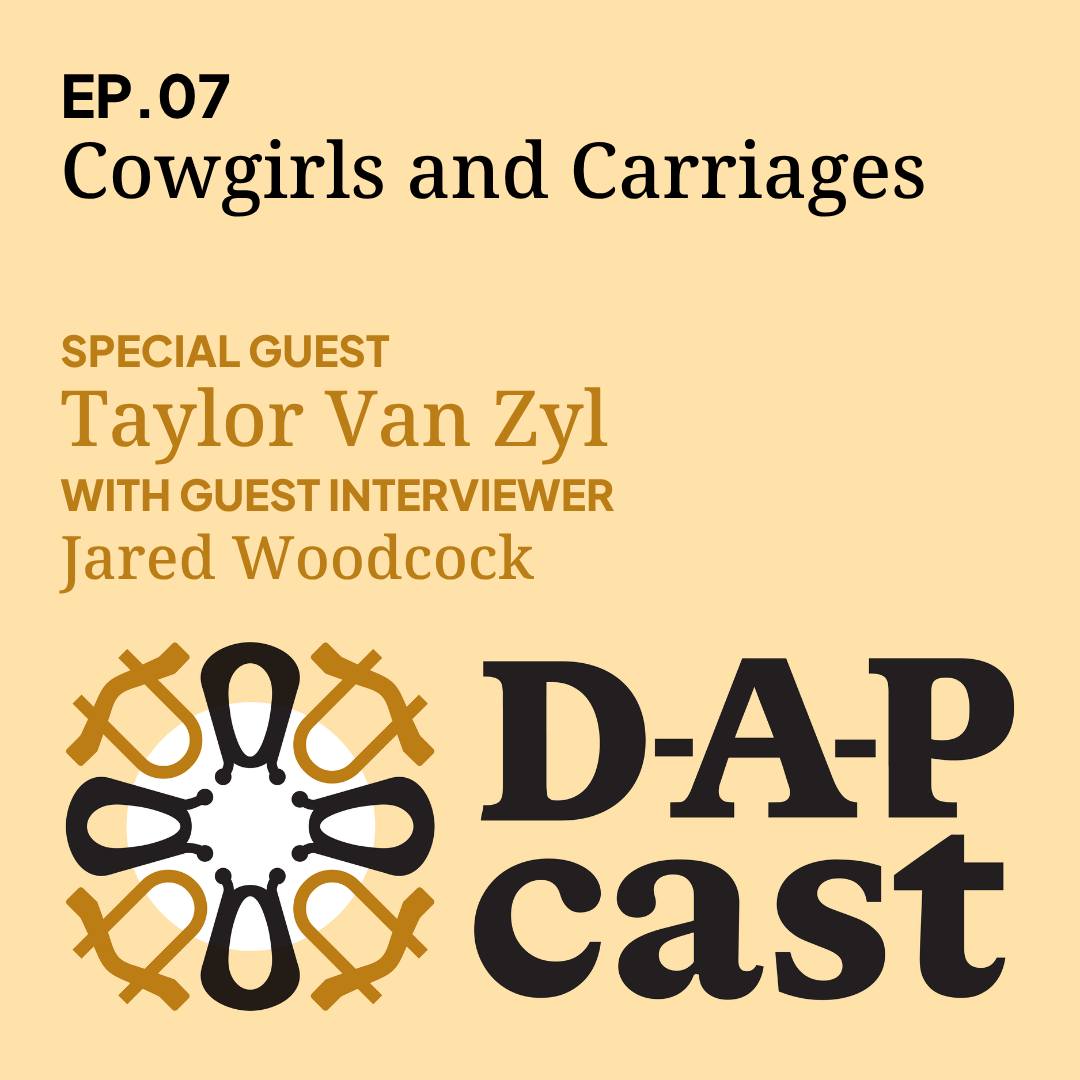
The DAPCast is back! After a long hiatus, we are pleased to announce a new season and a new episode of our popular DAPCast. Listen to Maggie and guest interviewer Jared Woodcock chat with Jared’s friend Taylor Van Zyl about tearing it up at the rodeo and running a successful carriage business across the West.
This episode represents an important milestone for us: Cal Hardage, creator of the Grazing Grass Podcast, has stepped up to be our audio production consultant. A farmer from Oklahoma, Cal is a joy to work with and a great addition to our team. Welcome Cal (and thanks also to Jared, who connected us)!
Above: Nora with Ivy’s team (Frank & Sparrow) when she was eleven.
My Journey to Becoming a Teamster
By: Nora van Gulden
Whenever people ask me why I started my team, I say something silly like “I couldn’t afford a horse, so why not just ride a cow!” While it is true that I started my team with riding cows in mind, this experience has grown to be so much more.
I have always been one of those horse-crazy weirdos. For my sixth birthday, my parents finally gifted me with my first horseback riding lesson. Of course, that wasn’t enough, and I was constantly pestering my parents to get my own horse. Eventually, when I was eleven, my parents said “well, we don’t live on a horse farm, however, we do live on a dairy farm…” They reminded me that they had both raised working steers in the past. We decided to train two of the heifers on the farm as a team. We did this as a trial run, because the girls would have to join the milking herd when they were two and we wanted to see how it went and how much I liked it before committing to a full on team of oxen. The heifers were named Pink and Bliss and I learned so much from training them.
After a year working with Pink and Bliss, they were needed on the farm, and I was satisfied for a little while. I kept riding horses and helping take care of the calves on the farm, and I got swept up in school and sports and all of that awesomeness. But of course, my obsession being as strong as it was, I soon got the hankering for a horse again. However, now with my new experience working a team, I was also much more interested in cattle. In my freshman year of high school, it hit me: I could just have a riding cow!
It was the perfect idea. We couldn’t afford a horse, but we had all of these cattle right there, and that’s basically the same thing, right? I knew it wouldn’t be the same (cows are slower and less comfortable than horses), but it was close enough for me, plus in my experience most cattle are a bit calmer than most horses, so it would be a great starting place for eventually training horses.
Over my freshman year, my obsession with training a riding cow became even stronger than my obsession with horses. My parents thought it would be a little silly to have one single riding cow that I could work with for only a few years before leaving for college. Because they are much more sensible than me and take such good care of me, they suggested we start a whole team so that they could still play with the oxen once I left.
On June 30th, 2025, Terrace was born. Terry is mine. I love him so much. And, yes his name is Terrace like a patio. I like it. Y’all can name your oxen whatever you want, but mine will be named after a patio thank you very much. Then, on July 14th, Ben was born. I insisted on that name because, I mean, come on– Ben & Terry.
Ben & Terry are really pretty cattle. It’s the first thing everyone notices. There is so much more to them, though. They like to try new things. They’re curious, smart and friendly. Terry follows me around like a duckling. And Ben picks things up in his mouth like a puppy. They pick up their feet (my dad is a hoof-trimer so we understand the importance of this, please train your oxen to hold their feet up). They are still not even a year old and they have already done so much. Terry was in a parade when he was four days old, and we brought them to Draft Animal Power Field Days when they were three months old.
Above, left: Ben, Terry and Nora at DAPNet field days. Right: Terry & Nora.
There’s so much more to this story, so if you’re curious, come say hi to me and the boys at the Draft Animal Power Field Days in the fall! Before I go, I have three important pieces of advice:
Just because you start a team doesn’t mean you can’t have other hobbies. In my experience, it’s okay if you only have 20 minutes a day for training. It’s about consistency and care.
My number one motto for training: nothing should be scary when you're with your team. I mean this for the oxen, and for the teamster. From the time they are babies, the more we do random things the better, that way if a plastic bag flies by at an event or something, they’re less likely to freak out. Also from the time they’re calves, it’s important to train them to respect your space, because when they grow up they will be 1,500 to 3,000 pounds and they will have horns.
Get yourself a good mentor. Hopefully you can find someone with a team of their own, who can teach you so much. I have the best mentor around, Ivy Pagliari. She’s so awesome! She taught me so much, helping me train Pink & Bliss, and now she’s helping me train Ben & Terry. She has two beautiful teams and she lets them be my mentors too. Ivy made it possible for us to bring Ben & Terry to Draft Animal Power Field Days where I met more amazing teamsters than I knew existed.
Above: Ben & Terry with the family in the snow ♥️
So now you know the story of me & Ben & Terry thus far, and how they are my dream come true.
Pony Powered Market Gardening
By: Christina Castellanos
Many market growers today use a walk behind tractor to prepare their market growing spaces. But you may be like me and favor animals over loud equipment. Perhaps you have a horse, pony, or donkey on your homestead already who would enjoy doing some useful work on the farm partnered with you. For me a sturdy Fjord cross mare, Ginger, originally my kids starter horse, was and is just the right sized horse power to manage our small acreage and my market garden.
Our farm is just under 3 acres total with about an ⅛ of one acre in market garden production. This small intensively grown space is surprisingly productive! I grow an array of cold hardy seasonal vegetables and flowers including artichokes, pumpkins, peas, Swiss chard, cilantro, giant marigolds, sunflowers, brassicas and more, for two markets per week throughout summer. These being what I enjoy eating and growing most, what sells best at market, and requires the least amount of labor, but also works well with the pony-powered system that has evolved here.
In spring while the first round of seedlings are still growing indoors under lights, and hardier varieties wait in the high tunnel blanketed with layers of row cover, is when work begins with my mare Ginger. First we practice walking slowly as we can up and down the garden beds dragging a homemade harrow made out of chicken wire and a small log. We knock down the bumps and hills of manure, spreading it evenly over the surface. We dumped this manure at the end of the previous growing season to age and feed the soil over winter.
Our next tasks are reshaping the beds with the Anny’s All in one using the hilling discs. The Anny’s All in one is a versatile walk-behind tool designed to be pulled by a single draft animal specifically for small-scale farming and market gardening. It has a number of different attachments of which we mostly use the disc hiller and rake. The hilling discs work great for reshaping my mounded raised beds quickly. They can also be used for hilling potatoes. We then use the rake attachment to comb lightly over the surface of these beds in order to smooth the surface more level. When working with the Anny’s or other walk-behind tool, a second pair of hands is required for us, so someone, my son most often, is operating the machine while I guide Ginger. Once this work is done, I plant directly into these beds.
Now Ginger’s farm jobs will focus outside the garden fence while vegetables grow. Mucking out the barnyard and moving loads of manure and spoiled hay to layer in the compost will give us steady work throughout summer, and build an abundant compost supply. The manure from Ginger and her goat mates provides the perfect amount of fertilizer to cover my gardens year after year, plus endless compost material. This is the basis of our soil building in the garden beds.
Ginger and I will further stay busy with our favorite work, logging for our winter supply of firewood out of the woodlot. This work will carry us all the way into fall. In recent years we’ve adopted the use of a log dolly for the big, burly logs. This cool little tool gets the butt end of the log up on wheels, making it easier for my little mare to pull it uphill over roots and bumpy terrain.
Ginger is grazed rotationally in limited amounts with her band of goats on pocket sized pastures around the farm, offsetting her feed costs. Come fall we will harvest the last crops, and all the grazers will glean the garden. Then we begin hauling the sleds of manure to the beds where they will be spread (hopefully) before hard freeze, to cover the soil through winter.
When winter arrives Ginger will be taking it easy in her cosy barn with her goats. I will also be taking it easier enjoying the indoor warmth fueled by the firewood harvested with my pony partner dreaming up next year's plans.
I’ve been a market grower for 20 years now, with 17 of them in partnership with Ginger. I know her life here has been enriched by the meaningful work she helps me do here every day. It’s certainly deepened our relationship, and made my work much more fun and interesting to me. Ginger has become the heart of my small farm market business’s continued success.
Welcome to the DAPMap !
This month, we are diving into our DAPMap, Clubs, Associations and Fairs section!
Highfields Institute- The mission of the European Brabant Registry of America is to preserve and maintain purebred European Brabants through the use of existing registry information, ancestry tracing and DNA profiles of imported European Brabants and their offspring, thereby providing enthusiasts and breeders the ability to search for and register purebred horses in North, Central and South America. You can contact them here.
Prommata- PROMMATA is a french non-profit organization wich support and encourage farm agriculture, through the development of modern draft animal uses , by carrying out research and innovation in Modern Animal Draft Agricultural Equipment (MADAE), by promoting animal traction, by offering as many people as possible equipment adapted to high-performance, agro-ecological farming, and by passing on our know-how through a wide range of practical training courses and international missions. Learn more about them here.
Want to be featured on the map? Fill out the form today!
The crew worked together this month to select teamsters and presenters who filled out our form (if that was you, thank you!) and prepared the second longer version of follow up questions. Planning for Field Days is right on schedule (dare we say ahead?!) and we are getting so excited!!
Communications
The Communications Committee is busy with many projects. We are preparing for the World Draft Cattle Symposium in June. We are working on creating more content for social media. A recent problem has occurred with fake accounts using material produced by real teamsters, we are working on a system to weed out the fake accounts. The Committee is continuing to plan for Field Days and working on the video series.
Sponsorships for the 2026 Draft Animal Power Field Days are open!
DAPFD Sponsors provide the seed money that starts the Field Days magic.
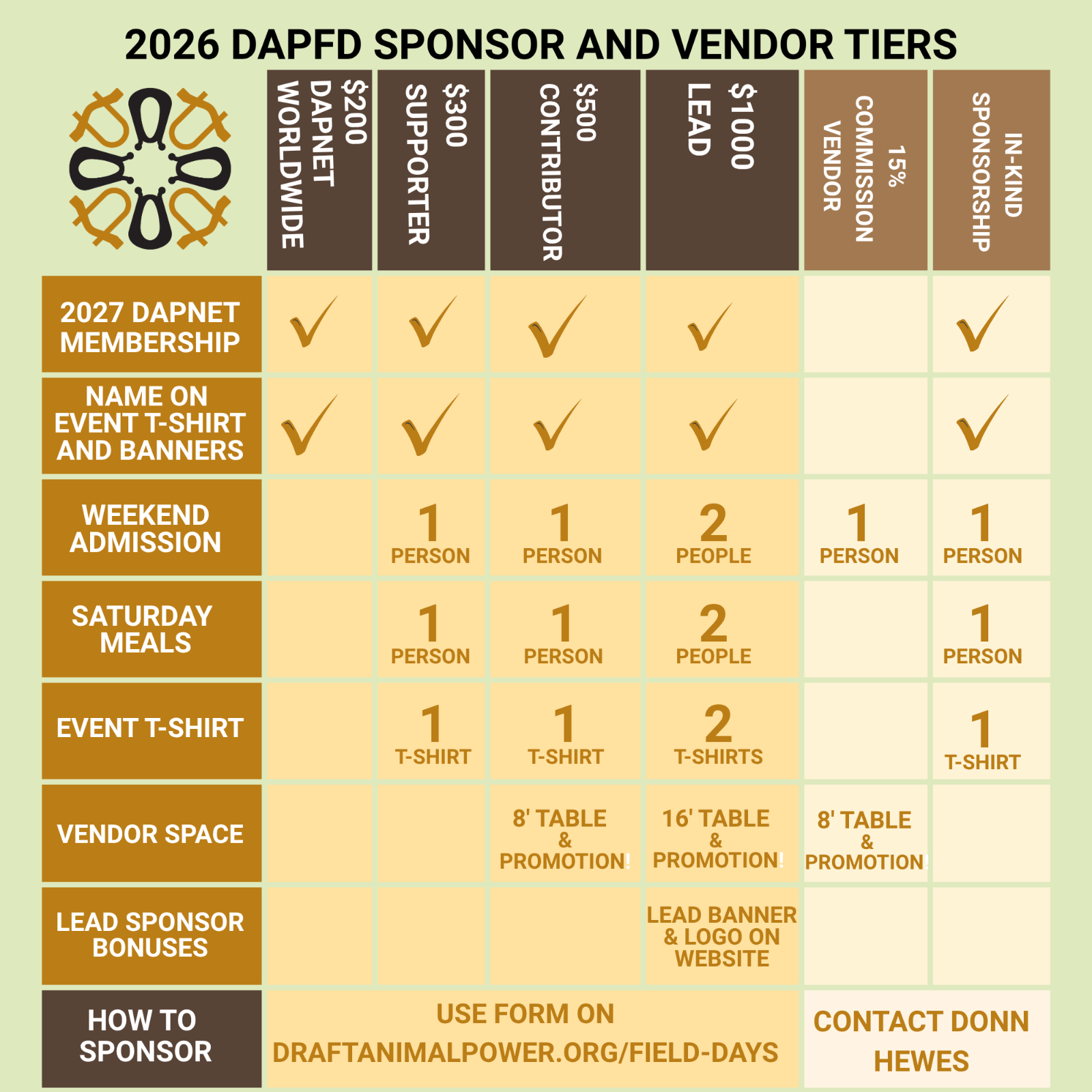
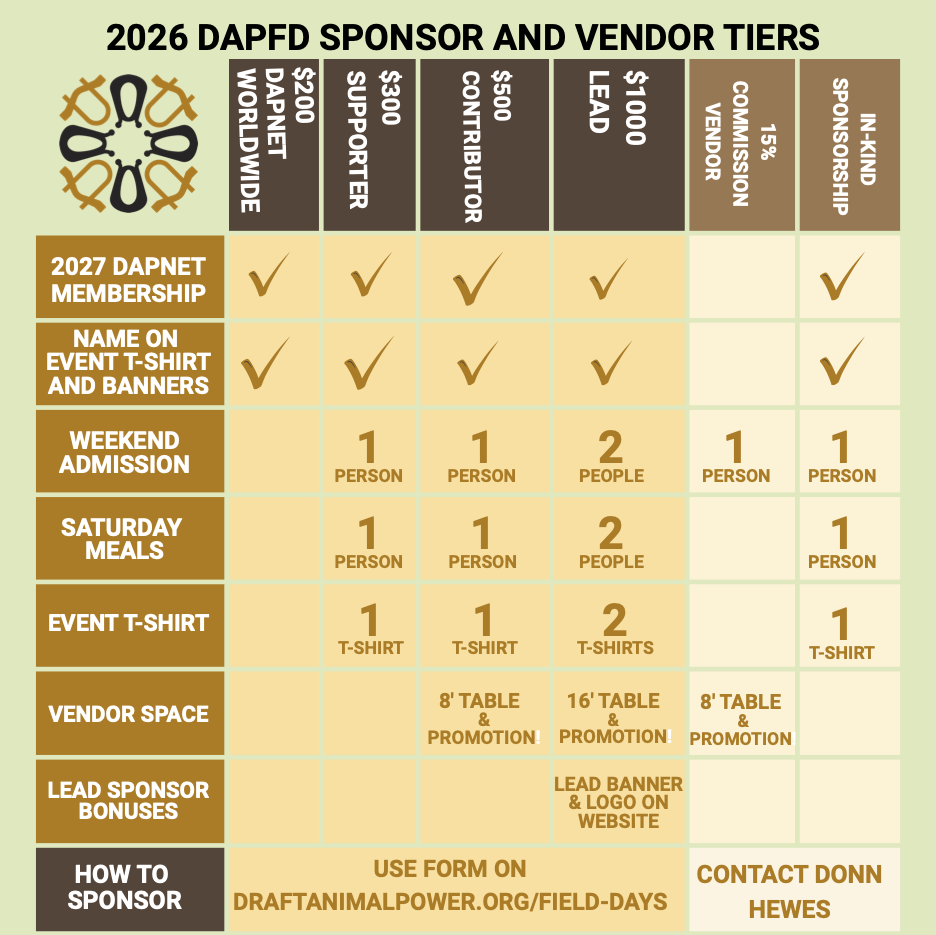
We have revamped our sponsorship tiers for 2026 and hope we can offer something for every business, farm and individual who would like to be a sponsor. Sponsor perks vary by tier and include 2027 DAPNet membership, event shirts, weekend admission, table space for vending and more.
Find out more about being a sponsor for 2026 DAPNet Field Days here. Or, email our sponsor liaison Donn Hewes at tripletree@frontiernet.net.
We couldn’t do it without you! Thank you!
Events Calendar
Have a draft animal related event you’d like to see on this calendar? Fill out our Events Submission Form and our volunteers will add your event to our calendar!
Draft Horse Basics
May 14th and 15th at Tillers International, Scotts MI
In this two-day class for beginners, experienced teamsters share draft horse handling, hitching, and driving skills. Participants begin by building confidence with the gentle giants in the barn, brushing and harnessing. Handling skills are then honed with simple ground driving of a single horse progressing to plowing and other field work with a team. Taught by Rick Eshuis. $410 DAPNet members get 10% off.
Are you ready to put your team or a team of oxen to work on the Farm and gardens? Then this is the workshop for you. Spend two full days with hands-on experience learning about plowing, discing, planting, cultivating, and cart work. Students will gain a working knowledge of draft equipment and a needed maintenance schedule to work properly. Taught by Ray Ramsey and Tyler Allen $288.
Draft Horse Clinic with Brandt Ainsworth and Daniel Dauphin
May 23rd and 24th at Dan Seewaldt Farm 3820 Hermitage Rd Warsaw NY 14569
This clinic is for all experience levels and will focus on horsemanship, communication, ground work, bitting, line fitting, harnessing and much more. All skill levels are welcome. Fun evening activities are also planned. Come and learn together! $225 for full participation both days. $40 to audit both days. For more information DM Brandt Ainsworth on Facebook, email stihlhorse@hotmail.com, or call 585-307-2972.
Draft Animal: Oxen Basics
June 6th and 7th at Sanborn Mills, Loudon NH
Are you considering an oxen team for your farm but wondering where to start? Join us for a two-day workshop to learn the things you need know about bringing a pair home, finding the right equipment for them, and learning how to work them. Our experienced instructors will train you in a safe and productive environment. Taught by Ray Ramsey and Tyler Allen. $288. Visit https://sanbornmills.org/farm-garden/draft-animal-oxen-basics-6-6-7/ for more information.
Oxen Basics Plus Yoke Making
June 21st-25th at Tillers International, Scotts MI
This comprehensive five-day class creates skills in driving, training, and yoking in a sequence of hands-on experiences. Enjoy well-trained oxen responding to your commands. Learn to select, team, and care for oxen. Use low-stress training to teach calves. Drive teams hitched to various loads and practice field tasks. Particpants will also make a yoke with hand tools. Beginner to intermediate class. Taught by Rob Collins and Tom Nehil. $675 DAPNet members get 10% off. Visit https://tillersinternational.org/classes/ for more information.
MODA 30th Anniversary Gathering AND Draft Cattle Symposium 2.0!
June 25th-28th at Tillers International in Scotts Michigan
Tillers International and the Center for Draft Cattle Research team up for The Ox Extravaganza you’ve been waiting for. More details to come but the preliminary schedule is to have formal presentations in Tillers’ Museum on Thursday and Friday afternoons, with field demonstrations and hands-on sessions on the farm both Friday morning and all day Saturday. For more information contact tillers@tillersinternational.org.
September 27; 10:00 a.m. to approximately 4:00 p.m. Lorsch, Germany
Have you always wanted to get a taste of the world of draft cattle training and work? Then this course is perfect for you. The one-day course covers an introduction to cattle behavior, harness knowledge, training options, and finally, suitable fields of work for draft cattle. In addition to theoretical sessions, the course offers the opportunity to gain initial practical experience with various training cattle.
Course fee: €100 per person, including meals and course materials
October 11, 10:00 a.m. to approximately 4:00 p.m. Lorsch, Germany
Draft cattle can be used in a variety of ways in agriculture. Whether in arable farming, grassland management, or fruit growing, cattle can find suitable tasks. This one-day course aims to introduce the specific agricultural training of cattle and, above all, present the different fields of work and provide practical exercises. It will cover machinery and equipment operation, as well as aspects of occupational safety and economic efficiency.
Course fee: €100 per person, including meals and course materials
You can now reach the DAPNet team at info@draftanimalpower.org! Don't worry, we still get the messages from dapnetinfo@gmail.com, but our new email comes with more digital storage and easier communication for our dedicated volunteer crew. Hope to hear from you soon!
Classifieds
*Olaf & Sven*
12 & 16 year old team of light red roan Belgian geldings for sale.
They are a shorter and stout team built more like the old style draft horses - they go about 16.2/16.3hh. We’ve owned them since 2021 where they worked for 3 years in Acadia National Park, they had a year off and worked last summer doing hands on demonstrations and wagon rides for the public. They are for sale as a team and to no fault of their own - I would keep them forever if I could. They would make a great pleasure team or to do some small farm work.
Please contact Emily Carpenter (207)694-1115 for more info/details and please share with anyone you know who may be interested.
If you haven't already, check out our Draft Animal Power Podcast! A new episode was curated last month, be sure to give it a listen and stay tuned for more!
Gas prices are high and diesel prices in Humboldt county are even higher. The sticker shock is real. We historically pay some of the highest fuel prices in the country here in Humboldt county. There are many reasons for this but it is part of being behind the “redwood curtain.” There is no way around it. We are all going to feel the price crunch of this new energy crisis.
It is times like these that I am often asked about the oxen because ostensibly they save me money on fuel that I wouldn’t have to put into a tractor. This is true they do run off of grass and sunshine. In fact it is one of the reasons that I was drawn towards draft animals. I wanted to find a way to grow “petrol free” produce. I love farming and when I was a tractor farmer I spent many hours burning diesel. I loved turning the earth and prepping the soil. This is my real skill as a farmer. I have a deep and intuitive knowledge of the ground that I have honed with many hours on a tractor. The diesel, hydraulic fluid, and lithium grease felt like my deal with the devil. I got to do the good work that I loved but I had to use petroleum products. I never liked the smell and toxicity of them.
I wanted to find a better way that didn’t involve burning stinky diesel. I wanted to hear the soil slipping off the plow rather than the constant roar of the engine. I also didn’t want to be alone. I wanted to share the experience with a team. I spent days and days on end alone on a tractor. The idea of working with draft animals seemed like the ideal way to farm and work the earth but not have to use petroleum.
In many ways I have succeeded in that. I get to go out with my team of oxen everyday and work in the field without burning diesel. But it is always more nuanced than that. We still have a tractor, but I am lucky that I don’t have to sit alone on it out in the field plowing up dirt. We use it mostly for the compost making side of our operation. It is still more cost effective to use it rather than a shovel for moving manure around. I use it for unloading pallets of feed and other supplies. The tractor is still really valuable to our operation and I am grateful for it but I still gasp when I have to fill up the diesel right now.
And then there is the elephant in the room. Transportation. Most farmers I know who use a tractor still put more diesel in their truck than the tractor. Transportation costs are the largest factor in almost all products including agricultural products. The fact of the matter is that most people use more fuel driving themselves around than we do on the farm. We are lucky to market all of our produce within a fifty mile radius to the farm. Everything I grow is sold in Humboldt county, and still my single biggest fuel expense is transportation. Unfortunately the amount I save on fuel because of my oxen doesn’t cancel out the cost of getting to market. It does help but ultimately we have to find a better way to solve transportation.
I am lucky I get to work with my team every day. They only emit fertility in their emissions, and they are not very loud when chewing their cud. They run off solar power and water. They have personality and sometimes they actually seem like they listen to me when I rant. Now if only they would take me into town.
The Women and LGBTQ+ Teamster Gathering of 2026
By: Natasha Klemek
Photo Credit: Meghan Alexander
As it turned out, the burn ban was for brush, and we could have a campfire. And thank goodness for that because Saturday, May 2nd in Marathon NY had turned out overcast, chilly, and not without a handful of snowflakes drifting down on us. It was now the evening of the first day of our weekend event and I think there were about a dozen of us who had stuck around after supper- the incredible supper prepared for us by Corey, which we ate sitting around Donn’s mower shop, passing stories around the circle over kebabs and rice- and now we packed around a cheery little campfire as the sun went down. The conversations kept up, lively and jumbled. A few people worked on crochet projects- sharing yarn and teaching each other new stitches. I managed to convince a small but enthusiastic contingent to sing some spring-themed rounds with me, and as karmic retribution for subjecting everyone else to our little concert inhaled a lungful of woodsmoke.
We talked about what we wanted to do the next day. Madeline had brought along her pair of working steers but we hadn’t done anything with them yet- while en route that morning she had had to change a couple trailer tires, so both Madeline and the steers got to take it easy once they did finally arrive. So Saturday had instead been full on with horses- Becky giving a harnessing demonstration with two of Northland’s incredible Suffolks, Mary and Rock, while those of us not directly participating in the harnessing crooned over or cuddled with the other animals on the farm- young horses, baby lambs, and Becky and Corey’s new Patterdale terrier puppy, Sally. After a potluck lunch we had gotten right back to it, and folks got to practice ground driving with a single horse or with a team.
On Sunday the sun came out, but so did the wind, although it hardly seemed to suppress anyone’s enthusiasm for spending time with the animals. We spent the whole morning with Madeline and her steers, so there was lots of time both for questions and discussion, and for practice driving the team and skidding some logs. In the afternoon we pulled out a walk-behind cultivator and got to do some real work preparing soil with horse power.
Throughout the weekend there was ample opportunity for hands-on practice for everyone who wanted it. Since the folks at the event had a wide range of experience levels, there was also ample opportunity for those with more experience to practice coaching those with less. I remember the broad smiles, especially on the faces of folks who had never held lines or a goad before- and am warmed by the thought of what can be accomplished by generous, patient people and good animals.
The pace of the weekend was gentle and laid back, with a decent amount of time given to letting people socialize. Still, we covered quite a lot. Partly this was due to the fact that while we were standing around talking, we were also sharing knowledge. During this “down time” we had a book swap, made art with paint and cyanotype prints, traded horse training advice… People came to this event ready to contribute, and it created an atmosphere of peer to peer learning that was inspiring.
The three of us who spearheaded this year’s women and queer teamster gathering had attended the one that Julia Ramsey organized three years ago (also held in May at Northland Sheep Farm). The sense of community and inspiration that I felt after that weekend in 2023 buoyed me through the rest of the farming season. When the feelings of overwhelm, overwork, and isolation hit in the depths of the growing season, I had this bright touchstone to think back on from the spring. After a number of years without another similar event, Becky, Saxon, and I finally decided over lunch at DAPNet’s Field Days last fall that we had to bring it back (a quick plug for Field Days- it’s a great venue for finding partners to embark on wonderful projects with). We wanted another chance to bring folks together, have fun and share knowledge, and strengthen those networks of support that are so crucial to continuing on with this work that can be so hard.
Thank you to everyone who came to our gathering and made it a success, and to Donn Hewes and Maryrose Livingston for hosting, and Corey McNaughton for cooking, and a huge thanks to Becky Frye and Saxon Alexandra for organizing.
Here’s hoping it doesn’t take another 3 years to have the next one!
Photo Credit: Meghan Alexander
Photo Credit: Meghan Alexander
Welcome to the DAPMap
This month, we are diving into our DAPMap, Equipment sales and repairs!
NEW- Blue Horse Equine Ltd-Supplier of draft animal working harness and equipment to the UK and Europe. Trading for 20 years. Contact them here.
Doubletree Carriage Company & Leatherworks- Are you looking for someone to demonstrate draft horse harnessing or talk about the history of horse-drawn transportation topics, give us a call. Also offering horse-drawn wagon and sleigh rides. Groups, special events and historic sites welcome. Check out their website here.
Big Black Horse, LLC- We sell driving & draft horse tack, including harness, bits, halters, etc. We are also Pioneer Equipment dealers. Check out their website here.
Osterby Smedja- Österby Smedja is a small company located in the south of Sweden. The company name means “east village smitty”. Our goal is to produce the best equipment you ever can find for working horses. We also work with extreme interiors for special buildings and custom cars, motorcycles, and boats. Check out their website here.
Big Sioux Saddlery- Quality custom leather harness, custom western saddles for all breeds including draft breeds, tack and strap goods. In business since 1992. Click here to learn more.
Want to be featured on the map? Fill out the form today!
This month we discussed options for zero waste at mealtimes. The team is working hard to come up with the least waste as possible! The schedule for the weekend is being curated and ongoing and we are hoping to get it live to the public ASAP. Field Days is right around the corner!
To Our DAPNet sponsors:
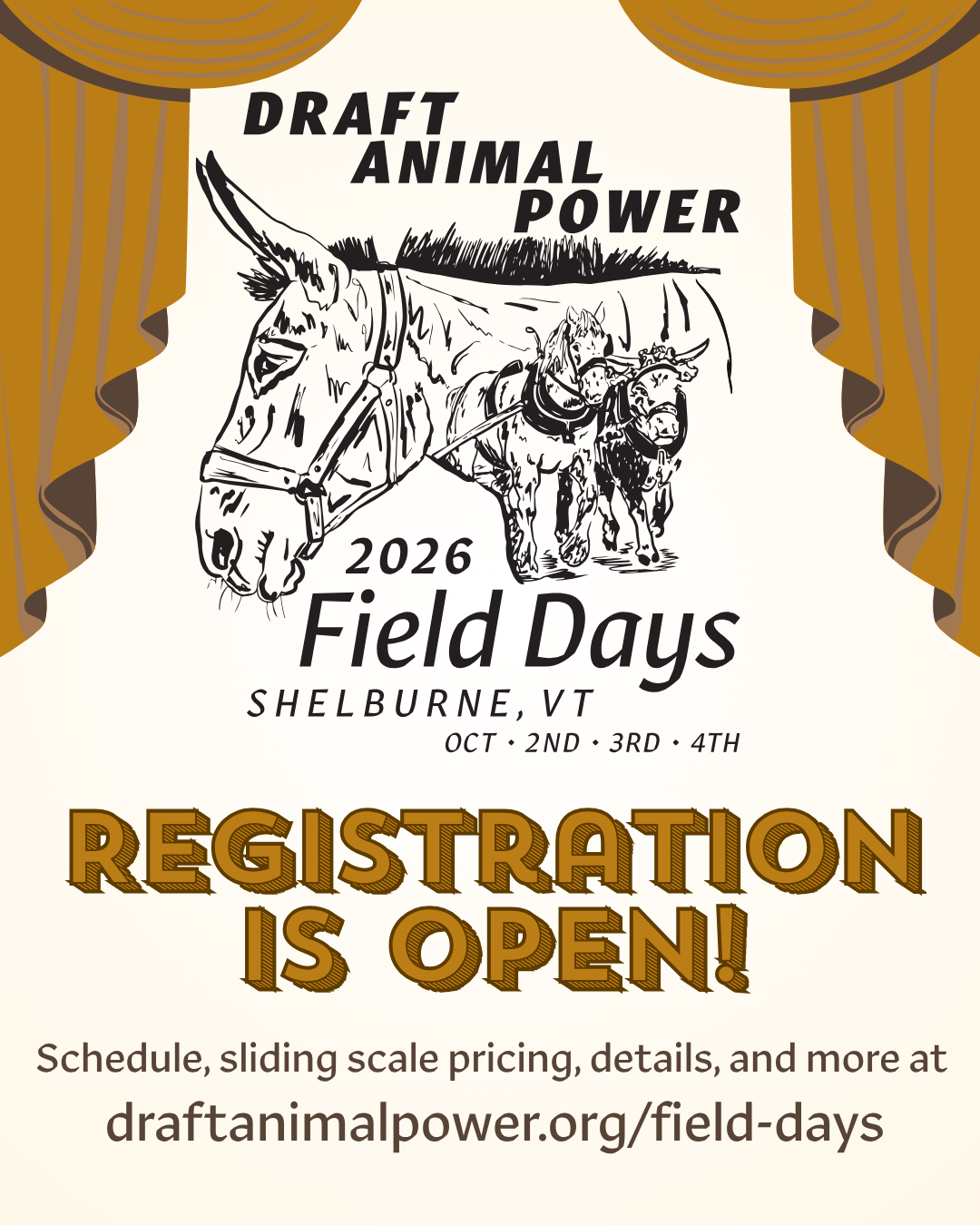
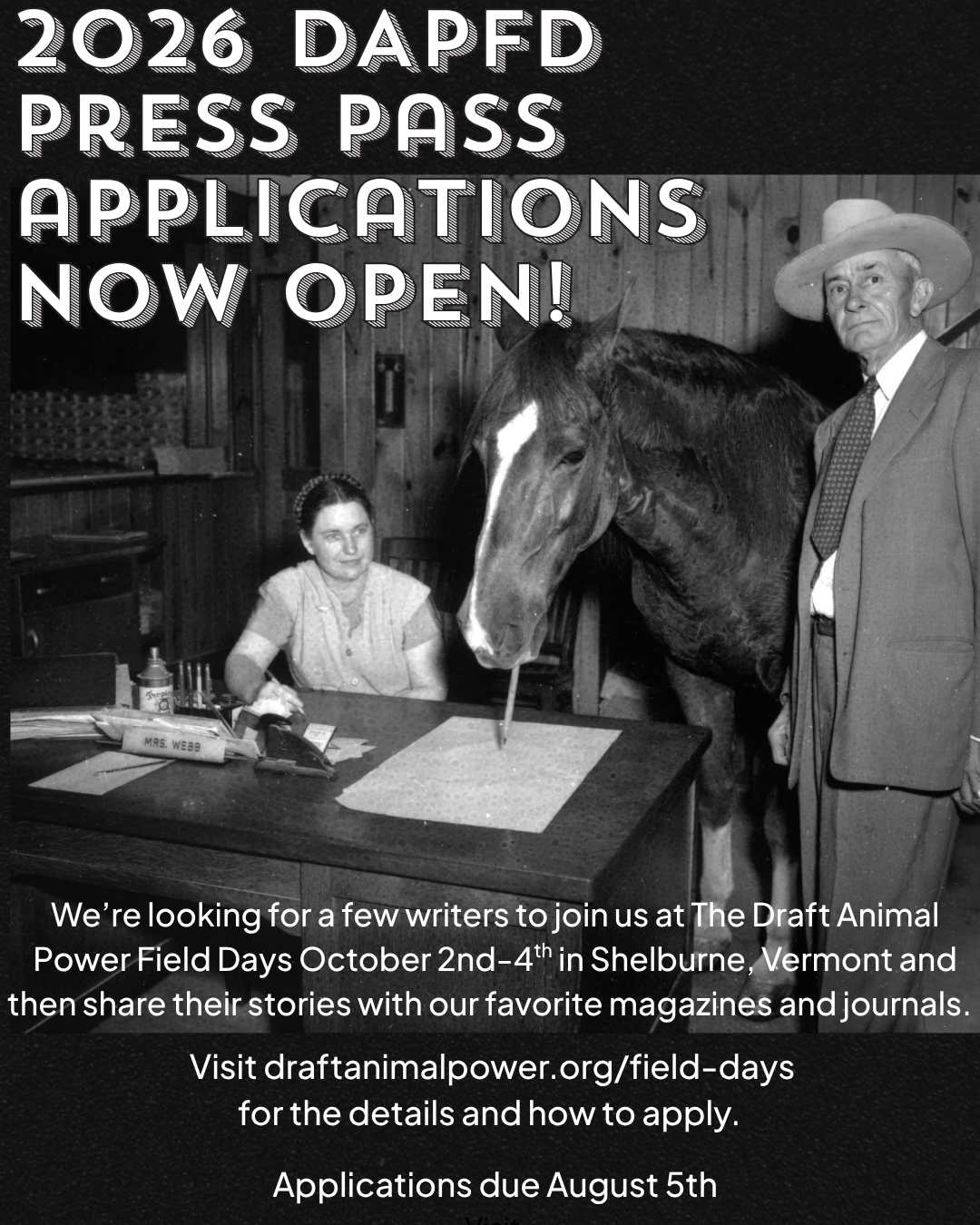
Thank you to the businesses, organizations, and individuals who have already sponsored the 2026 DAPNet Field Days (October 2nd-4th at Shelburne Farms in Shelburne VT). If you'd still like to sponsor, now is a great time! Visit www.draftanimalpower.org/field-days to sponsor or to find out more!
Events Calendar
Have a draft animal related event you’d like to see on this calendar? Fill out our Events Submission Form and our volunteers will add your event to our calendar!
Oxen Basics Plus Yoke Making
June 21st-25th at Tillers International, Scotts MI
This comprehensive five-day class creates skills in driving, training, and yoking in a sequence of hands-on experiences. Enjoy well-trained oxen responding to your commands. Learn to select, team, and care for oxen. Use low-stress training to teach calves. Drive teams hitched to various loads and practice field tasks. Particpants will also make a yoke with hand tools. Beginner to intermediate class. Taught by Rob Collins and Tom Nehil. $675 DAPNet members get 10% off. Visit https://tillersinternational.org/classes/ for more information.
MODA 30th Anniversary Gathering
June 25th-28th at Tillers International in Scotts Michigan
Tillers International and the Center for Draft Cattle Research team up for The Ox Extravaganza you’ve been waiting for. More details to come but the preliminary schedule is to have formal presentations in Tillers’ Museum on Thursday and Friday afternoons, with field demonstrations and hands-on sessions on the farm both Friday morning and all day Saturday. For more information contact tillers@tillersinternational.org.
September 27; 10:00 a.m. to approximately 4:00 p.m. Lorsch, Germany
Have you always wanted to get a taste of the world of draft cattle training and work? Then this course is perfect for you. The one-day course covers an introduction to cattle behavior, harness knowledge, training options, and finally, suitable fields of work for draft cattle. In addition to theoretical sessions, the course offers the opportunity to gain initial practical experience with various training cattle.
Course fee: €100 per person, including meals and course materials
October 11, 10:00 a.m. to approximately 4:00 p.m. Lorsch, Germany
Draft cattle can be used in a variety of ways in agriculture. Whether in arable farming, grassland management, or fruit growing, cattle can find suitable tasks. This one-day course aims to introduce the specific agricultural training of cattle and, above all, present the different fields of work and provide practical exercises. It will cover machinery and equipment operation, as well as aspects of occupational safety and economic efficiency.
Course fee: €100 per person, including meals and course materials
You can now reach the DAPNet team at info@draftanimalpower.org! Don't worry, we still get the messages from dapnetinfo@gmail.com, but our new email comes with more digital storage and easier communication for our dedicated volunteer crew. Hope to hear from you soon!
Classifieds
Tillers International is hiring for a full-time, on-site intern! You will assist with fieldwork, animal husbandry, landscaping and more. You will learn ox and horse driving techniques, fundamental blacksmithing and woodworking, and other skills utilizing appropriate technologies.
Housing, food stipend, and free classes provided as compensation. More info here.
Email tillers@tillersinternational.org with your resume and three references if interested.
We're incredibly sorry to share that Cal Hardage, who had been helping DAPNet produce The DAPCast, passed away unexpectedly last week on his farm in Oklahoma. In our all too brief tenure together, Cal was instrumental in getting season 2 of The DAPCast up and running and in consulting with us on tech topics. He was extremely patient and kind in his dealings with our amateur podcasting team, incredibly friendly, self-deprecating, and funny. We will miss him very much.
Cal's own podcast is called Grazing Grass. All 225 episodes can be found here.
If you haven't already, check out our Draft Animal Power Podcast! Be sure to give it a listen and stay tuned for more!
It has been a while since we had a proper welcome.
I want to blame it on the crazy year DAPNet had in 2025, but the truth is, there is always something to blame when you want to blame something. Let’s put the blaming aside, as this is a newsletter and not a social media platform.
DAPNet has had a very big year because so many good changes have occurred, and when you have change, you have transition, and transition takes time to adjust.
For those who don’t know me, my name is Daphné Rose Courtès, and I live in Quebec. I was elected as the new president of the Draft Animal Power Network during the December retreat, and I’m so grateful to be part of this team of volunteers.
Talking about transition, this year has been full of changes and challenges for me. From moving twice, trying to finish a master’s degree, heartaches, being far from friends, starting a young horse under harness, having to build a name in a new place for logging jobs, losing my car and my truck in the same week, and trying to keep up with DAPNet’s incredibly active board of volunteers, this year was an odyssey to remember.
I am proud to say I have finally landed on a farm in Newport, Québec. Indeed, through all these adventures, I felt a very strong need to come back closer to my friends in the Sherbrooke region and closer to my people in the United States. Therefore, I contacted an organization called Arterre that helps young farmers find land to farm in Quebec. I also made a post on Facebook and had more than 30 people contact me about opportunities… It turns out that if you want to work your horses on a farm, a lot of people are ready to open their doors to you!
In the end, after five visits and a zillion phone calls, I decided to meet a 59-year-old man in Newport. He has a farm but no barn and no second house for me… An interesting choice, you might say… well, yes and no. From the moment I met him, something clicked in my head. This man has a sensitivity toward his land and the people around him that makes the idea of building a farm with him seem possible and achievable through safe and open communication.
I feel very lucky to be surrounded by mentors (in horse work, sheep farming, and vegetable farming) and by professionals through the organization that made this match happen.
I am now looking for horse-drawn tools to make this dream happen in an affordable way.
Hang on tight for the next episode of how I’m making this horse-powered farm work!
DAPNet has been working immensely hard to prepare for the 2026 Draft Animal Power Network Field Days! Stay tuned for more information and make sure to register right away!!
Enjoy the newsletter,
See you next month,
Sincerely,
Daphné Rose Courtès (and the team of horses and the team of dogs and others)
Internship at Horsetail Herb Farm and Northland Sheep
By: Abby Traywick
Donn Hewes, Maryrose Livingston, Becky Frye, Corey McNaughton, Red, Mary, Rock, Dutchess, Duke, Ruby and Earl; these are the names of my teachers this summer. I just began my internship at Horsetail Herb Farm in Marathon, New York and will be on the farm until November.
While in school at Warren Wilson College, I discovered a love of draft powered farming that has only grown stronger. Since college I have been able to befriend a few teamsters and keep feeding my love for this work. My fiance graduated this spring from the University of Georgia’s College of Veterinary Medicine (woo!) and we were trying to decide where we might enjoy living for a time. I knew I wanted some more consistent work with draft horses before feeling confident enough to have my own team. Through DAPNet I heard about the internship at Horsetail Herb Farm, was lucky to get it and in May we packed up our things (and our cat) and moved to Central New York!
An average day: Wake up at 5:30… delay getting up until 5:45. Commute down the stairs to the barn. We bring the horses in for the day from their ever rotating pastures and then discuss plans for the day. My time is divided between working with Donn and/or Becky. Jobs with Donn could mean anything from mowing with the horses to helping him build a barn add on. Working with Becky can be transplanting herbs or cultivating with horses. Corey is a firefighter so in his ‘off time’ he’s out working the homestead garden or helping with haymaking. Maryrose is the sheep boss and does all things sheep. There’s a natural intuition for the ebb and flow of work on the farm and it's been fun to see how everyone helps each other out. The horses go back out around 6 and sometimes we hang out and eat a delicious dessert Donn’s created. Pretty ideal days for sure!
Donn has been working horses and mules for a long time and has really honed in on how he likes things set up. I particularly appreciate his open barn and concrete paddock where the horses stay loose during the day. It allows them to move around freely, but also has tie slots when we need the horses out of the way or for harnessing (check out his channel on Rural Heritage!). Some other things that are new to me are his use of open bridles, D-ring harnesses and working a stallion. His stallion ‘Red Oak’ is very handsome and very well trained. I really enjoy working with him and it’s inspiring to see his relationship with Donn. I am also benefitting from there being some young horses here and seeing interactions leading up to being a fully working horse. One thing he emphasizes is fostering calmness at all times in the horse and you can see it in his horses, especially with the 2 year old Duke who is really coming into his own. Watching Donn on any of the implements is helpful and he sure does make it all look easy—tight turns, not plugging the mower, operating a loud brush hog. You can tell he’s got a lot of miles in!
Becky is the herb queen and has been teaching me all the herb names and their benefits when we are working with them. I have pretty much only worked on veggie farms so it’s been exciting to see new plants. There’s added challenges with perennial vs annual plants, harvesting whole plant vs flowers and all the post harvest handling. I am excited to see more of the finished products later in the year and to experiment making some teas or hydrosols with them. I enjoy our conversations in the fields ranging from first concerts, what cocktail would each of the horses be, and her experience starting a small business.
I am not exactly sure what my future draft powered business will look like, but the skills I am learning here are essential. I hope to gain a better sense of confidence with field work, working horses and to also start to think about the type of draft partner I most enjoy working with. Between the specifics of daily living and working with horses and the broader action of continued networking and exposure to different ways of doing things, I feel excited for the future and figuring out my own way!
To Our DAPNet sponsors:
Thank you to the businesses, organizations, and individuals who have already sponsored the 2026 DAPNet Field Days (October 2nd-4th at Shelburne Farms in Shelburne VT). If you'd still like to sponsor, now is a great time! Visit www.draftanimalpower.org/field-days to sponsor or to find out more!
Welcome to the DAPMap !
This month, we are diving into our DAPMap, Clubs, Associations, & Fairs!
NEW- Roulopa-Our non-profit organisation helps draft projects to be created particularly if it includes living in gypsy wagons on the road. We organize a three-day training program to help future draft people to build their project. Farm hosts annual horses and draft horses events. We have a project of breeding Britain draft horses. We have a harness repair shop for ourselves and can provide simple repair services. We also help children social needs and adults with cognitive disabilities to open up in a natural farm environment. Tourists are welcome on our camping site. Schools in classes can visit the farm for half day or a whole day visit. Contact them here.
B & B Carriage Service - We offer wagon rides to the local churches and other nonprofit organizations. Weddings, Anniversaries, and many types of farming... plowing, mowing and raking hay, harrowing, stalk cutters, etc. Contact them here.
European Brabant Registry of America- The mission of the European Brabant Registry of America is to preserve and maintain purebred European Brabants through the use of existing registry information, ancestry tracing and DNA profiles of imported European Brabants and their offspring, thereby providing enthusiasts and breeders the ability to search for and register purebred horses in North, Central and South America. Check out their website here.
Ecurie d'Albe-Carriage rides, carriage weddings, Percheron horse discovery, various carriage and mounted activities (shows, historical reenactments...), Advice on breeding, care, training, management and comfort of athletic or leisure horses, Training and breaking in with methods respectful of each individual horse and each age (saddling, driving, working with draft animals); logging in protected areas, municipal services..., Reproduction management (semination, insemination, frozen semen, foaling)Check out their website here.
Rural Vermont- Rural Vermont envisions a just and equitable world rooted in reverence for the earth and dignity for all. This abundant and generous way of life celebrates our diversity and interdependence, in which communities of microorganisms, animals, plants, and humans tend one another and nurture generations to come. Click here to learn more.
This month we finalized what was needed in order for our incredible team to launch registration. The schedule of events that we have so far for the weekend was combed through as details were added; things are coming together very nicely! We are looking forward to the new intensives (which some have already signed up for, yay!) and all the other wonderful topics that folks have to offer the community.
For too many years DAPNet’s annual Draft Animal Power Field Days has gone largely undocumented, with the organizing team too occupied with pulling off the event to contemplate writing about it for all our favorite magazines. This year DAPNet is pleased to announce we will be offering Press Passes for Draft Animal Power Field Days. The recipient(s) of the 2026 Press Pass will receive free all-inclusive admission to the three-day event. For more info, see here.
Events Calendar
Have a draft animal related event you’d like to see on this calendar? Fill out our Events Submission Form and our volunteers will add your event to our calendar!
Introduction to Working with Draft Cattle
September 27; 10:00 a.m. to approximately 4:00 p.m. Lorsch, Germany
Have you always wanted to get a taste of the world of draft cattle training and work? Then this course is perfect for you. The one-day course covers an introduction to cattle behavior, harness knowledge, training options, and finally, suitable fields of work for draft cattle. In addition to theoretical sessions, the course offers the opportunity to gain initial practical experience with various training cattle.
Course fee: €100 per person, including meals and course materials
October 11, 10:00 a.m. to approximately 4:00 p.m. Lorsch, Germany
Draft cattle can be used in a variety of ways in agriculture. Whether in arable farming, grassland management, or fruit growing, cattle can find suitable tasks. This one-day course aims to introduce the specific agricultural training of cattle and, above all, present the different fields of work and provide practical exercises. It will cover machinery and equipment operation, as well as aspects of occupational safety and economic efficiency.
Course fee: €100 per person, including meals and course materials
On August 28th and 29th, 2027 in Dörentrup, Germany, the next big festival of working horses will take place once again on the grounds of Wendlinghausen Castle and Estate in Dörentrup! Thousands of guests from Germany and abroad will gather to celebrate this special event! Visit here for more information.
You can now reach the DAPNet team at info@draftanimalpower.org! Don't worry, we still get the messages from dapnetinfo@gmail.com, but our new email comes with more digital storage and easier communication for our dedicated volunteer crew. Hope to hear from you soon!
If you haven't already, check out our Draft Animal Power Podcast! Be sure to give it a listen and stay tuned for more!
Here is a little update from the farm here in Quebec:
Since moving in late June 2026, my farming partner, Scott, and I have been working on putting a barn together from two old but very clean chicken coops. It was a pretty big project, but somehow, we managed to get most of it done in about eight days. All that’s left are a set of doors and two sides to shelter some equipment and hay for the winter.
Barn design is tricky. What if I buy a new horse because my old one is getting old? I’ll need a third stall. But what if it’s a mare and I want to have foals? Maybe I need four stalls. Okay, maybe the budget won’t allow that… Let’s start small: two stalls and a tiny stall for the sheep. That’s where I landed.
Maybe we’ll expand later. After all, I’m going to need a sheep barn at some point anyway.
Next on the list is getting the pastures back into shape. That’s going to be a bit more of a challenge. Some of them will need to be plowed and reseeded. I bought a sulky plow and practiced with it in the garden, where I also doubled the area we’ll have for growing garlic next year.
Now I need to fix the seeder I got for free from my mentor so I can seed new pastures next year. Or maybe I should plow the neighbour’s field (which they are renting to me for $0 and lots of love) and put in a new hay field.
So, should I invest my time in pastures or hay? On our property or the neighbour’s? Big questions.
In the meantime, the hay storage barn we have here was built by someone who had never built a barn before, and it is, unsurprisingly, starting to fall apart. BUT it’s my only storage space for hay. SO, let’s brace it, bring in the hay, and hope for the best.
Meanwhile, the firewood is still sitting on the forest floor, waiting to be picked up. We need 12 cords, and I currently have about two ready to burn
And my master’s article needs to be revised ASAP.
The good news is we have so many contracts coming our way. Logging is happening here ! That’s AWESOME news.
And I need to get ready for the three events my horses and I will be participating in: the Cookshire-Eaton Fair (Québec), Common Ground Fair (Maine), and Draft Animal Power Field Days (Vermont).
I also had the chance to visit my wonderful friend Julia in Vermont, along with her amazing horses, and see her logging business getting off the ground. She is truly inspiring!
Since moving here, I’ve also had the chance to meet some incredible Quebecers working with horses right here in my region. It’s funny how putting yourself out there can lead you to meet such amazing people.
And then there’s DAPNet, which needs a lot more of my attention. I’m still figuring out exactly what all the roles and responsibilities of being president of this association are. For now, I see my role as being a board member who represents the organization and tries to weave together information, people, and tasks. I think this role is different for every person who takes it on. I’m definitely not the person doing the most in this organization, but I do feel that my aspirations in life are very much aligned with the mission of our board. And connecting with people who work with draft animals has become one of my favourite things about being involved with DAPNet.
I can’t wait to meet you, see you, hug you, or high-five you at the Draft Animal Power Field Days 2026 in Shelburne, Vermont.
Enjoy this newsletter filled with an article from Ivy about MODA and a lot of information about our field days.
See you there!
Daphné Rose Courtès
Journey to the (mid) West - MODA’s 30th Annual Gathering
By: Ivy Pagliari
I was one of more than 100 people and 40 draft cattle who made the voyage to Tillers International in Scotts, Michigan to take part in The Midwest Ox Drovers Association’s 30th Annual Gathering June 26-28th.
I really enjoy the modern marvel of the internet. It allows access to information and inspiration as well as communication with other folks on a wide variety of niche and unusual topics that just would not be as accessible to me otherwise. One of these topics is, of course, live power. This is a realm that I doubt I would have been able to enter as successfully as I have without the ability to reach out to folks across the country, locate like minded individuals, and learn without having to reinvent the wheel.
But I do admit that even the internet cannot compare with enjoying a beautiful evening on the Tillers campus with my friends. I got to drive oxen through the obstacle course at 9:30pm in the fading light of the setting sun whilst getting pointers on showing cart class from someone who has worked oxen for 40 years. And then I got to sit on the timber frame cants and watch other people take their turns until it was really too dark to see. (Big thank you to oxen Clark and Sparky for making this magic happen.)
Other highlights included:
-Watching the real time process of fitting a younger steer (who typically worked in a neck yoke) with a 3 pad collar. This included adjusting the collar, the tugs, and the chain length to make sure the animal was comfortable and the cultivator was operating efficiently and effectively.
-Being able to work alongside 20 people and at least 8 teams of cattle to put a field of loose hay in the barn in a few hours on Saturday afternoon. This hay will last the Tillers’ oxen for most of the winter.
-Listening to loved ones introduce, celebrate, and reminisce about the folks who founded the organization 30 years ago as well as lamenting that I yet again failed to win the very cool raffle prize. This year’s desired (by me) prize was a MODA t-shirt quilt that featured a prairie schooner and oxen quilted design made by Brenda Grettenberger.
I even found out about a website that I had never heard of through an in-person interaction! (I thought I had surely been to every ox website on the internet.) The website is oxnfrau.blogspot.com. On it Eva Scheinost writes about her 12 years spent and thousands of kilometers covered walking with her animals across Europe. While I have only scratched the surface of the treasure trove of entries, I definitely recommend it!
While I might sometimes regret having spent 14 hours (each way) in the truck traversing scenic I-90 on the way from Vermont to Michigan, I never regret the fun, wisdom, and community that come from gathering in-person. The handful of get-togethers that I attend keep me inspired for the whole year!
Classifieds
For sale: Vega is a grade Percheron mare, born April 2020, approximately 17 HH, black with a white star. I obtained her as a yearling along with 3 other half-siblings from Alberta. She has been working single, double, in 3 and 4 abreast and 4 up hitches as leader and wheeler and on both sides. Primarily farm and logging work, but has been in town on trolley service. I lost her teammate to injury on pasture 2 years ago and since then have had nobody to really pair her with satisfactorily as her pace and personality does not correspond to those of my other horses for all-day work. I've been using her single on occasion but I primarily need the power of a team. So she works in a multiple hitch during spring field work and then spends a lot of time idle. She is a horse that is calm at rest, but can be hot in the mornings until she settles in. She is a tryer. A very easy keeper, receiving hardly any grain even during spring work.
Would make a good horse for someone with experience. She is quite wide through the chest and her wide stance makes her less suitable as a furrow horse in ploughing. Has been vaccinated yearly for tetanus, rabies, West Nile, EEE, WEE. Teeth floated as required. No known health issues. Reproductive health unknown as I've never had her checked, but I see no reason why she wouldn't be a breeder should someone want to try for a foal.
Asking $6500.00 Canadian. Her collar and good Brubacher biothane harness, bridle and single lines, available for $1000.
Attached is a recent photo and here are a couple of video links:
I'm located halfway between Peterborough and Port Hope, an hour east of Toronto and 3 hours west of Ottawa, in Central Ontario, 15 minutes from Highway 401. Can deliver here in Ontario if required but my truck is not licensed to run Stateside.
Welcome to the DAPMap !
This month, we are diving into our DAPMap, Forestry & Logging.
Bear Bottom Farm-Diversified farm operation ,home dairy cow, draft mule team, feeder pig production herd , draft powered crop production including sweet sorghum molasses and seed crop, multi powered hay production, small bandsaw mill. Find them on Facebook!
Hitchpoint- Teamster and Oxen for hire - custom timber skidding, agri-tourism opportunities, training for humans and cattle! Contact them here.
Logging With Horses- A horse and woods loving soul. We specialize is select cut timber management, but will tailor our services to each individuals needs and goals, we use our European Brabants for low impact extraction and practice directional felling to minimize damage to the remaining trees. Follow them on Facebook.
Long View Farm- Weekend warriors harvesting wood, garden, sap, and hay with horses. Sleigh rides through winter and carriage work occasionally. Follow them on Facebook
Red Gate Farm, LLC- We are a horse-powered, sustainable permaculture farm, offering educational opportunities in Southern IL. We raise meat and produce, occasionally offering foods for sale, and practice forest-improvement through animal rotations and selective logging with horses. We offer a variety of tours, clinics, internships, and more. In addition, we are TIP trainers for BLM wild mustangs and burros, and frequently have horses available for adoption. Click here to learn more.
Want to be featured on the map? Fill out the form today!
If you haven't seen already, registration is live! This month in our meeting we discussed having more workshops on Sunday, updates on zero-waste crew, other upcoming events, merch deep dive and went over registration numbers so far.
Events Calendar
Have a draft animal related event you’d like to see on this calendar? Fill out our Events Submission Form and our volunteers will add your event to our calendar!
Introduction to Working with Draft Cattle
September 27; 10:00 a.m. to approximately 4:00 p.m. Lorsch, Germany
Have you always wanted to get a taste of the world of draft cattle training and work? Then this course is perfect for you. The one-day course covers an introduction to cattle behavior, harness knowledge, training options, and finally, suitable fields of work for draft cattle. In addition to theoretical sessions, the course offers the opportunity to gain initial practical experience with various training cattle.
Course fee: €100 per person, including meals and course materials
October 11, 10:00 a.m. to approximately 4:00 p.m. Lorsch, Germany
Draft cattle can be used in a variety of ways in agriculture. Whether in arable farming, grassland management, or fruit growing, cattle can find suitable tasks. This one-day course aims to introduce the specific agricultural training of cattle and, above all, present the different fields of work and provide practical exercises. It will cover machinery and equipment operation, as well as aspects of occupational safety and economic efficiency.
Course fee: €100 per person, including meals and course materials
On August 28th and 29th, 2027 in Dörentrup, Germany, the next big festival of working horses will take place once again on the grounds of Wendlinghausen Castle and Estate in Dörentrup! Thousands of guests from Germany and abroad will gather to celebrate this special event! Visit here for more information.
If you haven't already, check out our Draft Animal Power Podcast! Be sure to give it a listen and stay tuned for more!
It is still Daphné Rose Courtès telling you her terrible, fun, and weird life stories.
Well, we had some very sad news this month. The owner of the farm, we thought we could buy and live on forever, has decided to sell to move in with his girlfriend in Outaouais. Even after asking us if we wanted to follow him, this felt very sad in my heart.
Suddenly, the weight of the world I was navigating started crushing my shoulders. My master’s degree, my logging business, maintaining my vehicles, keeping my horses alive, training this nervous 3-year-old in the woods, dealing with a newly added puppy, 22 laying hens, and 2 sheep on the way.
My world crumbled… I needed to rehome my operations, and this would be my third move this year…. Alone… after only 2 months at this place. Let’s just say it took a month for me to catch my breath again and jump right back into life with a solution.
Some of you might know/feel the energy that lives inside me… It wasn’t easy to revive the flame, but I sure did. I was low enough that I thought about selling my horses and everything I owned. Pffft, imagine!
Instead, we found a farm to move to in December! But the thing is that there is no electricity or running water in the shack that I’ll move into… this is going to be an interestingly harsh Québecois winter. We’ll see. I must finish my master’s degree before moving in and do some logging in my area.
On another note, we had a wonderful visit from Rachel Bower! She drove the horses better than I did. It’s always interesting to witness people that don’t have a team drive my team with such ease. There is something to be said about the flexibility required to drive anybody’s team and the compassion you need to bring in because you have to make it work. Rachel also happens to be a great teamster.
We are also getting ready for the Draft Animal Power Network Field Days at Shelburne Farms, Vermont, this October 2nd to 4th! And just before that, we will be at the Common Ground Fair in Unity, Maine! Very big travel plans for a team that has gone through such life events, but we are very excited!
Enjoy this newsletter with an article about how Claus Kropp and his family work cattle on their farm and other tidbits on the Draft Animal Power Network.
Sincerely,
Daphné Rose Courtès
The Making of an Ox-Powered Small Farm
By: Claus Kropp
Photo above: Draft cow Belle (Vosges Cattle, France) and Anne (Original Brown Cattle, Germany) getting ready to pull some firewood. They are both harnessed in an adjustable three-pad-collar.
Together with my wife, our four children, another family of friends, and other like-minded people, we founded Oxfield Farms a few years ago. Oxfield is a small-scale farm where we engage in crop farming, hay production, poultry farming, landscape conservation, fruit growing, and dairy farming. We strive to operate in closed-loop systems and use our own manure to fertilize our land. We also produce our own chicken feed and grain feed for the dairy cows. I think it’s important to note that Oxfield Farms is not our main job, but rather something we do on the side. Our goal here isn’t to make money, but to provide ourselves and our small community with fresh food. It nevertheless shapes our or at least my way of life deeply.
Photo above: Plowing with our single ox Enjo (Raetian Grey Cattle, Switzerland). He is now 4 and capable of doing all farm tasks.
The linchpin of this operation is our farm’s own draft cattle. We currently have six oxen and two cows at various stages of training. Our long-term goal is to use the cattle to handle nearly all aspects of farm operations. In some areas, we’re already doing quite well: this year, for example, we were able to cultivate a large portion of our arable land using only animal power, and our potato field was also worked entirely by one of our oxen. We also were able to get a good amount of firewood out of the forest with our cattle. In other areas, there’s still room for improvement. When it comes to hay production, we still rely more on modern machinery, and mowing on the large hay meadows is done with a tractor. However, we’ve already been able to mow smaller areas with the cattle or by hand, and then turn and rake the hay using animal power. We now also have our own hayloft to store more loose hay. A few weeks ago, we also began using one of our draft cows to remove and move the still-essential round bales from the stack. Another important step in the right direction! We used a rope to turn the bale off the stack.
Draft cow Anne pulling a roundbale from the stack.
We’re currently building our own manure cart. The first version probably won’t be able to tip on its own yet, but it’s important to us to be able to start working with it soon. While we’ve often worked with small manure sleds using individual animals and three-pad collars. The new manure cart is now intended to be pulled by our young team of Original Brown Cattle (an old german breed), with whom I work using the bow yoke.
Photo above: The newly built manure cart with our young team of Original Brown Cattle oxen Doc and Marty.
I hope that, perhaps as early as one or two years from now, we’ll be able to do almost entirely without modern machines that run solely on fossil fuels. And we’re not doing this out of protest or to prove anything to ourselves, but because I believe that in today’s world, it’s necessary to take paths that are both new and time-tested—paths that lead us toward a new form of resilience, toward a future with many small farms and, at the same time, greater independence from the constraints of global markets.
by Claus Kropp, Germany
Photo above: Bud and Spencer, our young team of Cachena Cattle (Spain), they just turned one in July.
Photo above: Bruno, our 2.5 year old Hinterwälder ox (old heritage breed from Germany) pulling some manure in sleds.
Classifieds
McCormick's Tack and Antique Barn - Looking to sell many interesting, old, and unusual draft horse items. Willing to sell by the piece or by the truckload. Have been in business for more than 50 years. Contact Chris at McCormick's Tack and Antique Barn in Seymour, Wisconsin.920-833-7278 .
For sale: I have a carriage in good condition, seats need to be reupholstered. Has shafts for single or double, and harness. Asking $4000 for everything. Bill Sherman 607 434-7723 Snowridgeberners@yahoo.com
For Sale: This Bobsled Sleigh is in great condition, stored under cover, has two seats, a pole for a team and shafts for a single horse. Please email if interested for price and directions to see it. We are located in Cabot, Vt. Contact Lynn juneiris@fairpoint.net
Welcome to the DAPMap!
This month, we are diving into our DAPMap, Farm Production.
NEW! Horsemade Landscape (Oshiancle Farm & Forest)-is a small family-run farm and forest in Toyoura, Hokkaido, Japan, run by Kenichi Suzuki and his partner Makiko Suzuki. We work two draft horses, Hanayuki and Aisei, doing bakou and bahan. Our focus is growing rice through bakou — plowing flooded rice paddies with horses, using a traditional plow developed in Japan specifically for this purpose. We also manage our woodland through bahan, and run workshops introducing both practices, along with simple off-grid stays at Horsemade Cabin on the farm. We're a very small, two-person operation, and while we're happy to welcome beginner teamsters for a workshop or short apprenticeship-style visit, it helps a lot if you're comfortable communicating in Japanese, given our remote location and small team. Learn more here!
Arrow G LLC- Primarily a farrier business, but also offering draft animal work for custom logging, farming, property management, and public horse drawn rides.Contact them here.
Threefold Community Farm- Located 30 miles northwest of New York City, Threefold Community Farm practices, teaches, and promotes biodynamics. We are entrusted with the care of forty acres of land on which we cultivate vegetables, herbs, flowers, and seed crops. We also create our own fertility and potting soil through composting; rotationally graze and cut hay for Rockland County’s only dairy herd and raw milk creamery, work two draft horses, and manage an apiary. We care for the land, feed our neighbors, enrich local community life, and offer a variety of educational opportunities. Learn More Here.
Stockton's Big Little Shires-Shires; Stallions standing, foals for sale sometimes, wagon & carriage rides, training for those wanting to gain experience driving. Learn More!
Natural Roots Farm- We are a horse-powered vegetable CSA and farm store. We are logging seasonally, raise laying hens, and make hay. We train apprentices. Click here to learn more.
Want to be featured on the map? Fill out the form today!
Our committee reviewed registration numbers thus far, scheduled more meetings for more nitty-gritty details and voted on some merch choices. We also reviewed our very gracious sponsors whom we are endlessly grateful for!!
Events Calendar
Have a draft animal related event you’d like to see on this calendar? Fill out our Events Submission Form and our volunteers will add your event to our calendar!
Introduction to Working with Draft Cattle
September 27; 10:00 a.m. to approximately 4:00 p.m. Lorsch, Germany
Have you always wanted to get a taste of the world of draft cattle training and work? Then this course is perfect for you. The one-day course covers an introduction to cattle behavior, harness knowledge, training options, and finally, suitable fields of work for draft cattle. In addition to theoretical sessions, the course offers the opportunity to gain initial practical experience with various training cattle.
Course fee: €100 per person, including meals and course materials
October 11, 10:00 a.m. to approximately 4:00 p.m. Lorsch, Germany
Draft cattle can be used in a variety of ways in agriculture. Whether in arable farming, grassland management, or fruit growing, cattle can find suitable tasks. This one-day course aims to introduce the specific agricultural training of cattle and, above all, present the different fields of work and provide practical exercises. It will cover machinery and equipment operation, as well as aspects of occupational safety and economic efficiency.
Course fee: €100 per person, including meals and course materials
On August 28th and 29th, 2027 in Dörentrup, Germany, the next big festival of working horses will take place once again on the grounds of Wendlinghausen Castle and Estate in Dörentrup! Thousands of guests from Germany and abroad will gather to celebrate this special event! Visit here for more information.
If you haven't already, check out our Draft Animal Power Podcast! Be sure to give it a listen and stay tuned for more!
October was a very special month for DAPNet, as we held our annual Field Days at Shelburne Farms in Vermont at the beginning of the month.
As always, this event made us sweat, cry, and laugh. Our project manager, Ivy Pagliari, put in an incredible number of hours to make sure every little detail was taken care of. Maggie and I helped Ivy along, while Maggie was also working on other projects, including preparing for the videos our videographer would be filming during the event and supporting her throughout the weekend. I was getting ready to represent DAPNet at the Common Ground Fair, which turned out to be one of the most fun fairs I’ve attended in a long time. The organizing team was so inspiring and welcoming, and we were amazed by how warmly we were received. We also had the chance to meet some wonderful teamsters!
At our Field Days, we see more and more young teamsters attending every year, and we couldn’t be prouder of Cindy Nickerson and Ariana Auger for making this magic happen.
On Saturday, I left the woods to hand my horse Fred over to Maggie and Lara so they could give wagon rides. As I turned onto the road heading back toward the main event, I witnessed something that brought tears to my eyes.
Jared Woodcock, Ada (a Standardbred mare), Fred (a Belgian-Percheron gelding), and I came across all the young teamsters from the youth program. There were little teams of calves, horses, a miniature horse, and a mule, all driven by a group of young people on their way to bring logs out of the woods.
I could hardly believe my eyes. It was one of the most beautiful and promising things I had seen all weekend. The future of draft animal power is in good hands, and I couldn’t have been happier to witness it.
So many other wonderful things happened that weekend! One of them was Lisa McCrory’s beautiful and emotional speech celebrating 15 years since DAPNet’s incorporation. We also had two tintype photographers, Jocelyne Zwygart and John Morgan, capturing the event in a way that will help us remember it for the next (250?) years to come.
We welcomed Tillers International, Rob Collins, the Timber Framers Guild, and so many other wonderful people. We had an incredible lineup of presenters, too! Of course, I can’t speak to every moment or every person present, since I could only be in one place at a time. But everywhere I went, I heard wonderful things about the presenters, the attendees, and the event as a whole. It made me so proud to hear how much everyone was enjoying themselves.
At one point, I looked out at the crowd and thought about how lucky I was to be part of this community.
My way back home, through the border, was full of tears and I could feel my heart aching from the separation from all of you. I love this community so deeply.
I hope you enjoy this newsletter with articles from Barbara Corson and Becky Howell.
Daphné
Looking Back
By: Barbara Corson
Hello Draft Animal Friends,
Thanks for this opportunity to communicate with you via the newsletter.
I’ve been a member of the DAPNet community since I had a home computer, around 2011, if I remember right. But my interest in draft animals and “old timey” skills goes back further than that!
I was born in 1956 which is one of the first years that tractors outnumbered work horses on American farms. Also my home town is near several large Plain (Amish and Mennonite) communities where horses and mules are standard, so I can’t remember a time when draft animals weren’t a part of my life in one way or another.
We lived in a rural area and were part of a farm community although my parents didn’t farm for a living. (My dad was the town doctor, and my mother was a nurse and homemaker)
Nature and history were important subjects in my family and books like Farmer Boy gave me an abiding interest in what I called “olden times”, by which I meant times when animals and neighbors were more important than petroleum and electricity.
Because my father was a physician, and because I loved animals and being outdoors, I guess it’s not surprising I decided I wanted to be a large animal veterinarian. In my daydreams I looked forward to helping small farmers and their animals as part of a community. Like this photo below.
This painting (in the public domain) is called A Visit from the Veterinarian and it shows a vet feeling the sick cow’s ears, while the cow’s family and community look on anxiously. You can tell the cow is important to them.
It seems like this kind of community doesn’t exist now. When I graduated from vet school in 1989, small farm numbers were in free fall. There were still some small, diversified farms in my area, but they were under increasing economic pressure to specialize and “get big or get out”. Often the farmers felt they couldn’t afford to treat their animals, and I felt like I wasn’t able to help them or their animals much.
After working as a vet “in the field” for 5 challenging years, I went into the specialty of pathology (“dead animal medicine”) and got a job at a veterinary diagnostic lab in Harrisburg, Pennsylvania. This was an important decision for me for a couple of reasons:
1. I was happier because the animals I worked on weren’t suffering anymore,
2. By examining them, I could at least give the farmer some definitive answers on the cause of death, and how to treat any other cases on the farm.
3. The lab was state funded, so the tests we did were very affordable.
4. I had a regular schedule and salary that allowed me to pursue hobbies.
I had a lot of interests, which probably explains why I never accomplished much in any particular field. Looking back, I can now see that what linked all the hobbies was an interest in the connection between humans and the “natural world”, which of course includes draft animals and regenerative, non-technological farming. My job also gave me the opportunity to travel and see how different people managed their farms and livestock. It also allowed me to have my own livestock, and I used them as “agrarian ambassadors” by taking them to local venues and historic sites.
After about 20 years of work in pathology, the budget of the lab where I worked changed drastically and we had to start charging what I thought were exorbitant fees for post-mortem exams. I no longer felt like I was able to help farmers or their animals much, so I retired from my pathology job and instead took a full-time live-in job as a “historic farmer” at a 300 year old farm near Philadelphia. My goal was to help small farmers by educating consumers about agriculture. (You may well ask : “how did that work out?”) I was there for 5 interesting and challenging years.
In 2017 I moved back to my hometown to help my siblings care for our father in his last illness.
Since then I have been learning the art of silvopasture: managing our family milk cow and other livestock on 12 partially wooded acres, with the goal of benefiting the land, plants and animals (including me).
Sometimes I feel discouraged about the state of the world, but the folks in DAPNet continue to be an inspiration to me.
The Shire of Illinois, Greetings from the Prairie
By: Becky Howell
Greetings from the windswept corn prairie! I was asked to write a short article introducing us and what we are getting up to on our small farm in Central Illinois.
We (Adam, Becky, horses, dog, chickens, sheep) are first and only generation farmers, we bought in 2020 and built The Shire of Illinois, LLC from the ground up in a cornfield.
The Shire is 42 acres of clay to clay loam with a few sand strips and a surprising amount of fist sized rocks of all sorts as part of a glacial outwash. We’ve added a pond, repaired the riparian water ways, double tithed wild space, and restored prairie. We had plans for a holistic retreat and education space that I could bring close to three decades of wellness therapies, experimental farming solutions, and a background in environmental toxicology together.
Since then the county, insurance, and other bureaucratic vagaries have dumped us squarely into the production end of small scale farming. We were already saddled (if you’ll pardon the pun) with several ‘nonproductive’ horses and a vague dream of doing ‘some kind of draft thing.’ I knew my grandfather had farmed with his grandpa’s Belgian mules… and The Shire is an homage to him and contrary farming in general.
We are attempting to view wellness through good farming and good farming through wellness, hoping to hold hands with both ideals intact. Draft work seems to fit the ethos and there is a neatness of closed loop systems… although that has eluded us to date.
Currently we sell our surplus hay and invested heavily into a hoop house this year to add storage capacity. In 2021 we planted a sixty tree, mixed fruit orchard and 1 acre of cane fruits. While shopping around our fruit this past year, I accidentally picked up a couple of restaurant contracts for foraged foods as well.
This past spring was our first successful, partnered, plant starts sale, specifically chosen for climate resilience and reduced inputs while surviving what Central Illinois has become.
This next year we are adding production and selection of high content allicin garlic, a double red organic corn that we might bag and sell as seed corn, and a few tomato varieties for canning amounts. I’d also really like to try a quarter acre of wheat but time is sprinting by! We will likely keep our CSA to the same 5 households.
This past year we supplied flowers to our first wedding. I was expecting Bridezilla, but I actually loved it! Focusing on the growing and then hand off the responsibility is the ticket. Next year the plan is to grow flowers for five super local weddings with no fossil fuels used for shipping or cooling, and we will accept back any vegetative material for composting.
We added a flock of tri-purpose Navajo Churro sheep to the farm this past spring and am involved with resuscitating the McLean County Fiber Guild. The sheep have been a frustration and an absolute joy… including walking my hairstylist/night chore person through how to give Mabel, the ewe, an enema while at DAPNet Annual Field Days. Sam, the chore person, requested gloves next time.
Next year we are planning on a farmstand and aiming for 1-2 markets per month. I’d also dearly like to continue to expand the medicinal herbs. While I am excited about all of those things, the climate resilience and soil remediation work is my obsession. We are building an 84 foot deep barrier between us and the surrounding row crop farms. Each piece reduces industrial farm drift and run off, and with some fermented applications, we are seeing about an 80 percent reduction in load. I think with some tweaks we can get that mitigation percentage higher.
We are working with another two farms on a core list of 12 crops that perform with minimal to no inputs, withstand drought, desiccating winds, flooding, and pest pressure. We have had some soaring successes and absolute fall-on-my-face-in-front-of-everyone failures. Farming definitely keeps you humble and either obsessed or stoic.
I would say in all honesty, getting going (let alone competent) with draftwork has been the biggest struggle. Central Illinois does not have ready mentors… and the local-ish Plain Folk find my attempts laughably old-fashioned as I want to stay small and agile.
We have 1.5 draft horses that sort of work singly, one I trained, and it seems I’ve been in search of a good beginning team for forever. At this point, I have a good selection of gear (literally buying the cart before the horse) including a rare Chattanooga Disc Plow.
In summation, I had the privilege of listening to Suzanne Lupien during one of the sessions at the Field Days. Someone asked her about hope… and that caught me hard. Where is there hope? For me, and I suspect others that might read this, I can’t think of anything to pursue that is more useful or hope-producing than trying to grow food, medicine, and wellness in a regenerative way. If there is hope, then it’s here and doing this.
We want to hear from you! If you attended Field Days please take a moment and fill out the evaluation form linked below !
We had a wonderful summer of horse work this year and like all farms we have more work than we have time for, so we are hoping to expand our community.
We are open to lots of different types of partnerships, depending on who is interested. Clear communication about needs, desires, and expectations is critical to getting started.
We are a 240 acre farm in southwest, NH with 4 suffolk horses, 20ish acres of hay, 15ish acres of pasture, and lots of woodland. 1 acre of established garden and a 30'x96' high tunnel and a band saw mill. We make lots of hay and firewood and vegetables. Vegetables are our area of weakest knowledge.
Please reach out if you are interested, or share this with others you know who might be interested. We have housing and money for wages secured. Compensation will be based on experience and ability. We can train when school is not in session. -Jay Fisher
For Sale:
Northern Vermont
We are looking for a good home for our Percheron's, Baxter and Pee Wee (Leroy). They are late teens, nice boys, perfectly matched father and son, need work. They are lovely boys, but we need to simplify. Several good years of work and play for someone willing to give them the time they need. Or, the best looking lawn mowers ever. Both are well handled and socialized. Will pick up feet, and are used to tie stall and electric fence. $5000 or best offer.
Get in touch with Gwyneth if you are interested via email or phone:
Events committee would like to thank everyone who participated this past weekend; whether that was being a part of the planning efforts, attending Field Days, those who brought their animals, those who taught a workshop or intensive, those who volunteered their time and importantly, our venue host Shelburne Farms and our beloved sponsors!! We couldn't have done it or been successful without each and every one of you!
Events Calendar
Have a draft animal related event you’d like to see on this calendar? Fill out our Events Submission Form and our volunteers will add your event to our calendar!
Join UVM Extension service grazing specialists Amber Reed and Jascha Pick at Wild Carrot Farm for a workshop on rotational horse grazing. Covered topics include:
- Pasture Management - Rotational grazing techniques - Horse grazing nutrition - and more. Registration is required for this event. Please email gregg.wcnrcd@gmail.com to register.
Agricultural Work with Draft Cattle / Landwirtschaftliches Arbeiten mit Zugrindern
October 11, 10:00 a.m. to approximately 4:00 p.m. at the Center for Draft Cattle Research in Lorsch, Germany.
Draft cattle can be used in a variety of ways in agriculture. Whether in arable farming, grassland management, or fruit growing, cattle can find suitable tasks. This one-day course aims to introduce the specific agricultural training of cattle and, above all, present the different fields of work and provide practical exercises. It will cover machinery and equipment operation, as well as aspects of occupational safety and economic efficiency.
Note: Prior participation in the introductory course is recommended (unless you have practical experience with cattle). Course fee: €100 per person, including meals and course materials Registration: c.kropp@kloster-lorsch.de . Registration deadline: October 1st.
Virtual World Draft Cattle Symposium
January 16-17, 2027
The Center for Draft Cattle Research and Education will host the next World Draft Cattle Symposium. After the great success of 2024, the symposium now intends to focus more on the practical use of draft cattle around the globe and in the 21st century as well as on the preservation of skills. We want to bring together practitioners, engineers and scientists for comprehensive discussions on best practice examples as well as to explore innovative new ways of understanding, training and utilizing draft cattle. We are excited to document and preserve relevant draft cattle skills and the traditional knowledge that comes with it. The symposium will be hosted virtually in order to give as many people the chance to participate as possible. It also intends to create high standards in order to make it as accessible and participatory for local farmer communities, especially in the global south.
Horses Strong
On August 28th and 29th, 2027 in Dörentrup, Germany, the next big festival of working horses will take place once again on the grounds of Wendlinghausen Castle and Estate in Dörentrup! Thousands of guests from Germany and abroad will gather to celebrate this special event! Visit here for more information.
If you haven't already, check out our Draft Animal Power Podcast! Be sure to give it a listen and stay tuned for more!
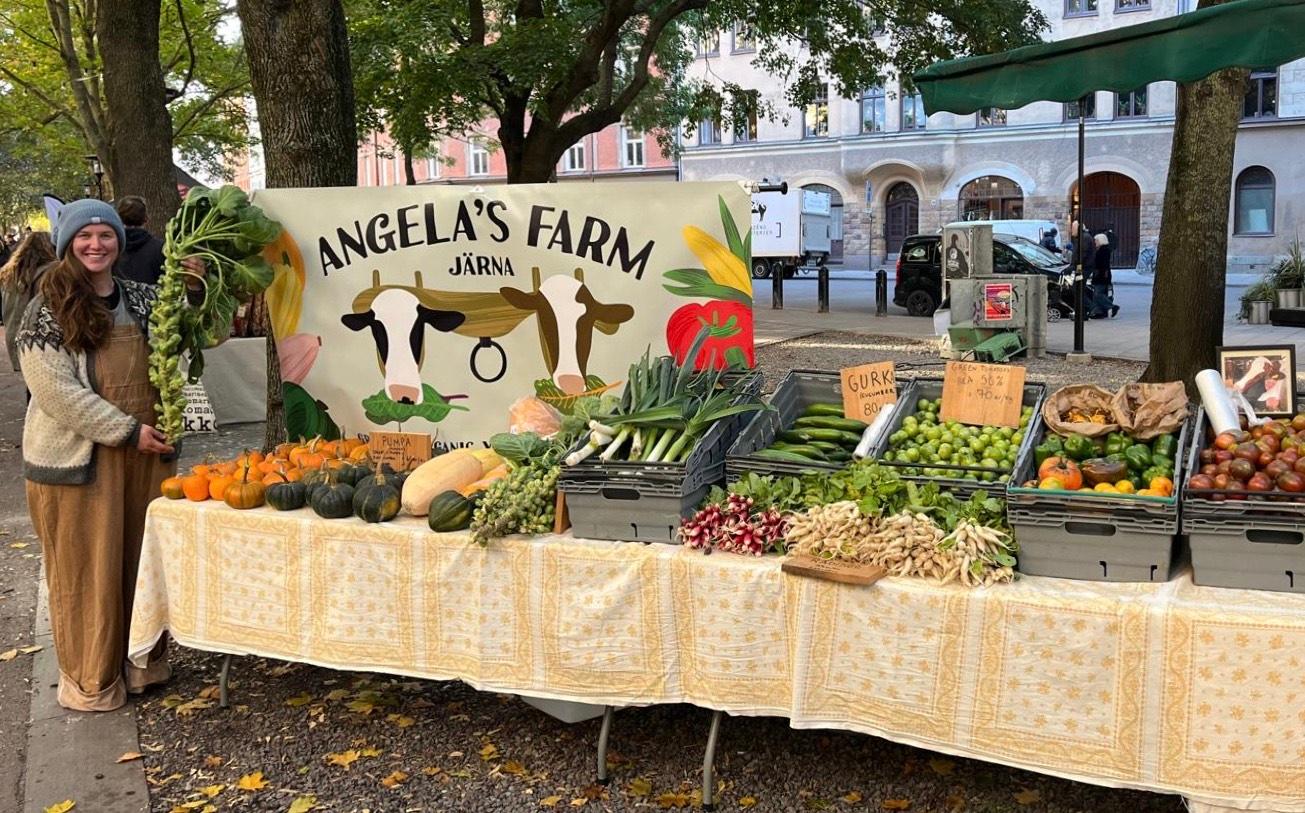
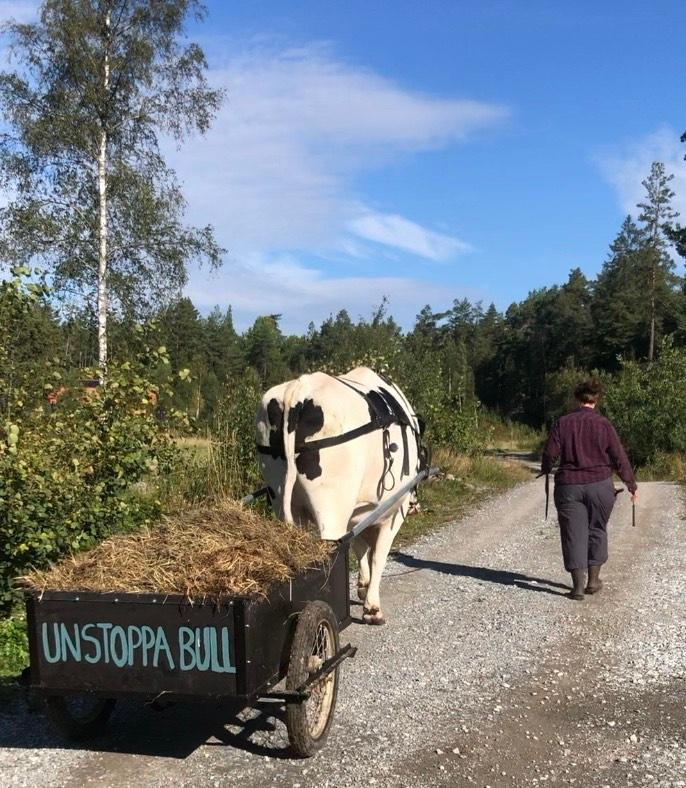
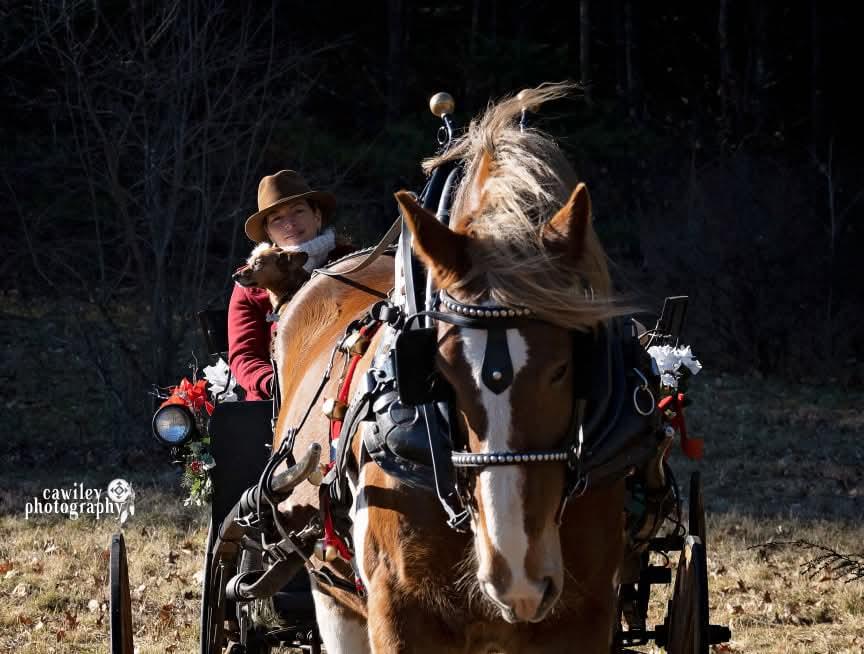
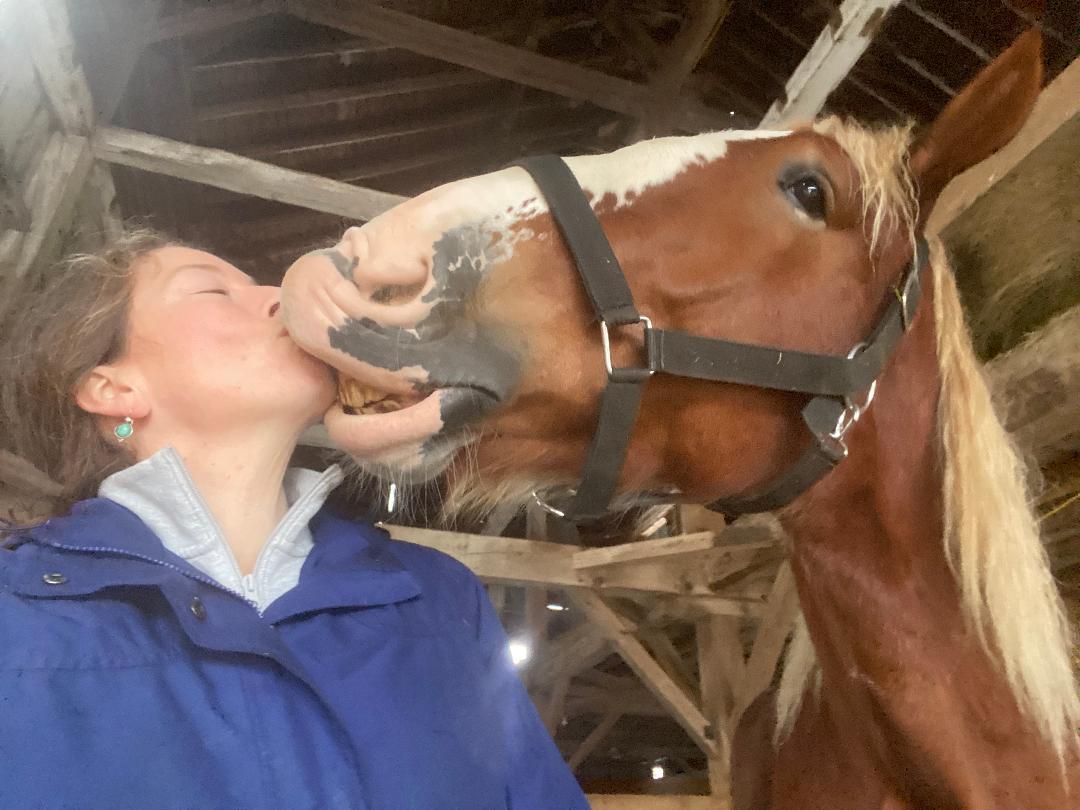


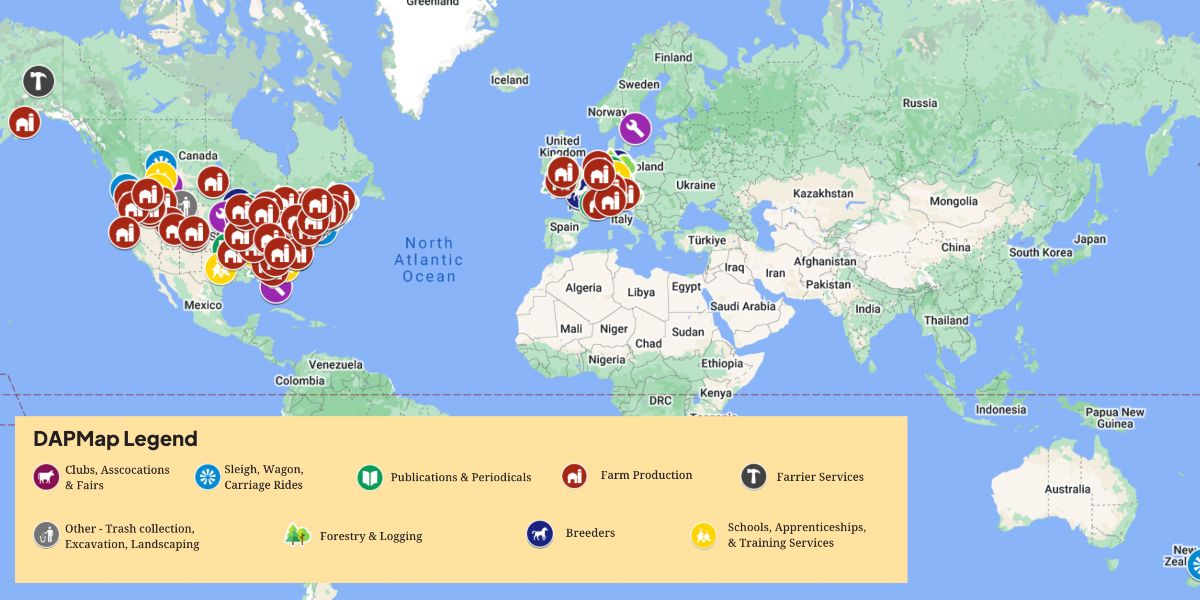





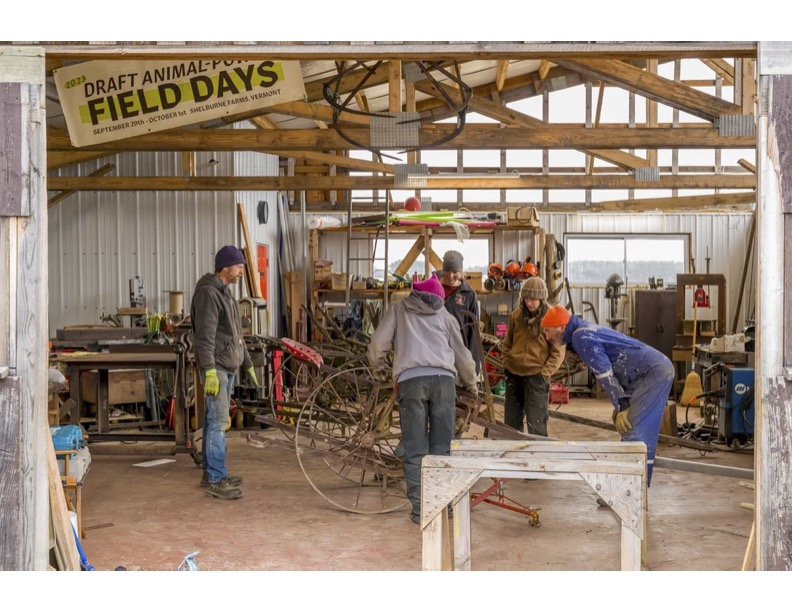
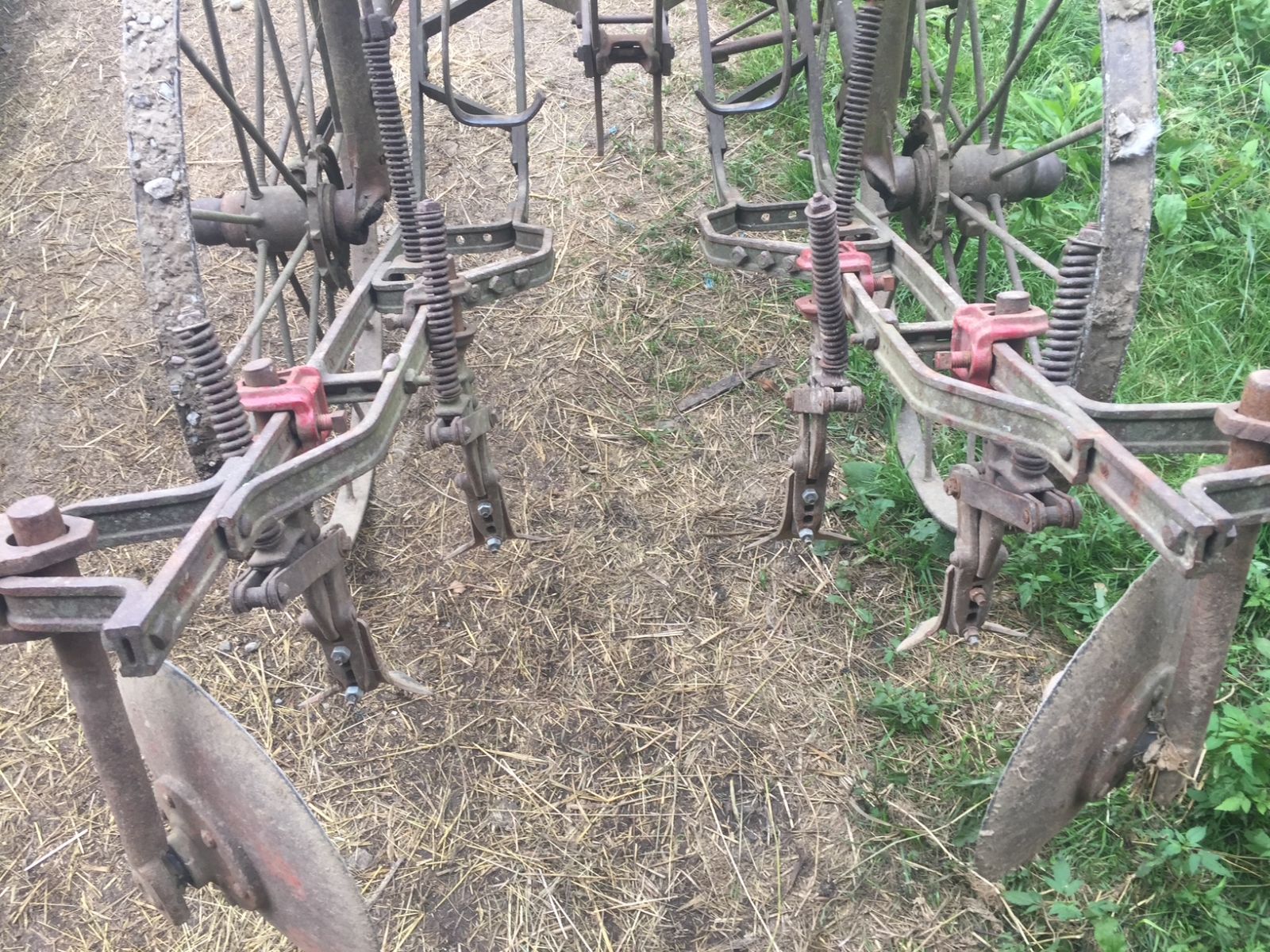
.jpg)
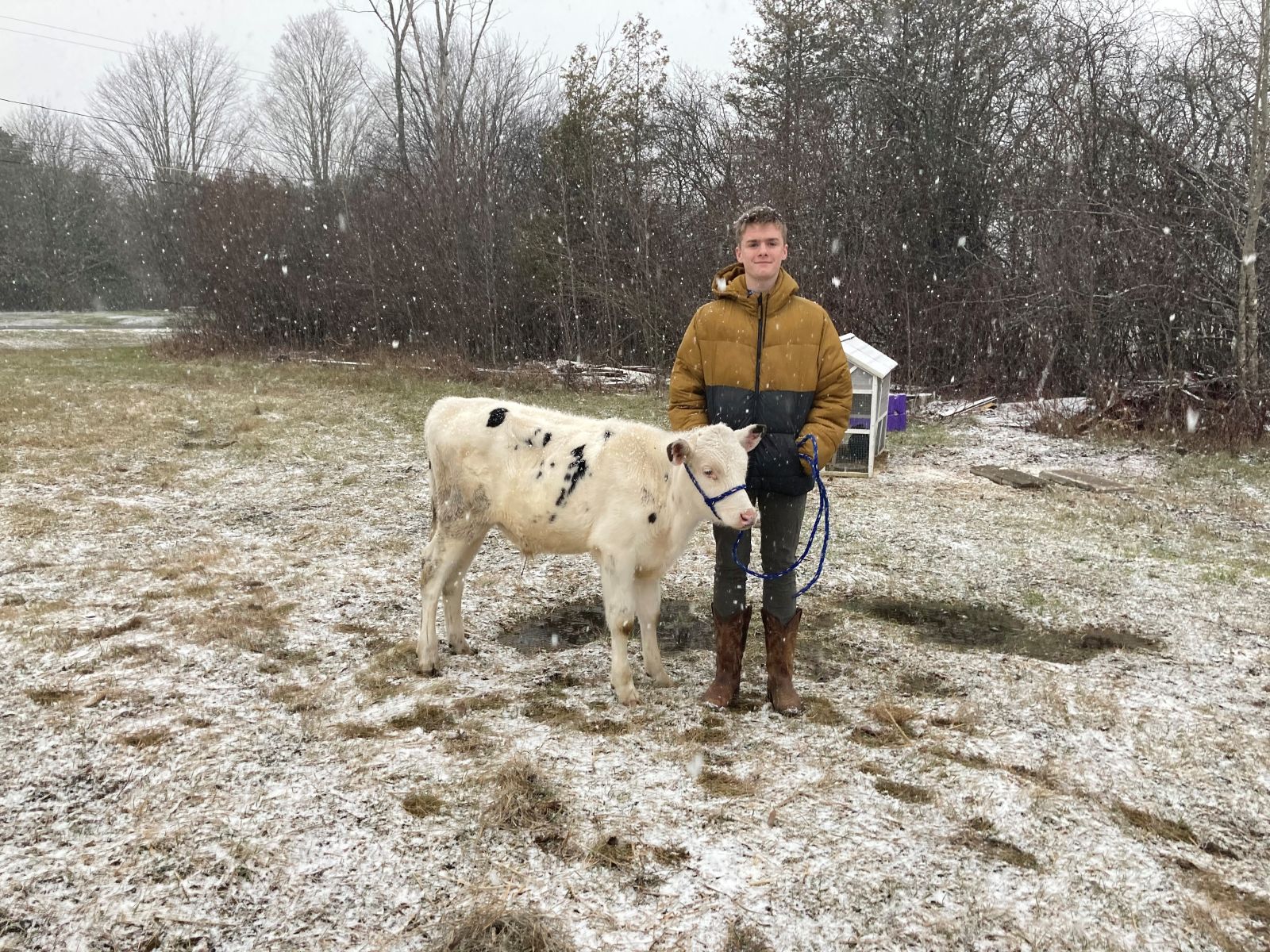
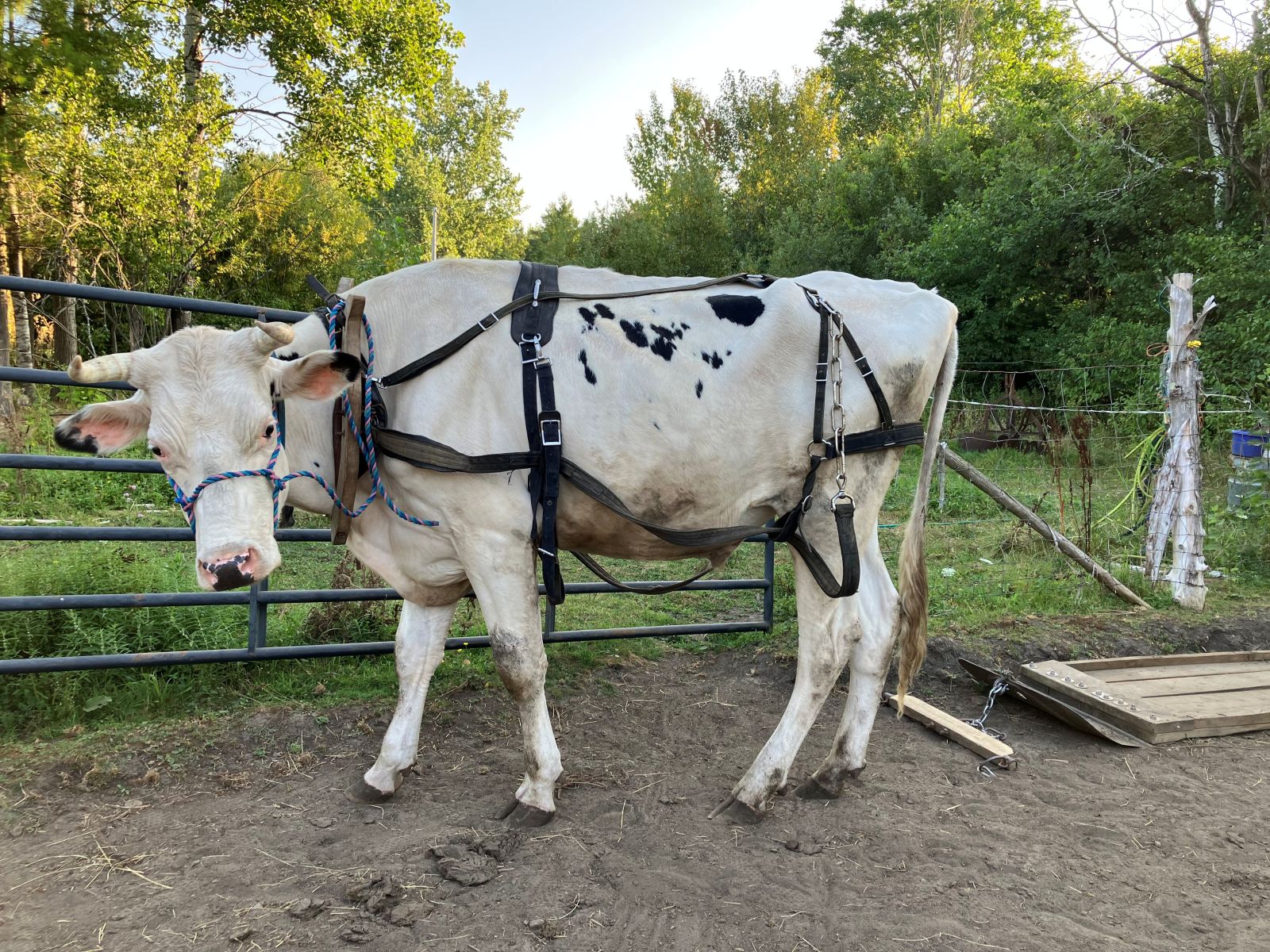
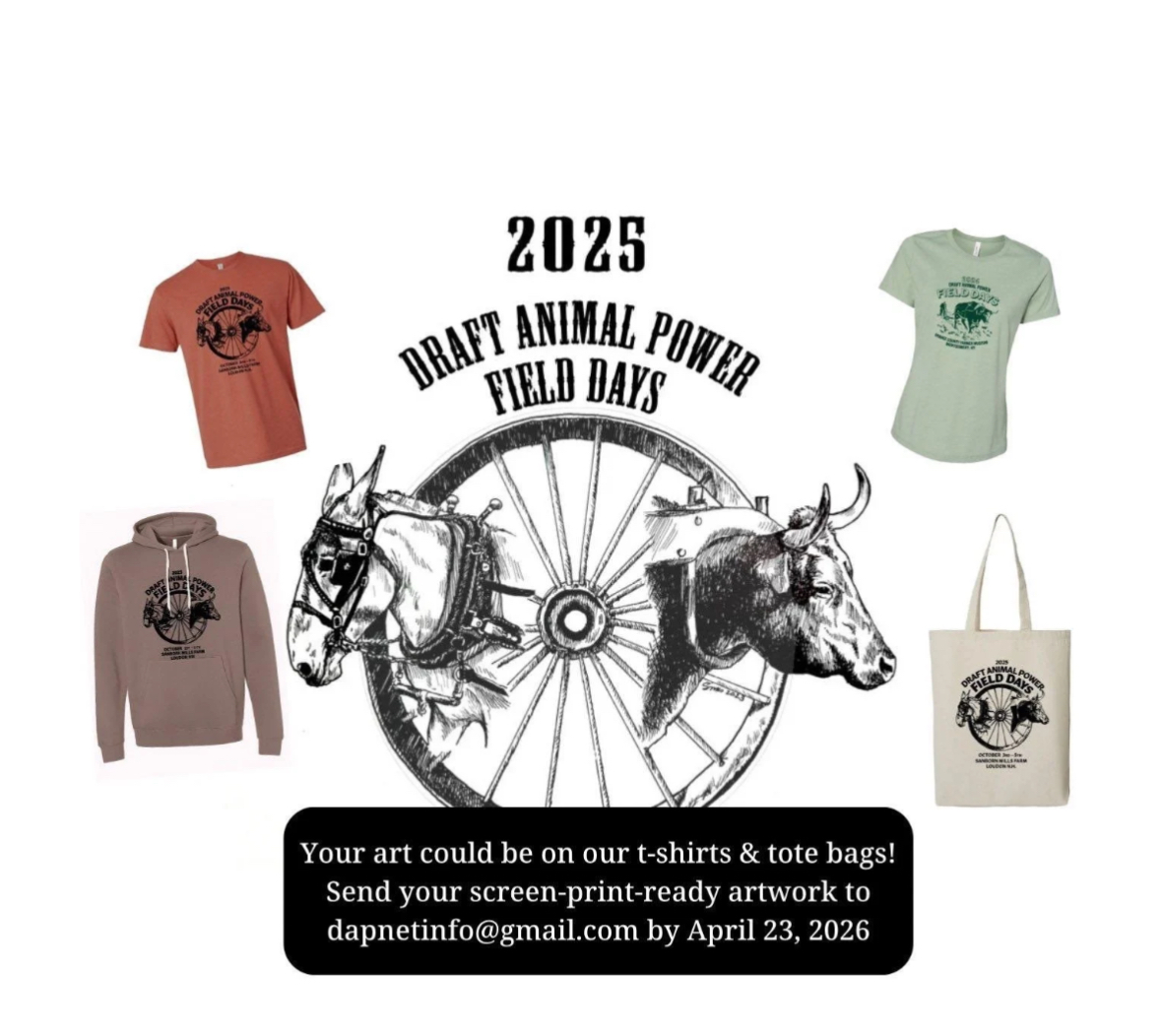
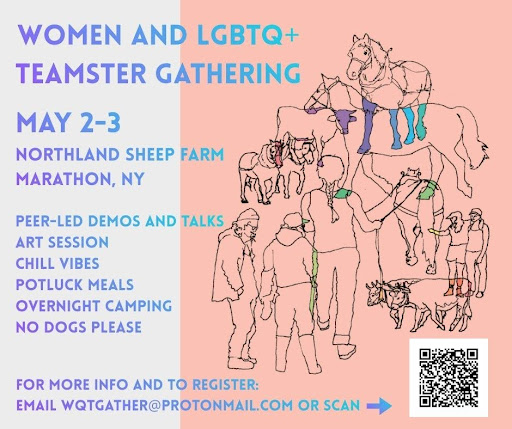
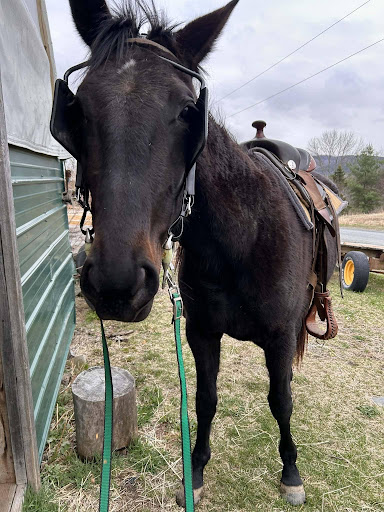

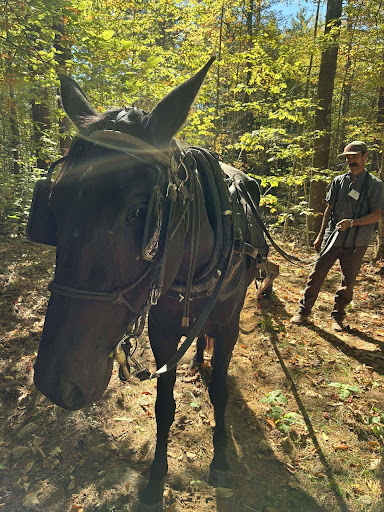
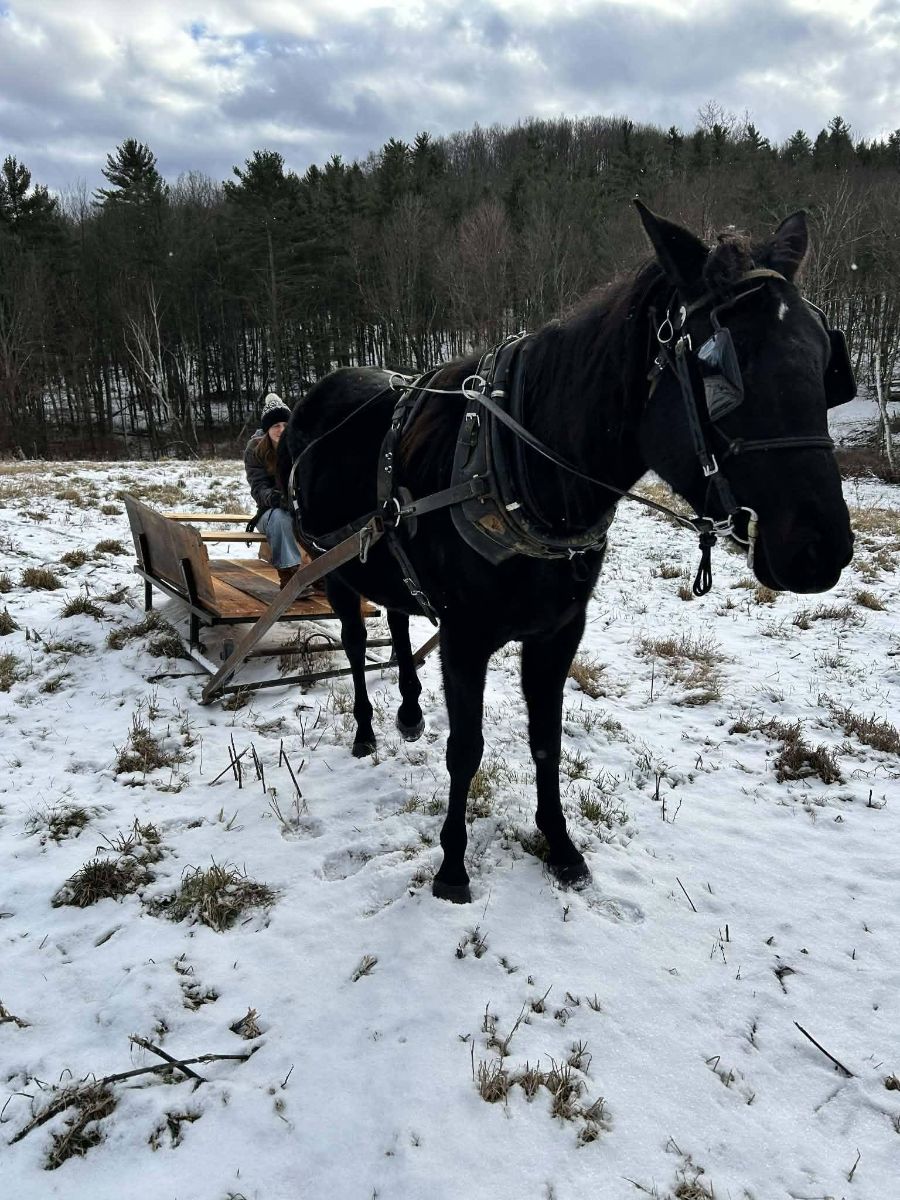
.JPEG)